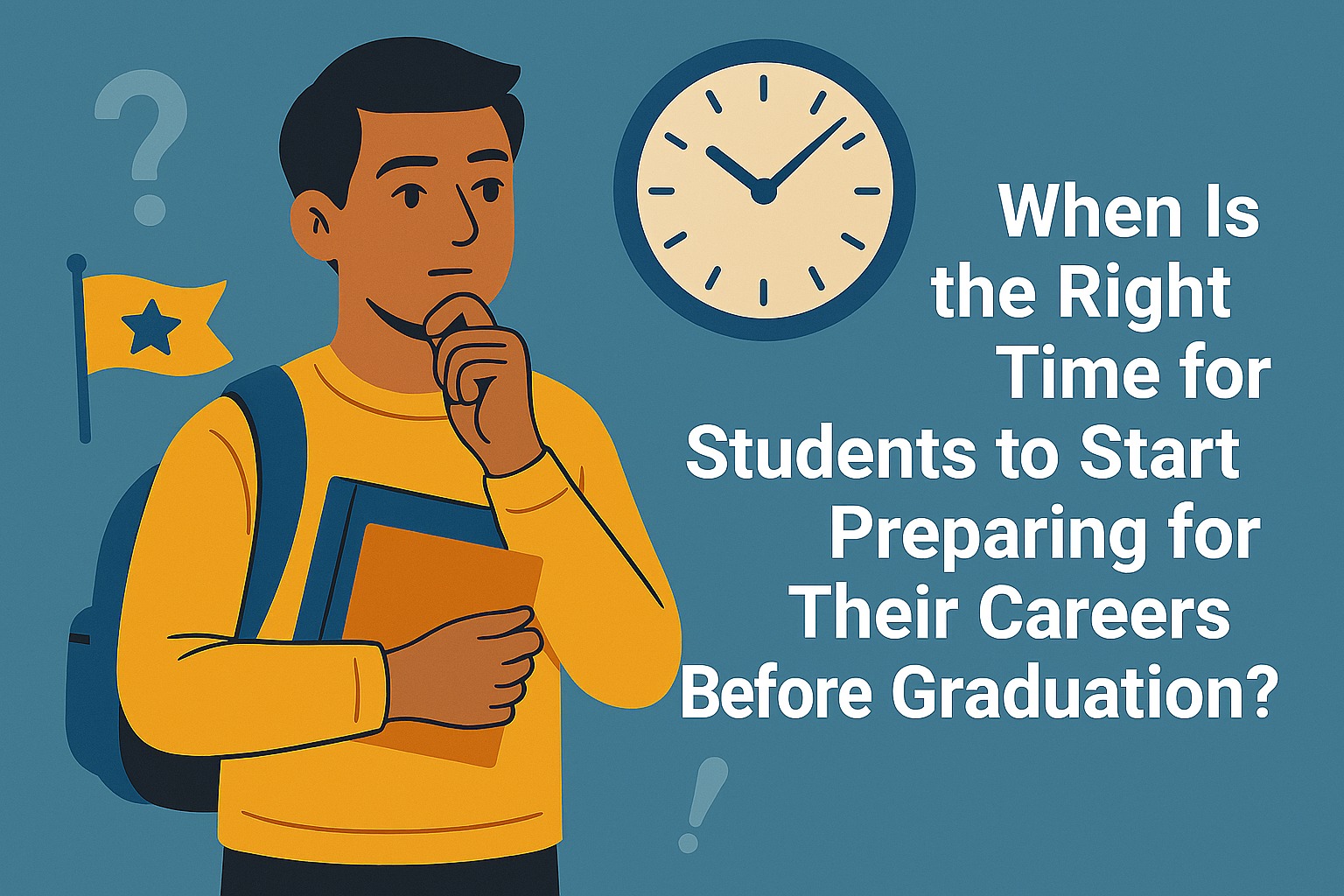
Many students only start thinking about their career near graduation, which often leads to feeling unprepared. Tight competition requires an early strategy.
FRESHMAN/SOPHOMORE YEARS: IDENTIFYING INTERESTS AND POTENTIAL
Early semesters are the time to explore interests and talents. Joining various communities helps students understand their strengths and weaknesses, forming the foundation for future career direction.
MIDDLE SEMESTERS: DEVELOPING SKILLS AND EXPERIENCE
During this phase, students should focus on relevant skills through training, additional courses, or certifications. Seeking internships or practical projects is highly recommended to understand the professional world.
FINAL SEMESTERS: PREPARING FOR ENTRY
Approaching graduation, students must seriously prepare CVs, build portfolios, expand networks, and begin applying. Interview practice is essential to build confidence for the recruitment process.
WHY EARLY PREPARATION MATTERS
Starting early gives students more time to grow and prevents the "graduation panic." Those with a plan are more confident and ready to face the dynamic demands of the working world.
COMMON MISTAKES
The biggest mistake is procrastinating until the last minute or participating in too many activities without a clear focus. Without a specific career goal, efforts can become ineffective.
CONCLUSION
The best time to start is as early as possible. By recognizing potential early and consistently developing skills, students significantly increase their chances of success after graduation.
About the Author
Gusti Ayu Tita P
Author — STEKOM University
An active author focused on academic issues, educational technology, and human resource development in the campus environment.