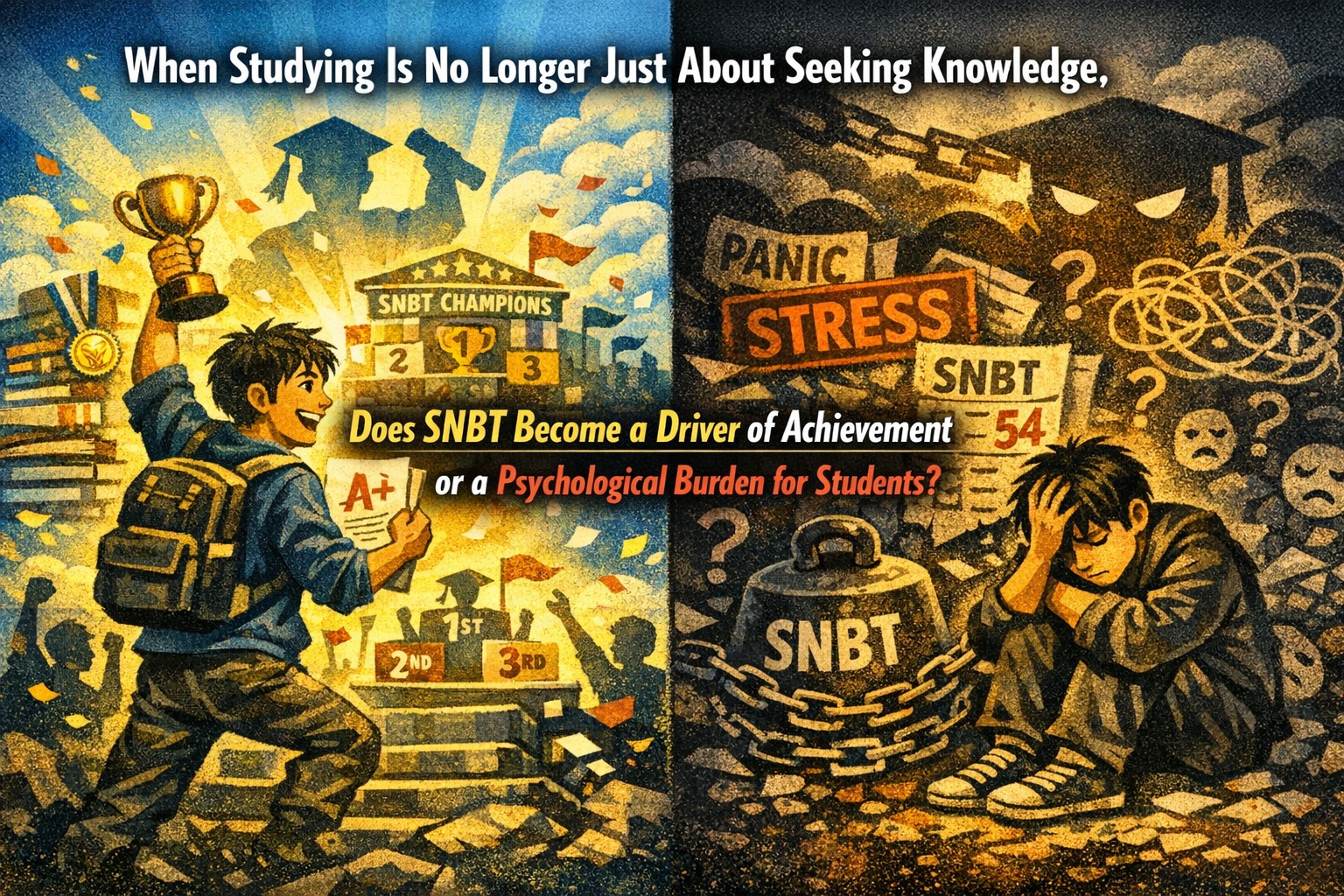
Education has always been seen as the main bridge toward a better future. For many students in Indonesia, one of the biggest gateways to higher education is SNBT (Seleksi Nasional Berdasarkan Tes). This national entrance examination is often considered a turning point that determines whether students can enter their dream university or must change their academic plans. Because of this, SNBT is not only an academic test but also an emotional challenge that affects confidence, mental health, and personal growth.
Every year, thousands of students spend months preparing for SNBT. They attend additional tutoring classes, study late into the night, reduce social activities, and place enormous expectations on themselves. Parents, teachers, and even society often contribute to the pressure by treating exam scores as the main indicator of intelligence and future success. As a result, students are trapped between two realities: motivation to achieve their dreams and fear of failure that feels overwhelming.
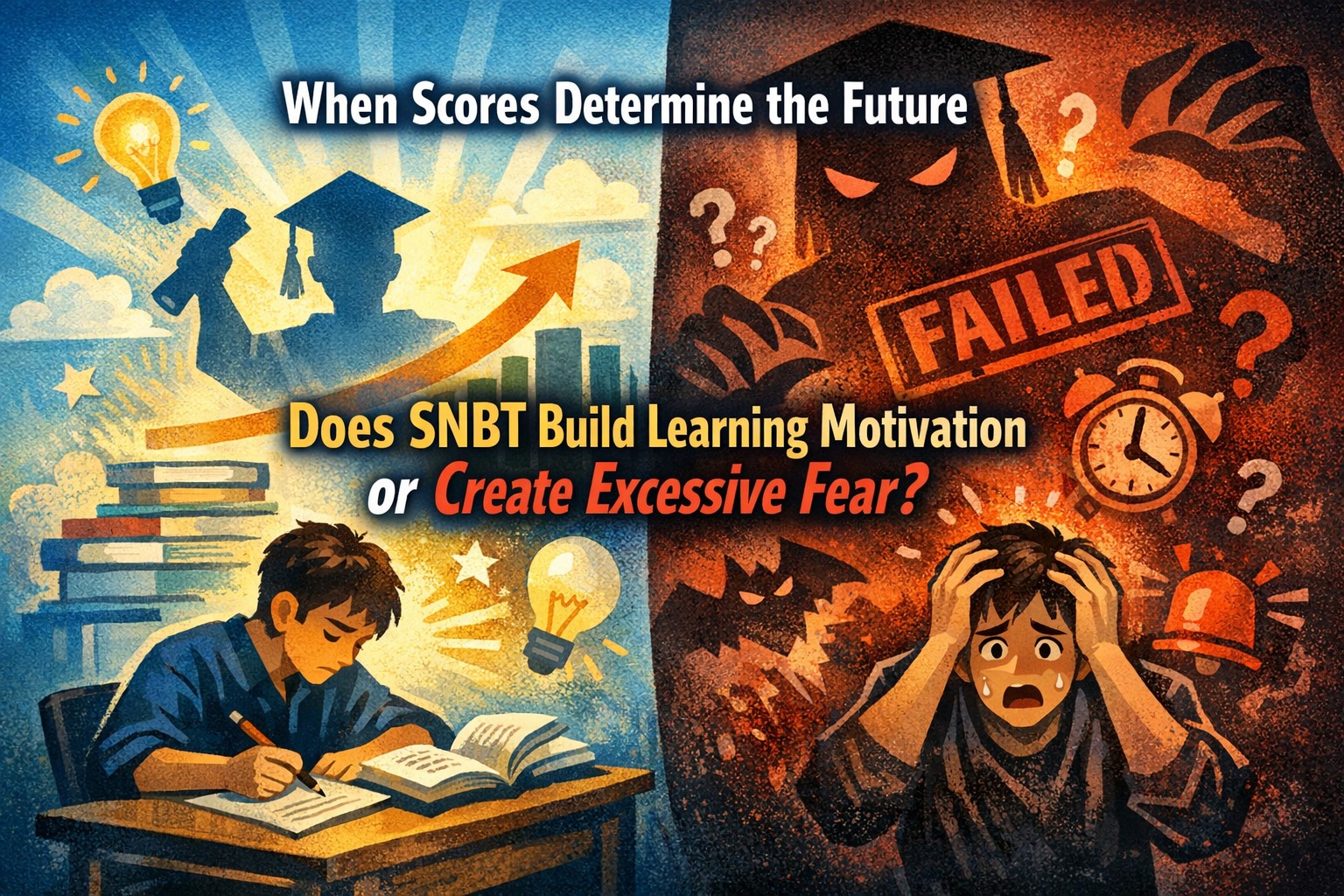
This situation raises an important question: does SNBT truly encourage students to develop a strong learning spirit, or does it create excessive fear that damages their mental well-being? The answer is not simple because both sides exist at the same time. SNBT can inspire discipline and ambition, but it can also trigger anxiety and emotional exhaustion if handled without balance.
SNBT AS A SOURCE OF LEARNING MOTIVATION
For many students, SNBT becomes a strong reason to study more seriously. Before facing this exam, some students may not have clear academic goals. However, the desire to enter a favorite university often changes their mindset. They begin to understand the importance of consistency, time management, and self-discipline.
The existence of a clear target can increase motivation significantly. Students who dream of studying medicine, law, engineering, psychology, or international relations realize that competition is intense. This awareness pushes them to improve their academic performance and become more responsible for their own learning process.
SNBT also teaches students how to face long-term challenges. Unlike daily school assignments, preparing for SNBT requires months of persistence. Students must learn how to maintain focus, evaluate weaknesses, and create effective study strategies. These habits are valuable not only for passing the exam but also for surviving in university life later.
In addition, healthy competition can create positive energy. Seeing friends work hard can inspire students to improve themselves. Discussion groups, study communities, and peer motivation often become powerful support systems that make preparation feel less lonely. In this context, SNBT can indeed build strong learning motivation and shape a more mature attitude toward education.
THE GROWING FEAR BEHIND A SINGLE SCORE
Despite its motivational side, SNBT often creates intense fear because students feel that their future depends entirely on one test result. This belief can be dangerous, especially when society repeatedly sends the message that failure in SNBT means failure in life.
Many students begin to associate their self-worth with scores. If practice test results are low, they may feel useless, ashamed, or disappointed in themselves. Instead of seeing mistakes as part of learning, they view them as proof that they are not good enough. This mindset can slowly damage confidence and increase emotional stress.
The fear becomes even stronger when family expectations are involved. Some parents unintentionally place too much pressure on their children by comparing them with others or demanding admission to specific universities. Students then study not because they love learning, but because they are afraid of disappointing the people around them.
Social media also adds another layer of pressure. Constant exposure to friends sharing achievements, high scores, and acceptance stories can create unhealthy comparisons. Students may feel left behind and begin to panic, even when their own progress is actually meaningful. Fear grows quietly through comparison, and mental exhaustion becomes difficult to avoid.
MENTAL HEALTH AND ACADEMIC PRESSURE
The connection between academic pressure and mental health is becoming more visible among students preparing for SNBT. Anxiety, overthinking, insomnia, and burnout are common experiences during the preparation period. Some students lose motivation completely because they feel trapped in endless expectations.
When studying becomes a source of fear rather than curiosity, the learning process loses its true purpose. Students memorize materials only to survive the exam, not to understand knowledge deeply. This creates short-term achievement but weak long-term academic development.
Burnout is one of the most serious risks. Students who study continuously without proper rest often experience physical fatigue and emotional emptiness. They may become easily irritated, lose concentration, and feel disconnected from their goals. Ironically, excessive pressure can reduce performance instead of improving it.
Mental health support is still limited in many educational environments. Some students are afraid to admit stress because they think it shows weakness. Others believe anxiety is simply a normal part of being a hardworking student. Without proper support, emotional struggles remain hidden until they become severe.
This is why discussions about SNBT should not focus only on scores and rankings. Mental well-being must become part of the conversation because success in education should include both academic achievement and emotional resilience.
THE ROLE OF PARENTS AND TEACHERS
Parents and teachers play a major role in shaping how students experience SNBT. Their words, attitudes, and expectations can either become encouragement or additional pressure. Sometimes, simple statements such as “you must pass” can create a heavy emotional burden.
Supportive parents understand that success is not limited to one university or one examination. They help students prepare seriously while also reminding them that personal value is not determined by a test score. Emotional safety at home allows students to study with a healthier mindset.
Teachers also influence student confidence significantly. Educators who focus only on rankings may unintentionally increase fear, while teachers who emphasize growth and progress can help students stay motivated. Encouragement, honest feedback, and realistic guidance are often more powerful than strict demands.
Open communication is essential. Students need spaces where they can express fear without being judged. Listening is sometimes more helpful than giving advice. When adults become partners instead of pressure sources, students can approach SNBT with more balance and confidence.
REDEFINING SUCCESS BEYOND UNIVERSITY ADMISSION
One of the biggest problems surrounding SNBT is the narrow definition of success. Many people believe that entering a top university is the only proof of intelligence and potential. This perspective is unfair because success has many forms and different timelines.
Not every talented student follows the same path. Some succeed through private universities, vocational education, entrepreneurship, creative industries, or professional experience. Life does not end with one exam result, and opportunities often appear in unexpected ways.
Students need to understand that rejection from a dream university does not mean the dream itself is over. Sometimes, a different path leads to even greater growth. Failure can become a lesson in resilience, adaptability, and self-discovery.
Education should help students discover purpose, not only chase prestige. When success is defined too narrowly, fear becomes stronger. But when students understand that their future is bigger than one score, they can study with healthier motivation and stronger emotional stability.
FINDING BALANCE BETWEEN AMBITION AND PEACE
The real challenge is not choosing between ambition and peace, but learning how to protect both. Students should be encouraged to aim high while also maintaining emotional balance. Hard work is important, but so is rest. Discipline matters, but so does self-compassion.
Preparing for SNBT should not mean sacrificing mental health completely. Healthy routines such as enough sleep, exercise, balanced study schedules, and social connection are not distractions—they are part of effective preparation. Students perform better when their minds are stable and supported.
Schools and families must help create an environment where effort is appreciated as much as results. Celebrating progress, not only final scores, helps students build confidence and resilience. This approach turns learning into growth rather than survival.
Ultimately, SNBT should be a tool for opportunity, not a source of permanent fear. Exams are important, but they should never define a person’s entire future. A score can open a door, but character, persistence, and adaptability are what truly sustain long-term success.
The question is not whether SNBT is good or bad. The real question is how students, parents, teachers, and society choose to respond to it. If approached with balance, SNBT can become a motivation for meaningful learning. If handled with excessive pressure, it risks becoming a source of unnecessary fear.
Students deserve an education system that challenges them without breaking them. They deserve the chance to dream without feeling crushed by anxiety. In the end, learning should build hope, not fear.
About the Author
Gusti Ayu Tita
Author — STEKOM University
An active author focused on academic issues, educational technology, and human resource development in the campus environment.