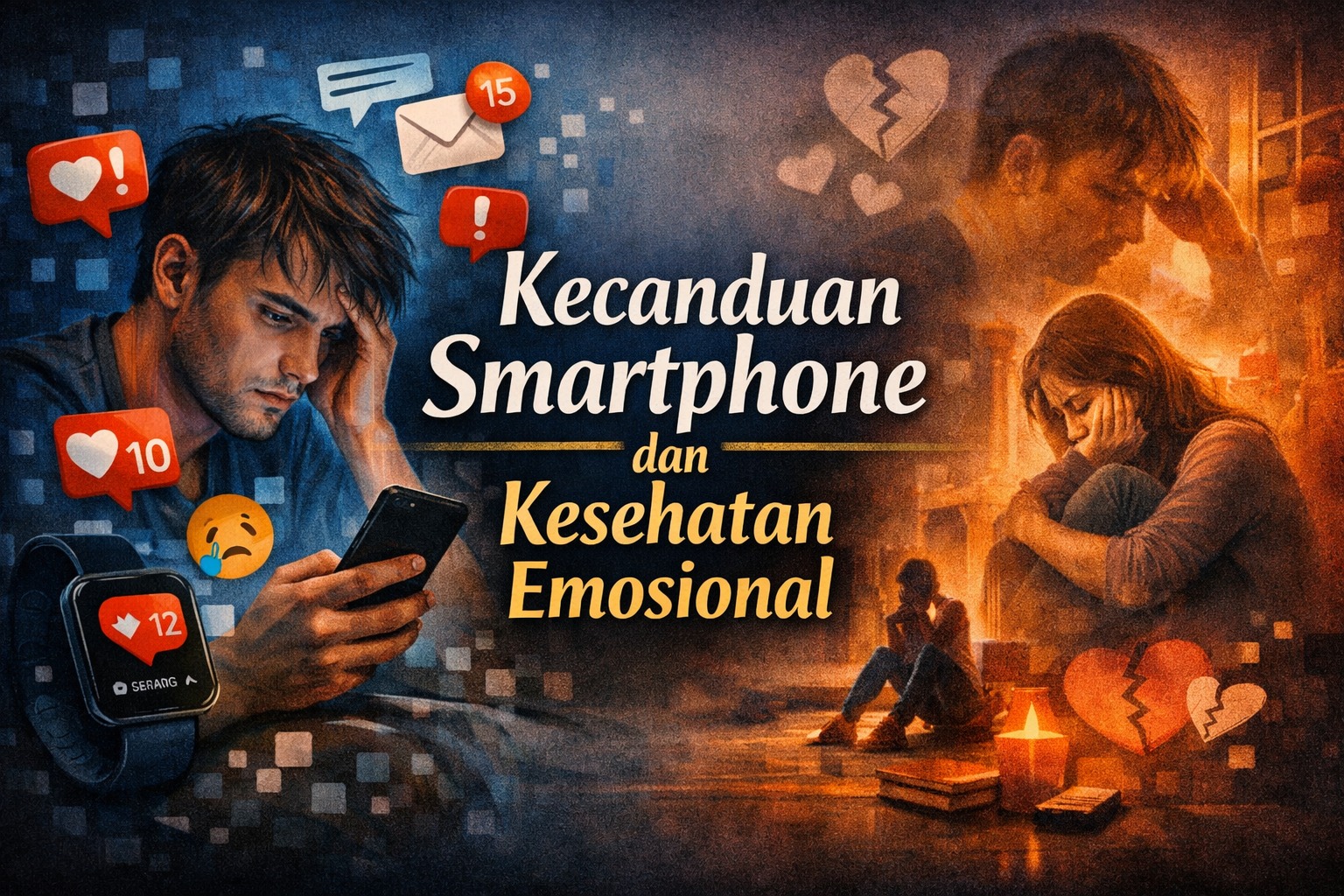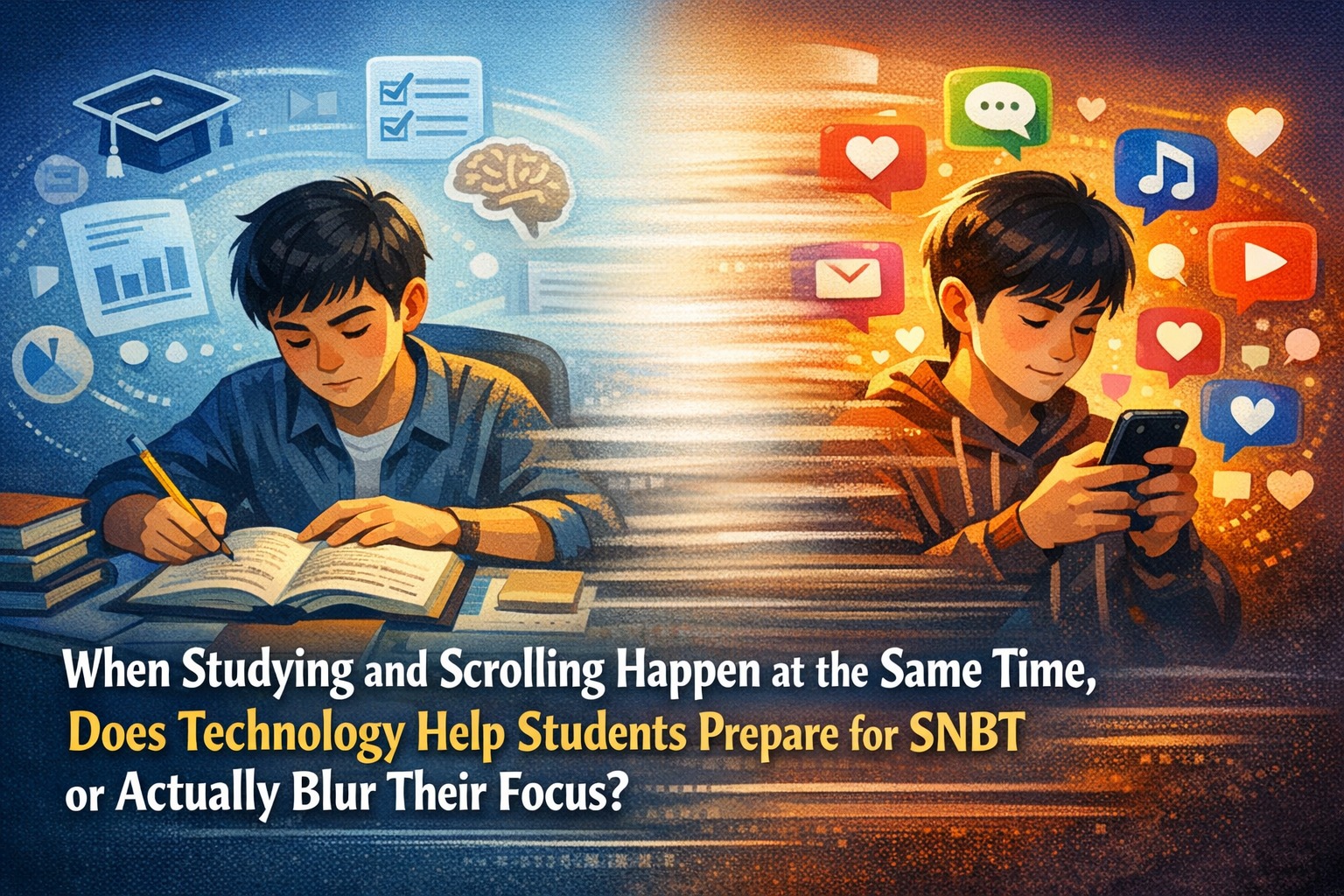
In today’s digital era, students preparing for SNBT (Seleksi Nasional Berdasarkan Tes) are living in a world where studying and scrolling often happen at the same time. A student may begin by opening a mathematics video tutorial on YouTube, but within minutes, they are checking Instagram stories, replying to WhatsApp messages, or watching unrelated TikTok content. Technology has become both a powerful academic tool and a major source of distraction.
This raises an important question: does technology truly help students prepare for SNBT more effectively, or does it slowly weaken their concentration and learning discipline?
The answer is not simple. Technology offers access to unlimited knowledge, practice questions, online discussions, and educational communities. At the same time, it also creates endless interruptions through notifications, entertainment platforms, and the habit of instant gratification. For many students, the biggest challenge is no longer finding learning materials, but maintaining focus long enough to actually use them.
Understanding this balance is essential because success in SNBT is not only determined by intelligence, but also by consistency, discipline, and the ability to manage attention in a highly distracting digital environment.
THE DIGITAL LEARNING REVOLUTION
Technology has completely changed the way students prepare for academic exams. In the past, students depended heavily on printed books, school notes, and private tutoring classes. Today, they can access thousands of learning resources instantly through smartphones and laptops.
Online platforms provide free video lessons, mock tests, question banks, and interactive discussions. Students can learn difficult concepts repeatedly without waiting for classroom explanations. This flexibility allows them to study anytime and anywhere.
For SNBT preparation, this is especially helpful because the exam requires strong conceptual understanding, critical thinking, and regular practice. Digital learning tools can support all of these needs efficiently.
However, convenience can also create overdependence. Some students consume too much information without deeply understanding any of it. Watching ten study videos is not always better than solving ten questions with full concentration.
Technology expands opportunity, but learning quality still depends on how students use it.
WHY STUDENTS OFTEN STUDY WHILE SCROLLING
Multitasking has become a normal habit for many students. They study while listening to music, replying to chats, checking social media, and switching between multiple applications. This behavior feels productive because everything happens simultaneously.
In reality, the brain does not truly perform deep multitasking. It simply switches attention rapidly from one task to another. This process consumes mental energy and reduces learning efficiency.
Many students scroll because studying feels mentally demanding, while social media provides quick entertainment and emotional relief. A difficult math problem creates stress, but a short funny video offers immediate comfort. This creates a cycle where distraction becomes a form of escape.
Over time, students may lose the ability to stay focused for long periods. Their attention span becomes shorter, and deep concentration feels uncomfortable.
This is one of the biggest hidden dangers of digital learning.
HOW TECHNOLOGY HELPS SNBT PREPARATION
Despite the distractions, technology provides undeniable advantages for students preparing for SNBT.
First, accessibility is significantly improved. Students from different regions can access the same high-quality learning materials without expensive tutoring centers. This creates more equal educational opportunities.
Second, adaptive learning helps students identify weaknesses faster. Many platforms analyze performance and recommend specific topics for improvement. This makes studying more targeted and efficient.
Third, motivation can increase through online communities. Students often feel encouraged when they join study groups, academic forums, or productivity challenges. Seeing others work hard can strengthen personal discipline.
Fourth, mock exams and simulation systems help students become familiar with real exam pressure. Practicing under time limits improves both speed and confidence.
Technology can therefore become a strategic academic partner when used intentionally.
HOW SOCIAL MEDIA BLURS STUDENT FOCUS
The same device used for learning is also the source of endless distraction. This creates a constant internal battle.
Social media platforms are designed to keep users engaged for as long as possible. Notifications, short videos, trending content, and personalized recommendations make it difficult to stop scrolling. These systems compete directly with study goals.
Unlike textbooks, social media rewards the brain instantly. Every notification creates a small emotional reaction. This makes studying feel slower and less exciting by comparison.
As a result, students may spend hours “preparing” without making real academic progress. They open educational content, but their attention is divided. This creates the illusion of productivity.
Worse, excessive scrolling often leads to comparison anxiety. Students may feel insecure when they see others posting achievements, study routines, or university acceptance stories. Instead of motivation, they feel pressure and self-doubt.
Focus disappears not only because of distraction, but also because of emotional exhaustion.
THE PSYCHOLOGY OF DIGITAL DISTRACTION
Understanding distraction requires understanding the brain.
The human brain naturally seeks rewards and avoids discomfort. Studying for SNBT requires delayed rewards. Students work hard now for results they may only see months later. This demands patience and self-control.
Social media offers immediate rewards. Likes, messages, and entertainment provide fast satisfaction with almost no effort. The brain quickly learns to prefer short-term pleasure over long-term goals.
This is why students often say, “I only wanted to check my phone for five minutes,” but end up losing an hour.
Digital distraction is not simply laziness. It is often a psychological habit shaped by repeated behavior.
Breaking this pattern requires awareness, not just motivation. Students must learn to design environments that support focus instead of depending only on willpower.
SMART STRATEGIES TO USE TECHNOLOGY PRODUCTIVELY
Technology itself is not the enemy. Poor management is.
Students can create healthier study habits by separating learning tools from entertainment triggers. For example, using one application only for study purposes helps reduce temptation.
Turning off non-essential notifications is another powerful step. Many distractions begin with a single notification that breaks concentration.
Time-blocking methods such as focused study sessions followed by short breaks can also improve productivity. During study periods, students should avoid opening unrelated platforms completely.
Digital minimalism is equally important. Not every educational video needs to be watched. Choosing fewer, higher-quality resources often leads to better understanding.
Students should also reflect regularly: are they learning actively, or simply consuming content passively?
Intentional use creates real progress.
THE ROLE OF SELF-DISCIPLINE IN THE DIGITAL ERA
Technology can support learning, but discipline determines results.
Students often search for the perfect application, the best online class, or the most effective strategy. Yet the strongest factor remains consistency. A simple routine followed every day is more powerful than an advanced system used occasionally.
Self-discipline means studying even when motivation is low. It means choosing revision over random scrolling and long-term goals over temporary comfort.
This does not require perfection. Every student gets distracted. The key is returning to focus quickly without turning one bad day into one bad month.
Building discipline also means setting realistic expectations. Extreme study schedules often fail because they are unsustainable. Balanced routines are more effective than dramatic plans.
Success in SNBT is often the result of repeated ordinary effort, not extraordinary moments.
PARENTS, TEACHERS, AND THE LEARNING ENVIRONMENT
Students do not manage technology alone. Parents and teachers also shape digital habits.
Parents should avoid seeing smartphones only as a problem. Instead, they can guide students in using technology responsibly. Open communication works better than strict control without understanding.
Teachers can help by integrating digital learning wisely. Recommending trusted resources, structured online exercises, and realistic academic planning helps students avoid information overload.
Schools can also promote digital literacy, teaching students how to manage focus, verify information, and use online platforms critically.
A supportive environment reduces unnecessary pressure and helps students stay academically healthy.
Preparing for SNBT should not feel like surviving alone in a digital storm.
FINDING BALANCE BETWEEN SCREEN TIME AND REAL LEARNING
The real goal is not to reject technology, but to create balance.
Students do not need to abandon social media completely. They need boundaries. Entertainment is normal, but it should not control academic priorities.
Real learning still requires silence, repetition, reflection, and patience. No application can replace deep understanding built through focused effort.
Technology should serve learning, not dominate it.
When studying and scrolling happen at the same time, students must ask themselves an honest question: am I using technology to move closer to my goal, or am I using it to avoid the work required to reach it?
The answer to that question may determine not only SNBT results, but also the kind of discipline they carry into university and adult life.
In the end, technology is only a tool. Focus is still a choice.
About the Author
Gusti Ayu Tita P
Author — STEKOM University
An active author focused on academic issues, educational technology, and human resource development in the campus environment.