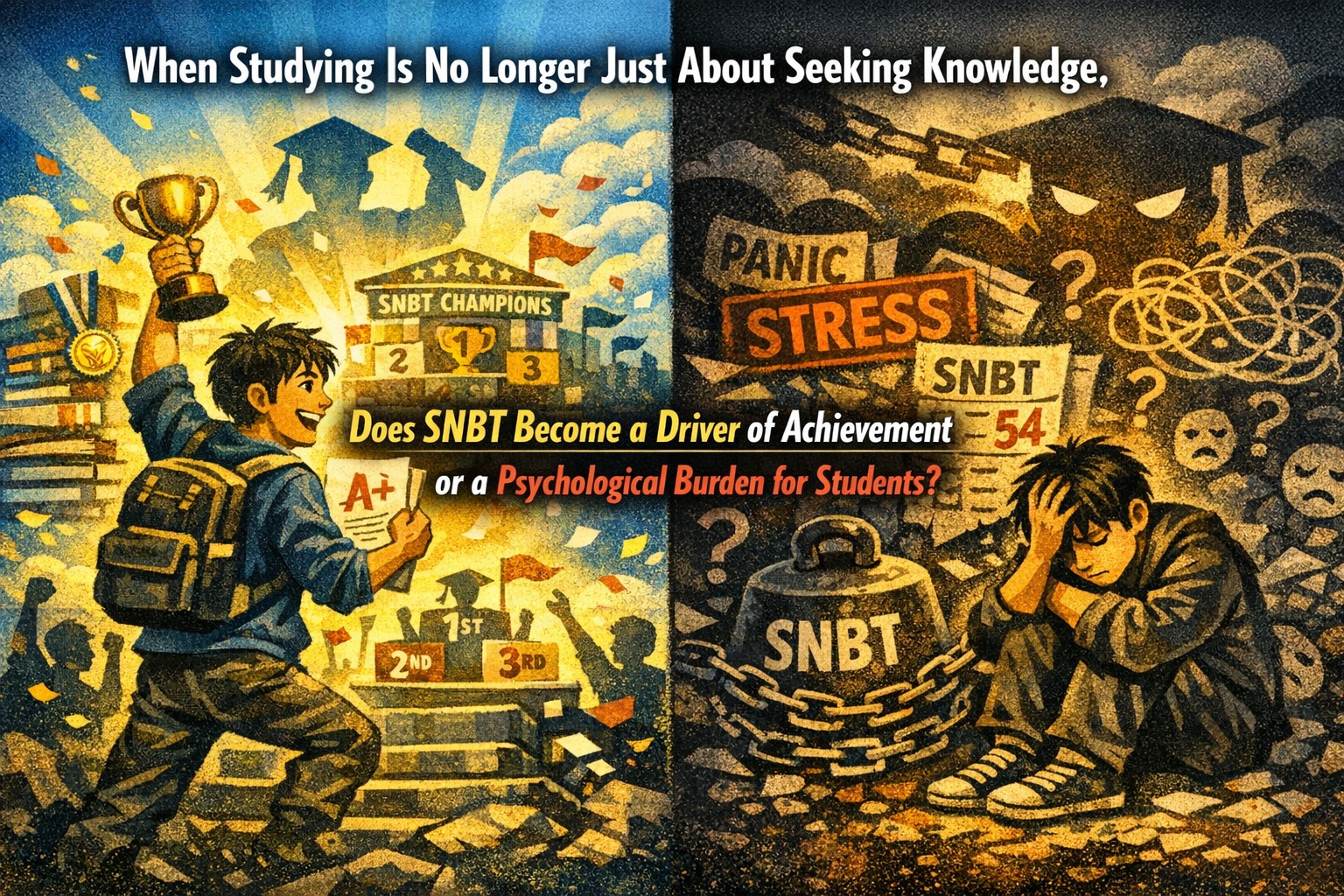
For many students in Indonesia, the journey toward higher education is filled with hope, sacrifice, and intense pressure. One of the most important stages in that journey is SNBT (Seleksi Nasional Berdasarkan Tes), a national entrance examination that often determines access to public universities. For students who dream of entering their favorite campus, SNBT is more than just a test. It becomes a symbol of opportunity, family expectations, and personal achievement.
Every year, students spend months preparing for this examination. They join tutoring programs, practice countless questions, and organize their lives around study schedules. Many believe that one score can decide the direction of their future. Because of this belief, SNBT carries not only academic importance but also emotional weight that affects confidence, identity, and mental health.
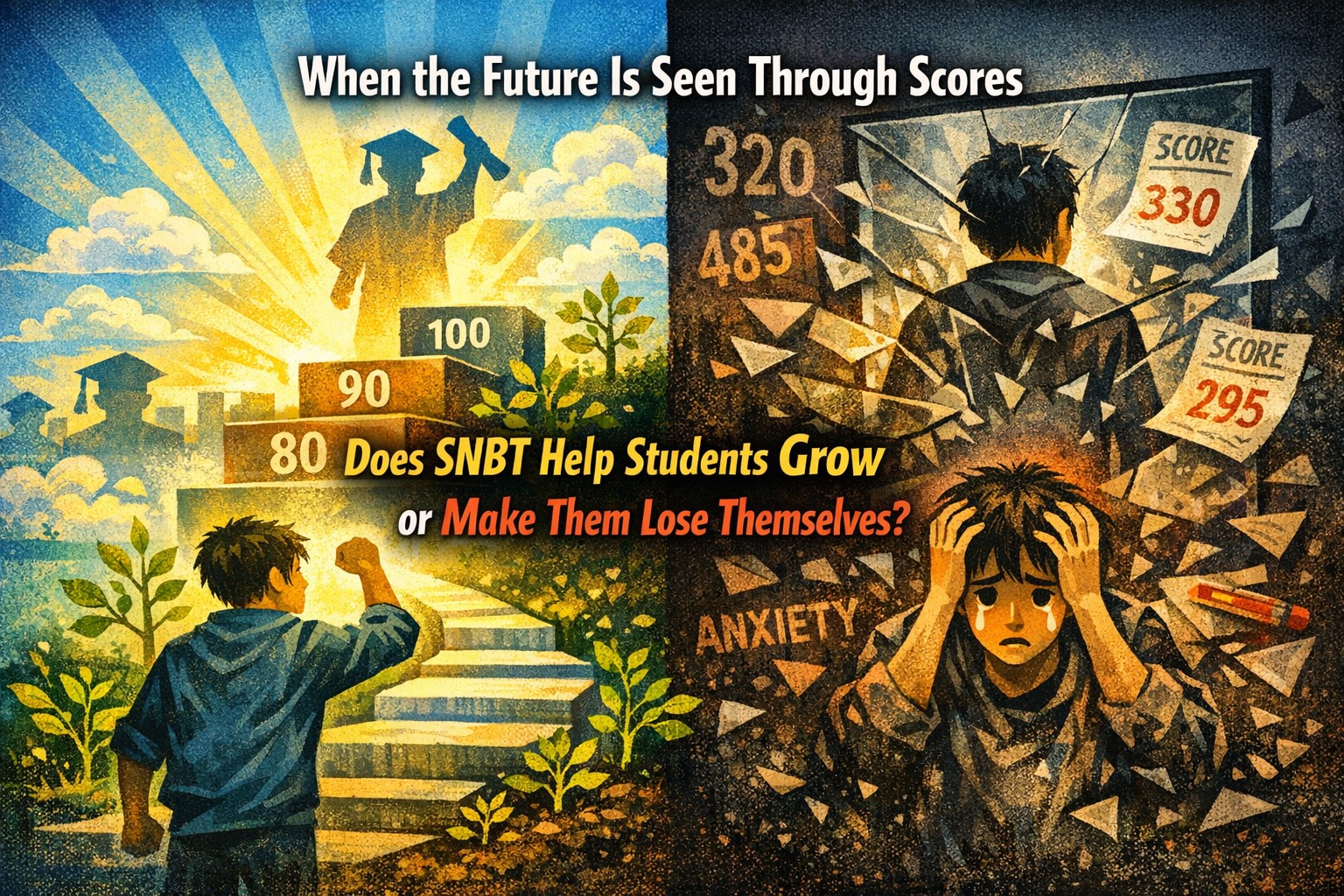
The system is designed to create fair competition and measure readiness for university life. However, behind that purpose lies an important question: does SNBT truly help students grow into stronger and more disciplined individuals, or does it push them so hard that they begin to lose themselves in the process?
This issue deserves attention because education should not only produce high scores but also healthy, confident, and resilient young people. When students begin to define their worth only through rankings and results, learning can become a painful burden rather than a meaningful journey.
SNBT AS A TOOL FOR DISCIPLINE AND PERSONAL GROWTH
For many students, SNBT provides a clear target that encourages serious academic preparation. Before having a university goal, some students may study without strong motivation. Once they decide on a dream major such as medicine, engineering, law, or psychology, their learning becomes more focused and purposeful.
This sense of direction often improves discipline. Students learn to manage time, set priorities, and maintain consistency over a long period. Preparing for SNBT requires patience because success cannot be achieved in one night. It demands regular practice, self-evaluation, and the willingness to improve from mistakes.
The process also teaches emotional endurance. Students face difficult questions, disappointing tryout results, and moments of self-doubt. Learning how to recover from setbacks builds resilience that will be useful far beyond the university entrance exam.
Healthy competition can also inspire growth. Study groups, peer discussions, and shared goals help students feel less alone. When competition is balanced with support, students become more motivated to improve themselves without feeling isolated.
In this positive perspective, SNBT becomes not only an academic test but also a training ground for responsibility and maturity. It helps students understand that success requires effort, strategy, and persistence.
WHEN SCORES START DEFINING IDENTITY
The danger begins when exam results stop being a reflection of preparation and start becoming a reflection of personal value. Many students unconsciously connect scores with self-worth. A high score brings pride and confidence, while a low score creates shame and disappointment.
This mindset is harmful because it turns learning into emotional survival. Students stop asking, “How can I improve?” and start asking, “Am I good enough?” Their confidence becomes unstable because it depends entirely on numbers.
Rankings make this problem even stronger. Students compare themselves with friends, classmates, and online communities. Seeing others achieve better results often creates insecurity and panic. Instead of celebrating progress, they focus on feeling left behind.
Social pressure increases this emotional burden. Parents may ask about scores every week, teachers may emphasize rankings, and society often praises only students who enter top universities. In such an environment, students can feel invisible unless they achieve exceptional results.
When identity is built around academic performance alone, failure becomes deeply personal. Students do not just feel unsuccessful—they feel unworthy. This is where the risk of losing themselves begins.
THE SILENT IMPACT ON MENTAL HEALTH
Mental pressure during SNBT preparation is often hidden behind routines that look normal from the outside. Students attend school, study late, and continue daily responsibilities, but internally they may be struggling with anxiety, fear, and emotional exhaustion.
One common issue is overthinking. Students constantly worry about not being prepared enough, choosing the wrong major, or disappointing their families. These thoughts can disturb sleep, reduce concentration, and make even simple tasks feel overwhelming.
Burnout is another serious problem. Many students believe that resting means falling behind, so they continue studying without balance. Over time, this leads to physical fatigue, loss of motivation, and emotional numbness. They no longer study because they are inspired, but because they are afraid to stop.
Some students also isolate themselves from social life. They reduce hobbies, avoid meeting friends, and feel guilty during moments of relaxation. Their world becomes smaller, centered only around one exam.
Unfortunately, mental struggles are often ignored because academic pressure is considered normal. Students may hesitate to ask for help because they fear being seen as weak. Without support, emotional stress can quietly grow into deeper mental health problems.
THE ROLE OF FAMILY AND EDUCATIONAL ENVIRONMENT
The way students experience SNBT is strongly influenced by the people around them. Parents, teachers, and schools can either create a supportive atmosphere or increase unnecessary pressure.
Parents usually want their children to succeed, but expectations can sometimes feel overwhelming. Statements like “You must enter this university” or constant comparisons with other students may reduce confidence rather than build motivation. Students need trust and understanding more than pressure.
Teachers also shape how students view the exam. Educators who focus only on rankings may unintentionally teach students that scores are everything. In contrast, teachers who value progress, effort, and emotional well-being help students develop healthier academic attitudes.
Schools should provide more than academic preparation. Counseling services, open discussions about stress, and realistic guidance about university options are equally important. Students need spaces where they can express fear without judgment.
A positive environment reminds students that they are more than their test results. This support allows them to prepare seriously without losing emotional stability.
LEARNING TO SEE FAILURE DIFFERENTLY
One of the biggest fears related to SNBT is the possibility of failure. Many students believe that not entering their dream university means their future is ruined. This belief creates extreme anxiety because the exam feels like a final decision about life itself.
In reality, success is not limited to one path. Public universities are valuable, but they are not the only place where students can grow. Private campuses, vocational education, scholarships, entrepreneurship, and professional experience can also lead to meaningful achievement.
Failure often teaches important lessons that success cannot provide. Students learn patience, humility, and adaptability when plans do not go as expected. These experiences shape stronger character and long-term resilience.
A rejected application should be seen as redirection, not destruction. Sometimes a different path leads to better opportunities than the original plan. Life is larger than one exam, and personal growth continues beyond admission results.
Changing how students understand failure is essential. If they see failure as part of learning rather than proof of inadequacy, fear becomes easier to manage.
FINDING BALANCE BETWEEN AMBITION AND SELF-WORTH
The true purpose of education should be growth, not emotional damage. Students should be encouraged to pursue ambition while protecting their mental health and personal identity.
Working hard for SNBT is important, but balance is equally necessary. Sleep, exercise, rest, and social connection are not distractions from success—they support it. A healthy mind performs better than an exhausted one.
Families should celebrate effort, not only final scores. A student who studies consistently and honestly deserves appreciation even if the result is not perfect. This helps build confidence that is based on character rather than numbers.
Schools must also promote a broader definition of success. Entering a famous university is meaningful, but so are creativity, resilience, integrity, and lifelong learning. Students need to know that their future is shaped by more than a single examination.
Ultimately, SNBT should function as a door, not a prison. It should help students discover their potential, not make them forget who they are. Education is most powerful when it builds both competence and self-respect.
When the future is seen only through scores, students risk losing the joy of learning and the understanding of their own value. But when education is approached with balance and humanity, SNBT can become a meaningful step toward maturity and purpose.
The question is not whether SNBT is good or bad. The real question is whether the system and the people around it allow students to grow without sacrificing themselves in the process. Because in the end, success should never require losing your identity.
About the Author
Gusti Ayu Tita
Author — STEKOM University
An active author focused on academic issues, educational technology, and human resource development in the campus environment.