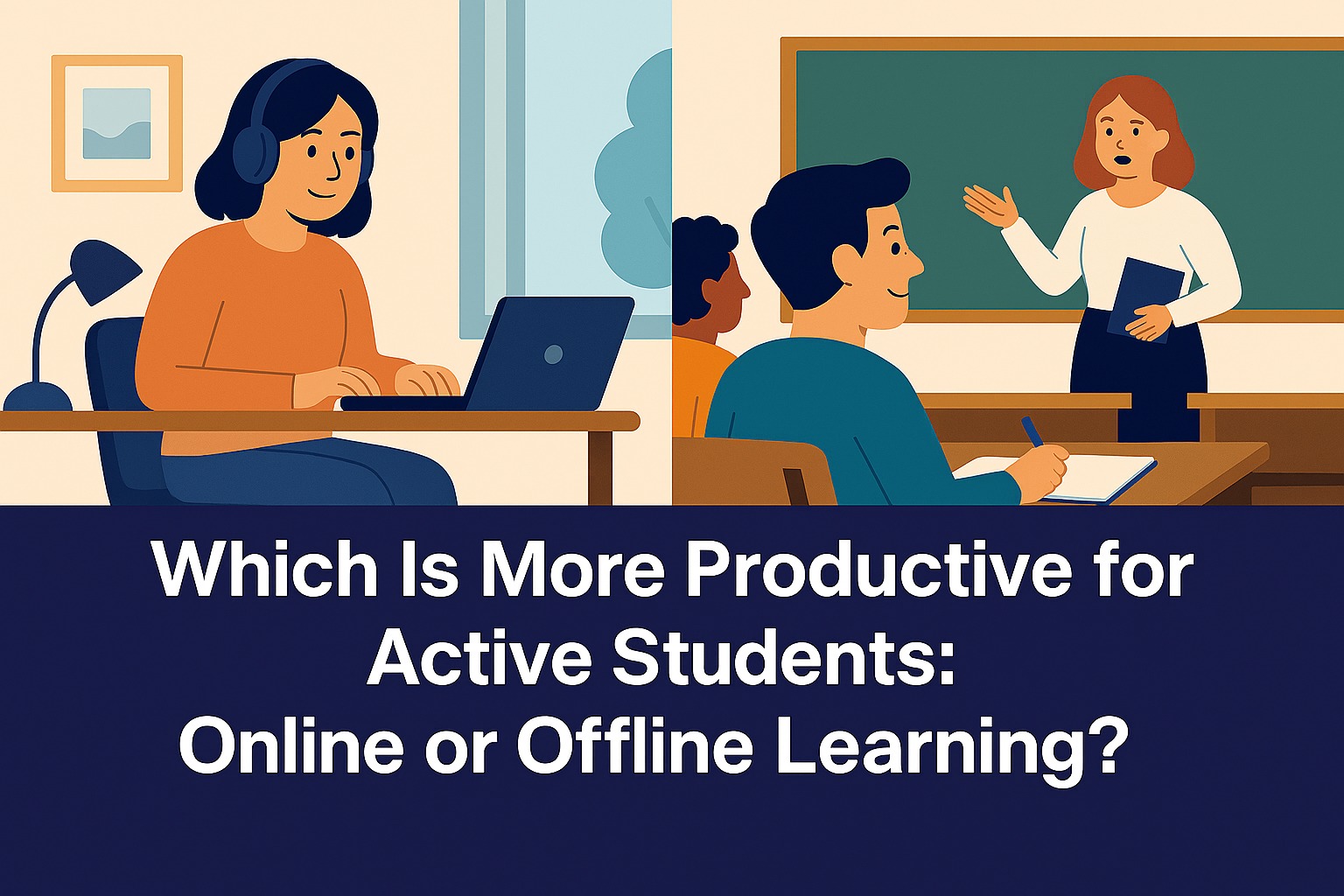
In today’s rapidly evolving educational landscape, students are offered more learning options than ever before. The growth of digital platforms has made online learning widely accessible, while traditional offline classrooms continue to play a significant role in academic development. For active students—those who participate enthusiastically, ask questions, and engage in discussions—the question becomes increasingly relevant: which learning method is more productive, online or offline learning?
Productivity in education is often measured by participation, knowledge retention, skill development, and overall academic performance. To determine which system supports active students more effectively, it is important to examine several key factors.
PARTICIPATION AND CLASSROOM INTERACTION
Offline learning environments naturally encourage direct interaction. Active students often thrive in face-to-face settings where they can raise their hands, join spontaneous discussions, and collaborate in group activities. The physical presence of teachers and peers creates a dynamic atmosphere that stimulates immediate engagement.
In contrast, online learning platforms provide digital discussion forums, live chat features, and virtual breakout rooms. For some active students, these tools offer equal or even greater opportunities to express ideas, especially for those who feel more confident typing their thoughts rather than speaking publicly.
However, the level of productivity depends on how effectively these tools are utilized. A well-managed offline classroom may generate energetic debates, while a well-structured online session can also foster meaningful interaction.
FLEXIBILITY AND TIME MANAGEMENT
Online learning offers flexible scheduling, allowing active students to organize their study time efficiently. Students who are involved in extracurricular activities, part-time jobs, or leadership roles may find online learning more productive because it enables them to balance multiple responsibilities.
With access to recorded lectures and digital materials, students can review lessons repeatedly to deepen understanding. This flexibility can enhance productivity for self-motivated learners who manage their time effectively.
On the other hand, offline learning provides a fixed routine that helps maintain discipline. Active students who benefit from structured schedules may find traditional classrooms more productive due to consistent daily engagement.
COLLABORATION AND SOCIAL ENERGY
Active students often gain motivation from social interaction. In offline learning systems, group projects, classroom debates, and peer discussions generate collaborative energy. The immediate exchange of ideas can sharpen critical thinking skills and encourage deeper analysis.
Online learning also supports collaboration through virtual group assignments and shared digital workspaces. While these tools allow teamwork across different locations, the absence of physical presence may reduce the intensity of interaction for some students.
For learners who draw energy from in-person communication, offline learning may provide a stronger sense of connection and productivity.
DISTRACTIONS AND FOCUS
Productivity is closely related to focus. Offline classrooms typically limit external distractions, helping active students maintain attention during lessons. Being physically present in an academic environment often reinforces concentration.
In online settings, distractions such as social media or household interruptions may reduce efficiency. However, disciplined and goal-oriented students can still achieve high productivity if they create structured study environments at home.
Ultimately, the ability to stay focused depends more on personal habits than the learning format itself.
CONCLUSION
Both online and offline learning offer unique advantages for active students. Offline systems provide dynamic interaction, structured routines, and strong social energy that can boost participation and engagement. Online learning, meanwhile, offers flexibility, resource accessibility, and opportunities for independent growth.
The most productive method depends on individual preferences, time management skills, and learning styles. For many active students, a blended approach that combines the strengths of both systems may deliver the highest level of productivity and academic success.
About the Author
Gusti Ayu Tita P
Author — STEKOM University
An active author focused on academic issues, educational technology, and human resource development in the campus environment.