
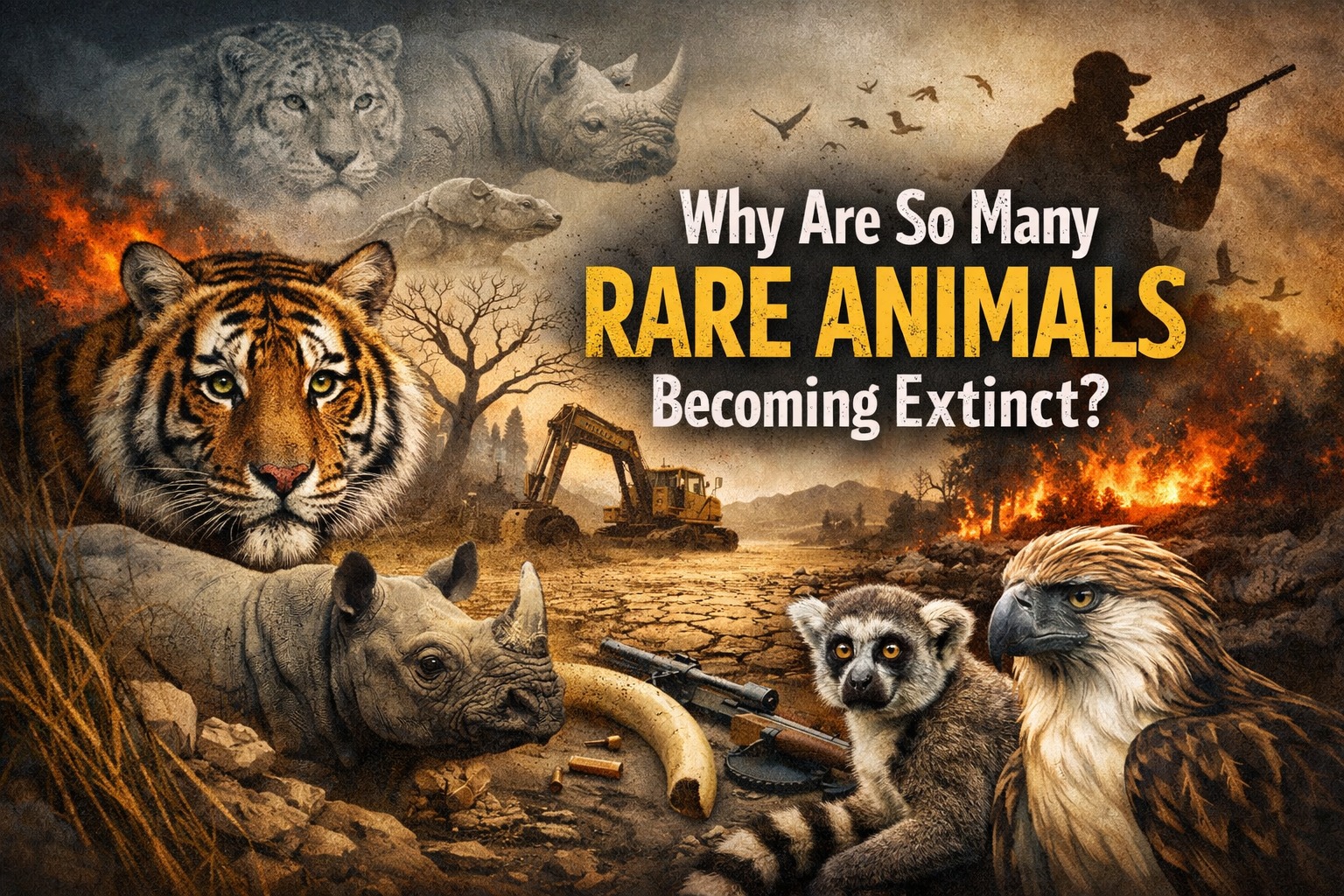
The world is home to millions of animal species, each playing an important role in maintaining the balance of nature. However, many rare animals are now facing extinction at an alarming rate. From forests to oceans, wildlife populations are shrinking due to human activities and environmental changes. If this problem continues, future generations may only know these animals through photographs and history books.
Understanding why rare animals are becoming extinct is the first step toward protecting them and preserving global biodiversity.
THE MEANING OF EXTINCTION
Extinction occurs when a species completely disappears from Earth. Once the last member of a species dies, that animal can never return naturally. Some extinctions happen over thousands of years due to natural changes, but today many species are disappearing much faster because of human influence.
Rare animals are especially vulnerable because their populations are already small. Even minor environmental changes can threaten their survival.
HABITAT DESTRUCTION IS THE BIGGEST THREAT
One of the primary reasons rare animals are becoming extinct is habitat destruction. Forests are cleared for agriculture, roads, mining, and urban development. Wetlands are drained, and oceans are polluted by industrial waste and plastic.
When animals lose their natural homes, they struggle to find food, shelter, and safe breeding areas. Species such as orangutans, tigers, and pandas are heavily affected by deforestation and land conversion.
Habitat fragmentation also creates isolated populations, making it difficult for animals to reproduce and maintain healthy genetic diversity.
ILLEGAL HUNTING AND WILDLIFE TRADE
Poaching and illegal wildlife trade continue to endanger many rare species worldwide. Animals are hunted for their fur, horns, meat, skin, or body parts that are sold at high prices.
Rhinos are targeted for their horns, elephants for ivory, and exotic birds for the pet trade. These activities dramatically reduce wildlife populations and disrupt ecosystems.
Despite international laws, illegal wildlife trafficking remains a profitable global business that threatens countless species every year.
CLIMATE CHANGE IS CHANGING ECOSYSTEMS
Climate change has become another major cause of extinction. Rising temperatures, changing rainfall patterns, melting ice caps, and stronger natural disasters affect animal survival.
Polar bears are losing sea ice habitats, while marine animals suffer from warming oceans and coral bleaching. Many species cannot adapt quickly enough to sudden environmental changes.
Climate change also affects food availability and migration patterns, increasing the risk of extinction for already endangered animals.
POLLUTION HARMS LAND AND SEA ANIMALS
Pollution damages ecosystems in many ways. Plastic waste, oil spills, pesticides, and toxic chemicals contaminate rivers, forests, and oceans.
Marine animals often mistake plastic for food, causing injury or death. Air pollution also impacts bird and insect populations, while chemicals in water can poison aquatic life.
As pollution spreads globally, even remote habitats are no longer safe for rare species.
LOSS OF BIODIVERSITY AFFECTS HUMAN LIFE
The extinction of animals does not only affect wildlife. Humans also depend on healthy ecosystems for clean air, water, food, and medicine.
When one species disappears, the entire food chain can become unstable. Pollinators such as bees and butterflies are essential for agriculture, while predators help control pest populations.
Protecting biodiversity is important for maintaining ecological balance and supporting human survival.
CONSERVATION EFFORTS CAN HELP SAVE SPECIES
Although the situation is serious, there is still hope. Many organizations, governments, and local communities are working to protect endangered animals through conservation programs.
Wildlife reserves, anti-poaching laws, breeding programs, and environmental education have helped several species recover. Public awareness and sustainable lifestyles can also reduce harm to nature.
People can contribute by reducing plastic use, supporting conservation organizations, protecting forests, and avoiding products linked to illegal wildlife trade.
CONCLUSION
Rare animals are becoming extinct because of habitat destruction, illegal hunting, climate change, pollution, and human exploitation of natural resources. If humans fail to act responsibly, many unique species may disappear forever.
Protecting wildlife is not only about saving animals but also about preserving the balance of life on Earth. Through global cooperation and environmental awareness, humanity can still help prevent further extinctions and create a safer future for all living creatures.
About the Author
Gusti Ayu Tita
Author — STEKOM University
An active author focused on academic issues, educational technology, and human resource development in the campus environment.



