
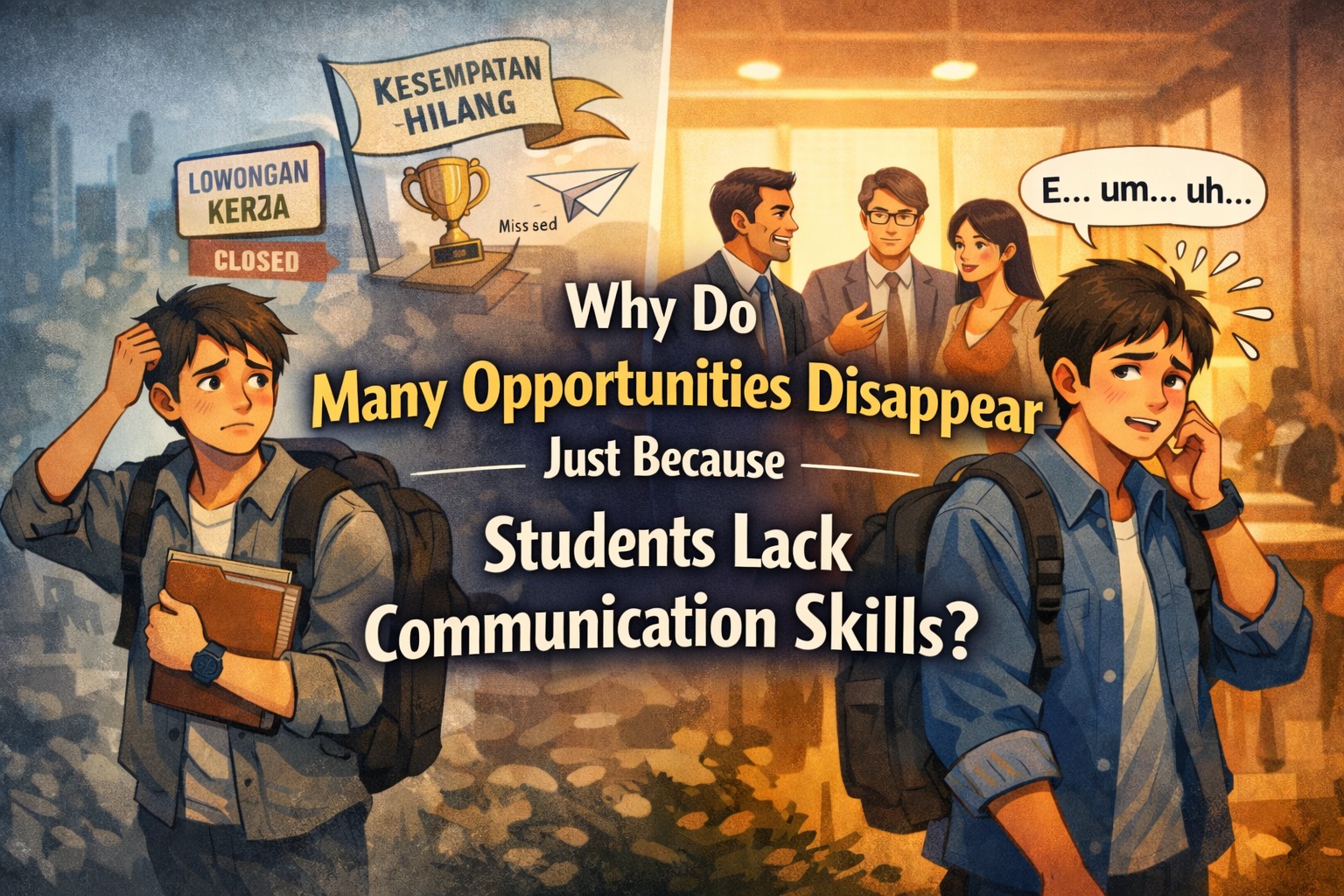
In the academic world, students often focus on gaining knowledge, achieving high grades, and completing assignments successfully. While these elements are important, another factor often determines whether students can access opportunities during and after their campus life: communication skills.
Many students have strong ideas, academic abilities, and potential, yet they struggle to express their thoughts clearly. As a result, certain opportunities—such as leadership roles, academic recognition, collaborations, or internships—may pass them by. This leads to an important question: why do many opportunities disappear just because students lack communication skills?
Understanding this issue can help students realize the importance of developing communication abilities alongside academic knowledge.
THE CONNECTION BETWEEN COMMUNICATION AND OPPORTUNITY
Opportunities often arise in environments where people exchange ideas and collaborate. On campus, students frequently participate in discussions, presentations, group projects, and academic forums.
Students who communicate clearly are usually more visible in these situations. Their ideas are easier to understand, which makes others more likely to respond, collaborate, or support their initiatives.
In contrast, students who struggle to express their thoughts may find it difficult to present their ideas effectively. Even when they have valuable insights, those ideas may remain unnoticed.
WHY COMMUNICATION SKILLS MATTER IN ACADEMIC LIFE
Communication skills influence how students interact with lecturers, classmates, and academic communities. These interactions often determine whether students are invited to join projects, research activities, or leadership roles.
For example, a student who confidently presents ideas during a discussion may gain the attention of lecturers or peers. This visibility can open doors to academic collaborations or organizational opportunities.
Without strong communication skills, students may find it harder to build these connections, even if they possess strong academic potential.
THE ROLE OF CONFIDENCE IN COMMUNICATION
Confidence plays a major role in effective communication. Students who feel comfortable expressing their ideas are more likely to participate actively in academic activities.
However, students who lack confidence in speaking or presenting may hesitate to share their thoughts. This hesitation can limit their participation in discussions and reduce the chances of their ideas being recognized.
Over time, this pattern may cause valuable opportunities to pass by simply because ideas were never clearly communicated.
DEVELOPING COMMUNICATION SKILLS AS A STUDENT
The good news is that communication skills can be improved through practice and experience. Students can begin by participating more actively in discussions, asking questions, and sharing opinions during academic activities.
Joining student organizations, presenting research projects, and engaging in collaborative learning can also strengthen communication abilities.
With consistent practice, students gradually become more confident in explaining ideas and interacting with others.
TURNING COMMUNICATION INTO A STUDENT ADVANTAGE
When students develop strong communication skills, they gain an important advantage in academic environments. Their ideas become easier to understand, their participation becomes more meaningful, and their presence becomes more noticeable.
This visibility often leads to greater academic engagement and opens the door to various opportunities that support personal and professional growth.
CONCLUSION
Many opportunities disappear not because students lack intelligence or potential, but because their ideas are not communicated effectively. Communication skills allow students to transform knowledge into influence and participation.
By strengthening their ability to express thoughts clearly and confidently, students can ensure that their ideas are heard and valued. In this way, communication becomes a powerful tool that helps students recognize and seize opportunities throughout their academic journey.
About the Author
Gusti Ayu Tita
Author — STEKOM University
An active author focused on academic issues, educational technology, and human resource development in the campus environment.



