Education has experienced significant changes in recent years, especially with the rapid development of digital technology. One of the most noticeable transformations is the rise of hybrid learning. This modern educational approach combines traditional face-to-face instruction with online learning methods, creating a flexible and efficient learning environment. Today, many schools, universities, and training institutions around the world are adopting hybrid learning as part of their long-term educational strategies.
Hybrid learning has become more than just an alternative teaching method. It is now considered one of the most effective solutions for meeting the demands of modern education in the digital era.
UNDERSTANDING HYBRID LEARNING
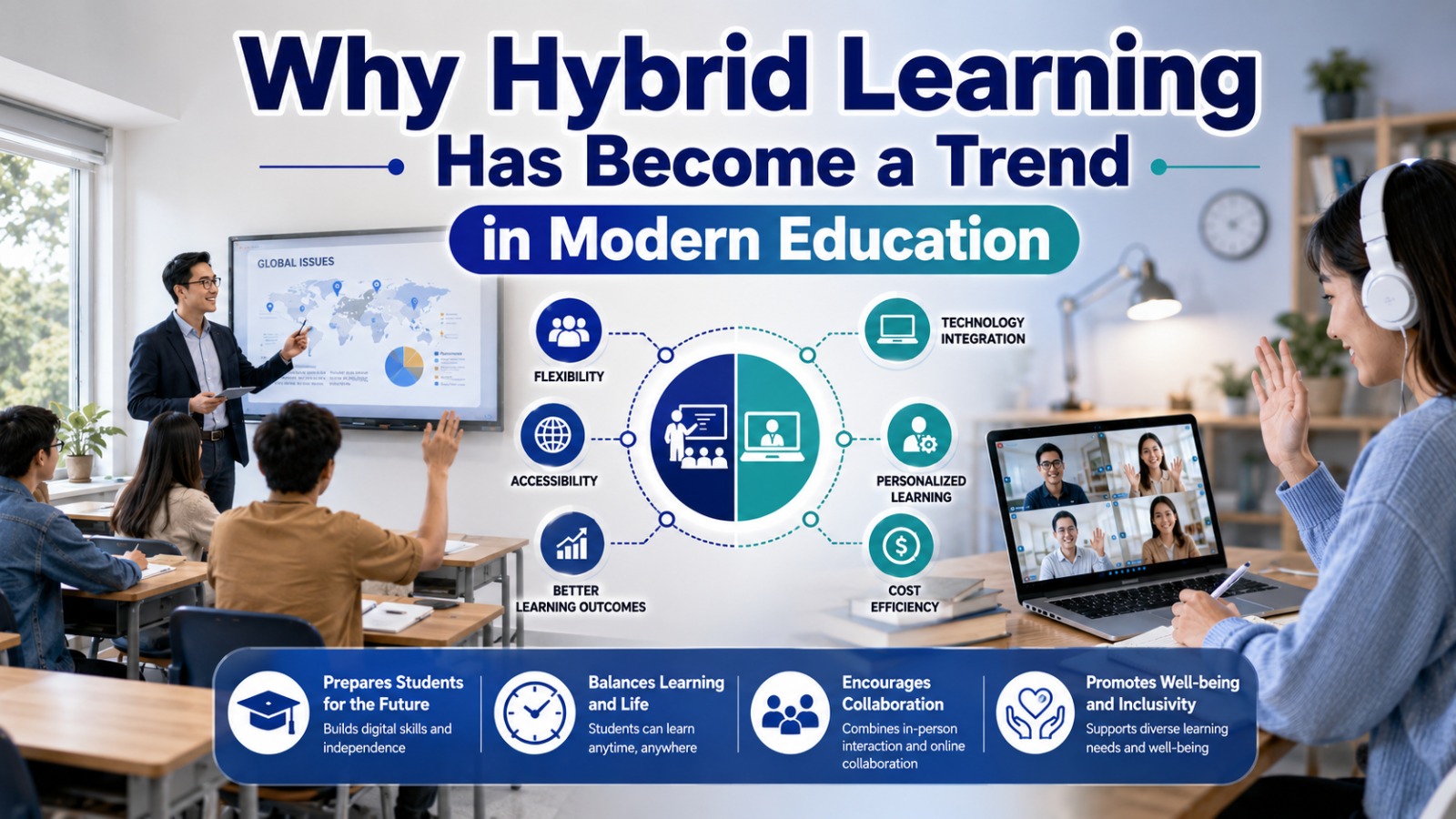
Hybrid learning is a learning model that integrates classroom-based teaching with online educational activities. In this system, students can attend physical classes while also accessing digital materials, virtual discussions, recorded lectures, and online assignments.
This combination allows educational institutions to provide a balanced learning experience. Students still benefit from direct interaction with lecturers and classmates, while also enjoying the convenience of digital learning platforms.
THE IMPACT OF TECHNOLOGY ON EDUCATION
One of the main reasons hybrid learning has become a trend is the rapid advancement of technology. The widespread use of the internet, smartphones, laptops, and educational software has changed how people access information and learn new skills.
Modern students are highly connected to technology in their daily lives. Because of this, educational institutions are adapting their teaching methods to match student behavior and technological developments. Hybrid learning provides a practical way to integrate technology into education without completely replacing traditional classrooms.
FLEXIBILITY IN THE LEARNING PROCESS
Flexibility is one of the strongest advantages of hybrid learning. Students can access lessons, assignments, and educational materials from anywhere at any time. This flexibility helps students balance academic responsibilities with personal activities, work, or family commitments.
For lecturers, hybrid learning offers more freedom in delivering lessons and organizing course materials. They can use digital tools to schedule classes, share resources, and communicate with students more efficiently.
This flexible learning model has become increasingly attractive in modern education because it supports diverse lifestyles and learning needs.
IMPROVED ACCESS TO EDUCATION
Hybrid learning has also expanded access to education. Students who live far from campus or have transportation limitations can still participate in learning activities through online platforms.
In many cases, hybrid learning reduces educational barriers by allowing students to continue studying regardless of location. This accessibility makes education more inclusive and available to a wider range of learners.
Educational institutions can also reach more students through online programs, increasing opportunities for academic growth and professional development.
ENHANCED STUDENT ENGAGEMENT
Another reason hybrid learning is trending is its ability to improve student engagement. Traditional teaching methods sometimes make students feel passive during lessons. Hybrid learning introduces interactive tools such as online quizzes, virtual discussions, multimedia presentations, and collaborative projects.
These learning activities encourage students to participate more actively in the educational process. Interactive digital content can make lessons more interesting, helping students stay motivated and focused.
The combination of online and offline interaction also supports better communication between students and lecturers.
DEVELOPMENT OF DIGITAL SKILLS
In the digital era, technological skills are essential for academic and career success. Hybrid learning helps students become familiar with digital platforms, communication tools, and online collaboration systems.
Students learn how to manage virtual meetings, submit digital assignments, and access online resources effectively. At the same time, lecturers improve their ability to use educational technology in teaching.
These digital competencies are increasingly important in modern workplaces, making hybrid learning highly relevant for future career preparation.
COST AND TIME EFFICIENCY
Hybrid learning can also reduce certain educational costs. Students may spend less money on transportation, accommodation, and printed materials because many resources are available online.
Lecturers and institutions can save time by using automated grading systems, online attendance tracking, and digital communication tools. Virtual meetings and online assignments can also simplify administrative processes.
As a result, hybrid learning offers both economic and practical advantages for educational institutions and learners.
SUPPORT FOR DIFFERENT LEARNING STYLES
Every student learns differently. Some students understand material better through visual presentations, while others prefer direct discussion or independent study.
Hybrid learning supports multiple learning styles by combining traditional teaching methods with digital learning resources. Students can review recorded lectures, participate in live discussions, or study materials independently according to their preferences.
This personalized learning experience can improve understanding and academic performance.
CHALLENGES OF HYBRID LEARNING
Despite its many advantages, hybrid learning still faces several challenges. Reliable internet access and digital devices are necessary for effective participation. Some students may struggle with technical difficulties or lack motivation during online learning sessions.
Lecturers also need to adapt to new teaching technologies and prepare engaging digital content. However, as technology continues to improve, many educational institutions are finding better ways to overcome these obstacles.
CONCLUSION
Hybrid learning has become a major trend in modern education because it offers flexibility, accessibility, efficiency, and improved learning experiences. By combining traditional classroom instruction with digital technology, hybrid learning meets the evolving needs of students and lecturers in today’s fast-changing world.
As educational technology continues to develop, hybrid learning is expected to remain an important part of the future education system. Its ability to create flexible and engaging learning environments makes it one of the most effective educational approaches in the digital age.
About the Author
Gusti Ayu Tita
Author — STEKOM University
An active author focused on academic issues, educational technology, and human resource development in the campus environment.