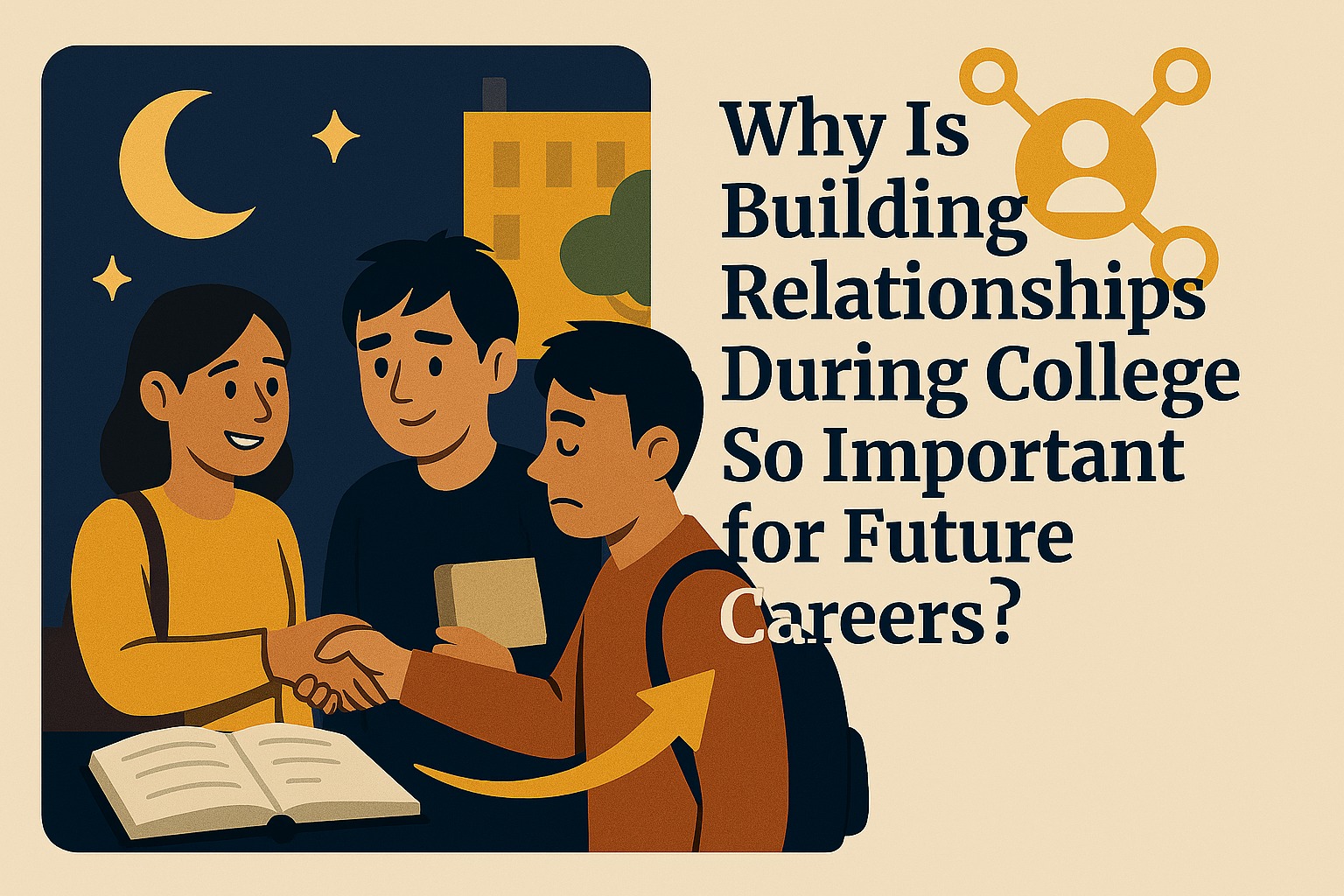
College life is not only about achieving a high GPA or finishing assignments on time. Beyond academics, there is an important factor that often determines success after graduation: building relationships during college. Many fresh graduates realize that the connections they made while studying play a major role in opening career opportunities.
So, why is building relationships during college so important for your future career? This article explains the benefits in detail and how to start effectively.
RELATIONSHIPS AS SOCIAL CAPITAL IN THE PROFESSIONAL WORLD
In the professional world, technical skills alone are often not enough. Relationships function as social capital that helps someone gain information, recommendations, and career opportunities.
Classmates, lecturers, alumni, and even seminar speakers can become valuable connections. When someone actively builds good relationships during college, they gain broader access to internship opportunities, collaborative projects, and even job openings that are not always publicly advertised.
EXPANDING INSIGHT AND EXPERIENCE
Building relationships during college also helps students broaden their perspectives. Discussions with peers from different backgrounds can open new viewpoints. Joining campus organizations or professional communities also enriches experiences outside the classroom.
Having diverse connections makes students more adaptable and ready to face workplace dynamics. Interacting with many people also trains communication skills, which are highly needed in professional careers.
INCREASING INTERNSHIP AND JOB OPPORTUNITIES
Many career opportunities come from recommendations or internal information. Students who actively maintain good relationships with lecturers and alumni often receive early information about internship programs or recruitment opportunities.
In addition, well-maintained connections can build trust. A recommendation from someone who knows a person’s competence and work ethic carries more value in the eyes of employers.
In other words, relationships built during college can serve as a bridge into the professional world.
DEVELOPING SOFT SKILLS COMPANIES NEED
The ability to build relationships is closely related to soft skills such as communication, empathy, teamwork, and leadership. These skills are highly sought after by companies.
Through active interactions on campus, students learn how to deal with differences of opinion, resolve conflicts, and work in teams. These experiences become important preparation for adapting to a dynamic workplace.
STRATEGIES TO BUILD RELATIONSHIPS DURING COLLEGE
To build high-quality relationships, students can take the following steps:
1. Actively join campus organizations or communities.
2. Participate in seminars, workshops, and professional activities.
3. Maintain good communication with lecturers and alumni.
4. Build a positive image through professionalism and consistency.
5. Use professional platforms to expand your network.
Strong relationships are not built overnight, but through sincere and continuous interaction.
CONCLUSION
Building relationships during college is very important for your future career because it becomes social capital that opens opportunities and broadens insight. Besides increasing job opportunities, relationships also help develop soft skills needed in the professional world.
Career success is not only determined by academic scores, but also by the ability to build positive and productive relationships. Therefore, use your college years not only to study in class, but also to build a network that will benefit you in the future.
About the Author
Gusti Ayu Tita P
Author — STEKOM University
An active author focused on academic issues, educational technology, and human resource development in the campus environment.