
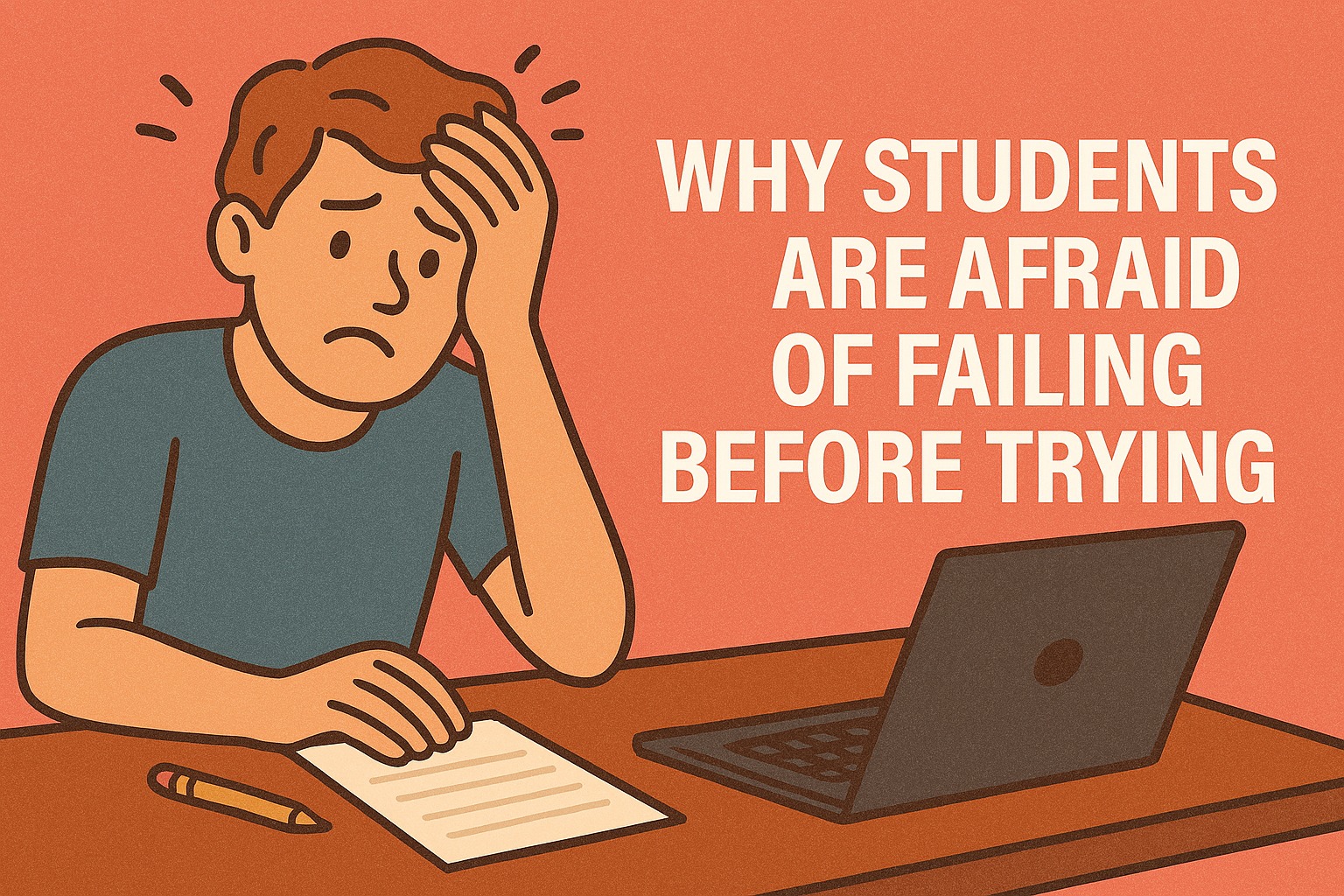
Fear of failure is one of the most common psychological barriers faced by students today. Instead of motivating effort, this fear often stops students from even taking the first step. In academic settings that emphasize achievement and comparison, many students choose avoidance over action because the possibility of failing feels overwhelming.
This article explores the main reasons why students are afraid of failing before trying, how this fear affects their academic journey, and what can be done to overcome it.
THE PRESSURE TO ALWAYS SUCCEED
From an early age, many students are taught that success is the ultimate goal. High grades, awards, and academic recognition are often praised more than effort or progress. As a result, students may associate their self-worth with outcomes rather than learning.
When success becomes an obligation instead of a goal, failure feels unacceptable. Students begin to believe that making mistakes means they are not smart or capable enough. This mindset creates intense pressure that discourages experimentation and risk-taking.
FEAR OF JUDGMENT AND COMPARISON
Campus and school environments can amplify fear through constant comparison. Students regularly measure themselves against classmates, friends, or even online representations of success. Social media further reinforces the idea that everyone else is doing better, achieving more, and failing less.
This fear of being judged—by peers, lecturers, or family—can be stronger than the desire to try. Many students worry that failure will lead to embarrassment, disappointment, or loss of respect, even though failure is a normal part of learning.
PERFECTIONISM AND UNREALISTIC STANDARDS
Perfectionism is a major reason students hesitate to try. When students believe their work must be flawless, starting a task becomes intimidating. They may delay assignments, avoid challenges, or overprepare out of fear that the result will not meet their own high standards.
Unrealistic expectations often come from past experiences, such as being labeled “the smart one” or consistently achieving high results. Over time, students may fear that one failure will erase their identity as a successful learner.
PAST EXPERIENCES WITH FAILURE
Negative past experiences can leave a lasting emotional impact. A poor grade, public criticism, or repeated academic struggles may cause students to associate effort with disappointment. Instead of viewing failure as feedback, they begin to see it as proof of inability.
This emotional memory makes students more cautious. To protect themselves from feeling hurt again, they avoid situations where failure is possible—even if it means missing valuable learning opportunities.
LACK OF A GROWTH MINDSET
Students who lack a growth mindset often believe that intelligence and ability are fixed traits. In this perspective, failure is not seen as part of improvement but as evidence of limitation. This belief makes trying feel risky because the outcome seems permanent.
Without understanding that skills can be developed through practice, students may assume that failing once means failing forever. This belief strengthens fear and reduces motivation to try.
ACADEMIC AND EMOTIONAL CONSEQUENCES
Fear of failing before trying has serious consequences. Academically, it can lead to procrastination, avoidance of challenges, and limited participation in class. Emotionally, students may experience anxiety, low confidence, and constant self-doubt.
Over time, this fear can restrict personal growth. Students miss chances to discover their strengths, build resilience, and develop independence—all essential aspects of education.
HOW STUDENTS CAN OVERCOME THE FEAR
Overcoming fear of failure starts with changing perspective. Students can learn to see failure as part of the learning process rather than a final judgment. Small, consistent actions help rebuild confidence and reduce fear.
Helpful strategies include:
- Setting realistic and flexible goals
- Focusing on effort instead of outcomes
- Reflecting on mistakes as learning experiences
Support from lecturers, peers, and academic communities also plays an important role in creating a safe environment for growth.
CONCLUSION
Students are afraid of failing before trying because of pressure, comparison, perfectionism, and negative beliefs about failure. While these fears are understandable, they can limit both academic success and personal development.
By redefining failure as a step toward improvement, students can regain the courage to try. Education should not be about avoiding mistakes, but about learning, growing, and becoming stronger through experience.
About the Author
Gusti Ayu Tita
Author — STEKOM University
An active author focused on academic issues, educational technology, and human resource development in the campus environment.



