
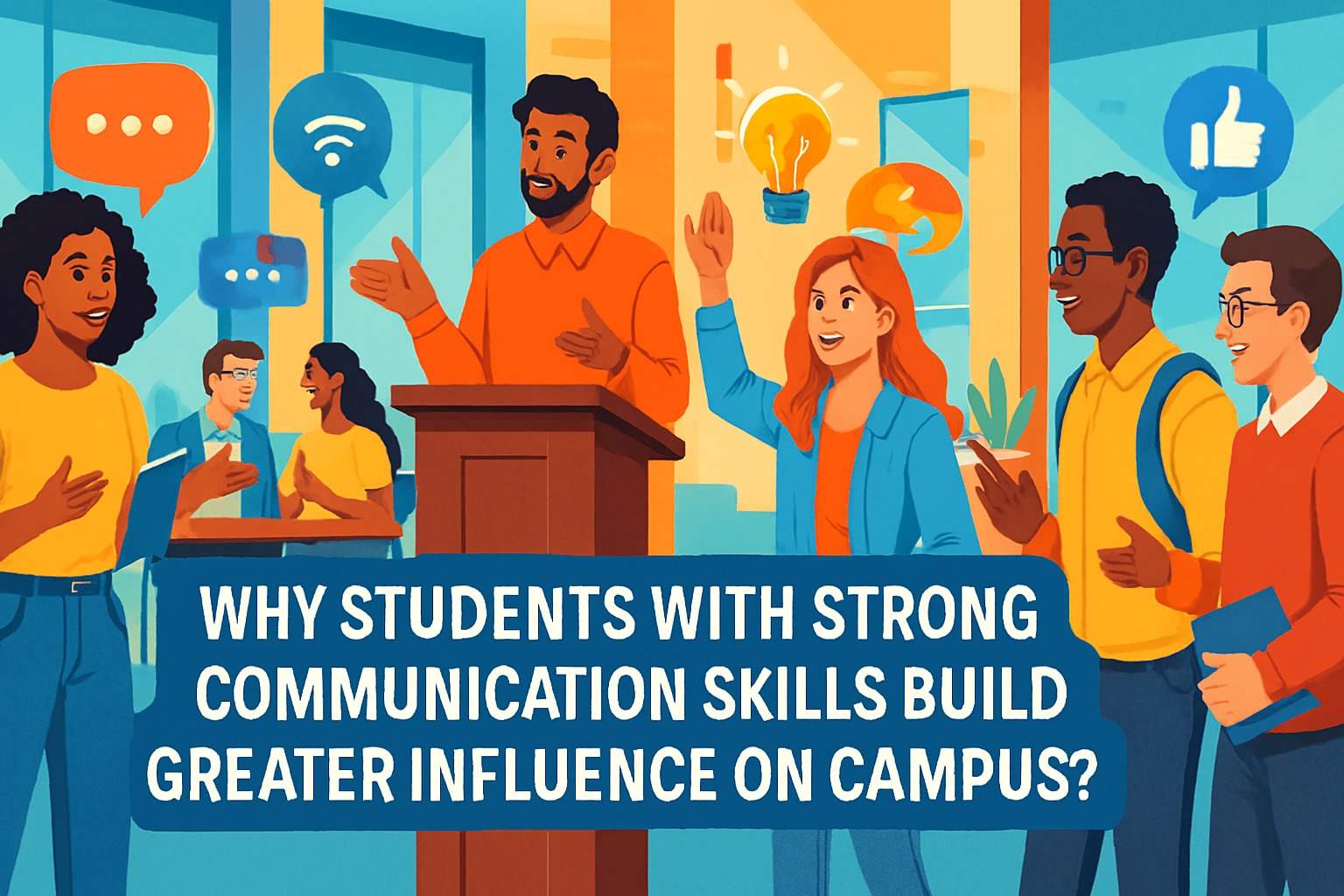
In a campus environment, a student’s influence is not always determined solely by academic grades. Many students are able to make a significant impact on campus because they possess the ability to express ideas clearly and convincingly. Strong communication skills are often a key factor that enables students to become more influential in various academic and organizational activities.
Students who can communicate effectively usually find it easier to present ideas, lead discussions, and build relationships with multiple stakeholders on campus. This ability allows them not only to participate in academic activities but also to drive thought and collaboration among those around them.
THE ROLE OF COMMUNICATION IN ACADEMIC LIFE
Communication is an essential part of student activities on campus. In the learning process, students are often involved in activities that require speaking and discussion skills, such as class presentations, group discussions, and seminars.
Students with strong communication skills are able to present ideas in a structured and understandable manner. This makes their ideas more easily accepted by the audience.
Additionally, effective communication helps create more active discussions. When students express their opinions clearly, the exchange of ideas in academic spaces becomes more dynamic.
COMMUNICATION AS A MEANS OF BUILDING INFLUENCE
Influence on campus is often shaped by a person’s ability to convey ideas that can inspire or motivate others. Students who communicate well usually capture attention more easily in discussions or academic forums.
When ideas are presented clearly and supported by logical arguments, others are more open to understanding and considering them. This is where influence begins to develop.
Students who actively speak and share ideas often become catalysts for various campus activities. They are able to motivate their peers to participate and collaborate toward shared goals.
CHARACTERISTICS OF STUDENTS WITH STRONG COMMUNICATION SKILLS
Students with strong communication skills typically exhibit several notable characteristics. One is the ability to present ideas clearly and concisely.
They are also good listeners. Listening carefully helps them understand others’ perspectives before responding.
Openness to different viewpoints is another key trait. Students who respect differing opinions can create a healthier and more productive discussion environment.
These characteristics make communication not just a way of speaking but also a tool to build strong intellectual relationships on campus.
BENEFITS OF COMMUNICATION SKILLS FOR STUDENTS
Strong communication skills provide several benefits for students throughout their college life. One of the main advantages is increased confidence in expressing their thoughts.
Students who regularly communicate actively are better prepared to handle various academic situations, such as presentations, scientific discussions, and organizational activities.
Moreover, communication skills help students expand their social and collaborative networks. Relationships built through effective communication can open up opportunities for personal and academic growth.
In the future, these skills also become essential as students enter the professional world, where the ability to collaborate and convey ideas effectively is highly valued.
DEVELOPING COMMUNICATION SKILLS DURING COLLEGE
Communication skills can be developed through various experiences during college. Students can start by actively participating in class discussions and asking questions or providing feedback on the topics being discussed.
Joining student organizations is another effective way to practice communication. Within organizations, students are often involved in activities that require both speaking and collaboration with others.
The more frequently students practice communicating, the more they develop the ability to present ideas clearly and confidently.
About the Author
Gusti Ayu Tita
Author — STEKOM University
An active author focused on academic issues, educational technology, and human resource development in the campus environment.



