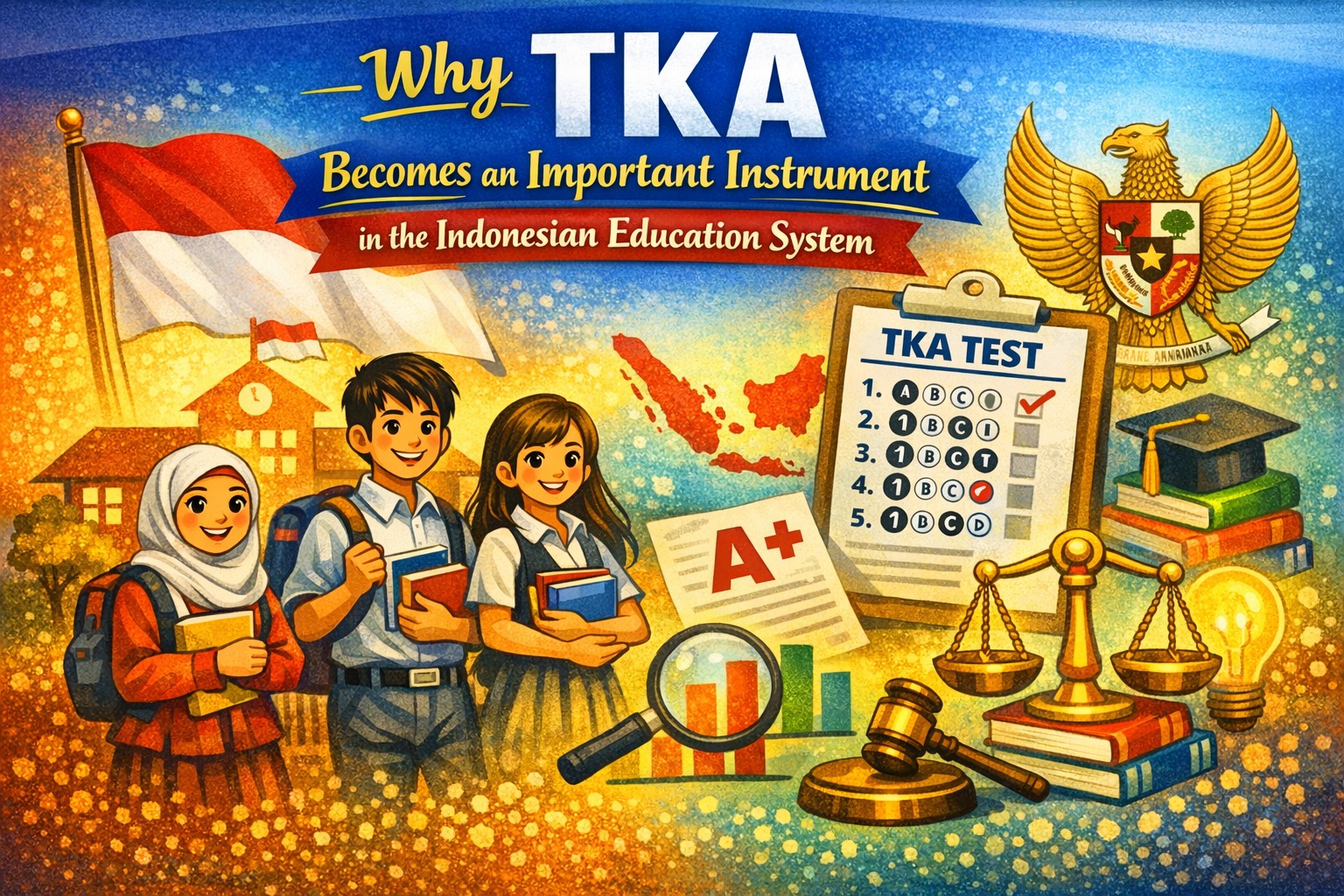
The Academic Competency Test, widely known as TKA, has emerged as a significant instrument in the Indonesian education system. As the country continues to improve the quality of its education, having a reliable and standardized method to measure student achievement is essential. TKA provides a structured framework that allows educators to evaluate students’ academic abilities in a consistent and measurable way across different regions and levels of education.
In addition, TKA plays a crucial role in aligning educational outcomes with national standards. By implementing this assessment, schools and policymakers can ensure that students are meeting the expected competencies required for their level. This not only enhances the credibility of the education system but also supports long-term efforts to improve learning quality and global competitiveness.
ENSURING STANDARDIZED ACADEMIC ASSESSMENT
One of the primary reasons TKA is important is its role in ensuring standardized academic assessment. In a diverse country like Indonesia, differences in educational quality can occur between regions. TKA helps minimize these disparities by providing a uniform benchmark that all students must meet, regardless of their background or location.
Standardization also supports fairness in evaluating student performance. With clear and consistent criteria, teachers and institutions can assess students objectively. This reduces the risk of bias and ensures that all students are judged based on the same academic standards, creating a more equitable system.
Furthermore, standardized assessment allows for better comparison of educational outcomes. Schools can evaluate their performance relative to others and identify areas for improvement. This encourages healthy competition and motivates institutions to continuously enhance their teaching practices.
SUPPORTING DATA DRIVEN EDUCATIONAL POLICY
TKA provides valuable data that can be used to support data driven educational policy. The results of the test offer insights into student performance at various levels, helping policymakers understand the strengths and weaknesses of the education system. This information is essential for making informed decisions.
With accurate data, the government can design targeted programs to address specific challenges. For example, if TKA results indicate low performance in certain subjects, additional resources and training can be allocated to improve those areas. This ensures that educational policies are effective and relevant.
Moreover, data from TKA can be used to monitor progress over time. By analyzing trends, policymakers can evaluate whether implemented strategies are successful or need adjustment. This continuous improvement approach helps maintain the quality and relevance of education in Indonesia.
ENCOURAGING STUDENT COMPETENCY DEVELOPMENT
TKA also plays a significant role in encouraging student competency development. By setting clear academic standards, students are motivated to achieve specific learning goals. This helps them develop a sense of responsibility and discipline in their studies.
In addition, TKA promotes the development of essential skills such as critical thinking, problem solving, and analytical reasoning. These competencies are crucial for success not only in school but also in higher education and future careers. Through regular assessment, students become more familiar with applying their knowledge in practical situations.
Furthermore, TKA helps students identify their strengths and areas for improvement. With this awareness, they can focus on enhancing their abilities and overcoming challenges. This process supports continuous learning and personal growth, which are essential in a rapidly changing world.
PREPARING STUDENTS FOR FUTURE EDUCATION PATHS
Another important aspect of TKA is its role in preparing students for future education paths. As students progress through different levels of education, they face increasing academic challenges. TKA helps them build the necessary skills and confidence to succeed in these transitions.
Early exposure to structured assessments also helps students adapt to more complex evaluation systems in higher education. They become more comfortable with exams and develop effective study habits. This preparation reduces stress and improves performance in future academic endeavors.
Additionally, TKA results can serve as a reference for educational institutions when making decisions about student placement. By providing a clear measure of academic ability, TKA helps ensure that students are placed in programs that match their skills and potential.
PROMOTING EQUITY AND QUALITY IN EDUCATION
Equity and quality are key goals of any education system, and TKA contributes significantly to both. By providing a standardized assessment, TKA ensures that all students have equal opportunities to demonstrate their abilities. This is particularly important in a country with diverse socio economic backgrounds.
TKA also helps identify gaps in educational quality between different regions or groups of students. With this information, targeted interventions can be implemented to address inequalities. This ensures that all students receive the support they need to succeed.
Moreover, improving educational quality through TKA benefits the nation as a whole. A well educated population is essential for economic growth and social development. By strengthening assessment systems, Indonesia can build a more competitive and sustainable future.
CONCLUSION
In conclusion, TKA has become an important instrument in the Indonesian education system due to its ability to standardize assessment, support data driven policies, encourage competency development, prepare students for future education, and promote equity and quality. Its role goes beyond evaluation, serving as a foundation for continuous improvement in education.
As Indonesia continues to develop its education system, the importance of TKA will only grow. By effectively implementing and utilizing this assessment tool, the country can ensure that students are well prepared to meet future challenges and contribute to national progress.
About the Author
Gusti Ayu Tita
Author — STEKOM University
An active author focused on academic issues, educational technology, and human resource development in the campus environment.