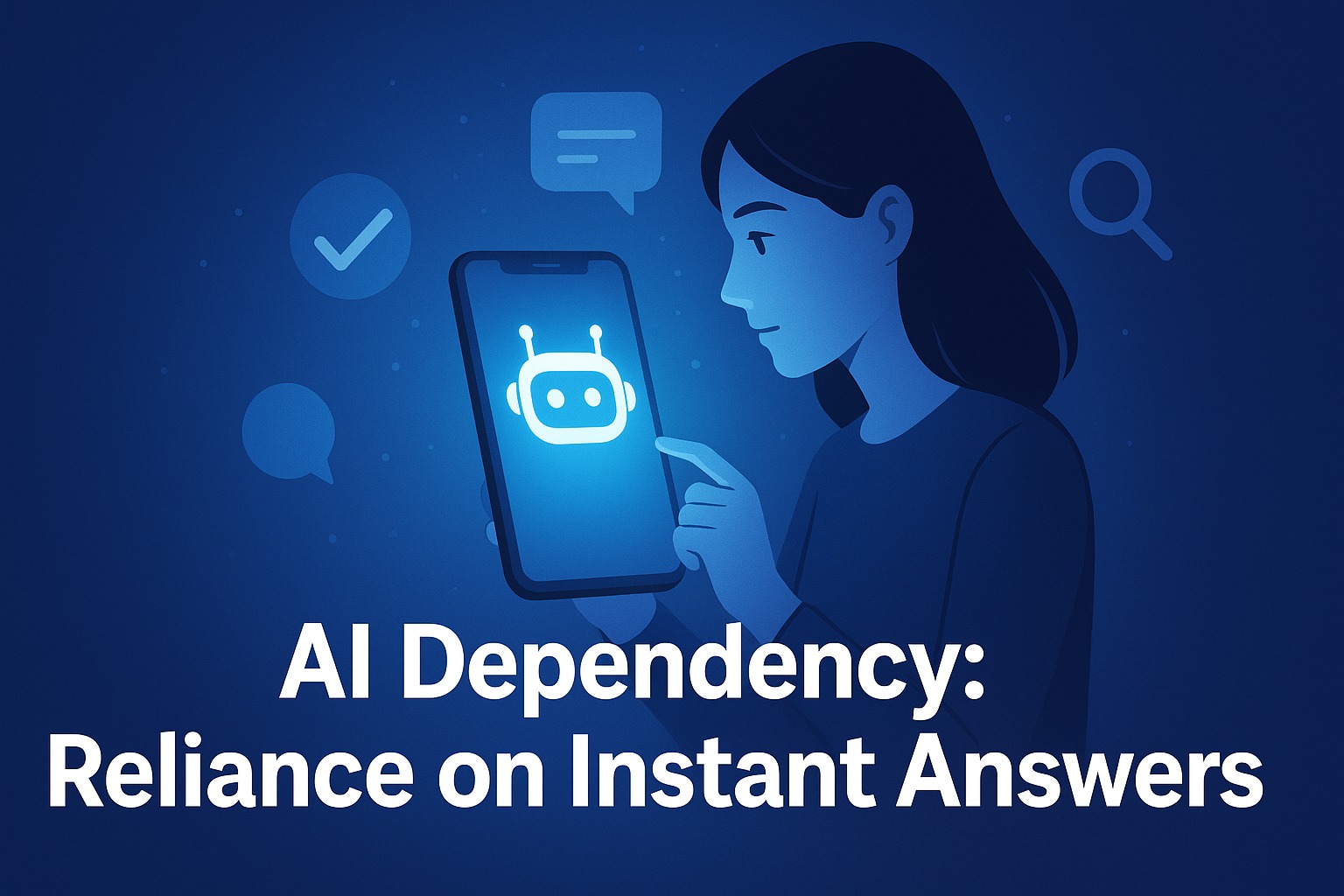
In an era of increasingly advanced artificial intelligence, finding answers to various questions has become easier than ever. With just a single query, we can obtain comprehensive information within seconds. However, this convenience also brings a new phenomenon: AI dependency, a condition in which someone becomes overly reliant on instant answers from technology, reducing their ability to think, analyze, or solve problems independently.
This dependency is not only experienced by general users, but also by students, workers, and even professionals who begin relying on AI to make decisions, compose content, or carry out daily tasks. This article discusses how AI dependency forms, what risks it carries, and how to maintain balance in using technology.
DEFINITION OF AI DEPENDENCY
AI dependency refers to the tendency to rely excessively on artificial intelligence to answer questions, make decisions, or perform tasks. While using AI offers convenience and efficiency, excessive reliance can weaken critical thinking skills and hinder the development of analytical abilities.
This phenomenon arises due to usage patterns that emphasize speed and practicality. Technology makes everything feel instant, causing the brain to no longer be accustomed to working hard to find answers. As a result, dependency forms without being noticed.
CAUSES OF AI DEPENDENCY
AI dependency usually develops through a combination of technological and psychological factors, including:
Easy Access to Information
AI provides answers within seconds. This convenience leads the brain to choose the easiest route—avoiding longer, more complex thinking processes.
Fear of Making Mistakes
Many people believe AI is more accurate than their own ability. This pushes them to rely on AI to make decisions in order to avoid errors.
Mental Fatigue
Amid busy routines, getting instant answers feels more efficient than conducting manual research. Over time, this habit becomes a pattern of dependency.
NEGATIVE IMPACTS OF AI DEPENDENCY
Excessive dependency can bring several mental and social consequences.
Declining Critical Thinking Skills
Constant reliance on AI makes people analyze information less deeply. In the long run, problem-solving abilities may weaken.
Loss of Creativity
Creativity arises from the process of thinking, experimenting, and exploring. If all answers come instantly, the space for exploration becomes narrower.
Lack of Independence in Decision-Making
AI can help, but it does not always understand emotional context or personal values. If someone always follows AI’s answers, they may lose confidence in making their own choices.
HOW TO REDUCE AI DEPENDENCY
To continue using technology in a healthy way, here are several steps that can be taken:
1. Use AI as a Tool, Not the Main Decision-Maker
Treat AI as a support system, not the sole source of truth. Use its output to enrich your perspective, not replace it.
2. Practice Independent Thinking
Try solving problems on your own before asking AI. This helps train the brain to stay critical and creative.
3. Limit Daily Usage
Set daily limits or use AI only when necessary. This helps the mind stay active without relying on instant answers.
CONCLUSION
AI dependency has become a new phenomenon emerging alongside technological advancement. While easy access to information offers many benefits, excessive reliance can weaken critical thinking, creativity, and independence. By positioning AI as a supportive tool rather than the primary decision-maker, we can use technology wisely while maintaining the quality of our intellectual abilities.
Tentang Penulis
Gusti Ayu Tita
Penulis — Universitas STEKOM
Penulis aktif yang berfokus pada isu-isu akademik, teknologi pendidikan, dan pengembangan sumber daya manusia di lingkungan kampus.