1. Aligning the Curriculum with Industry Needs
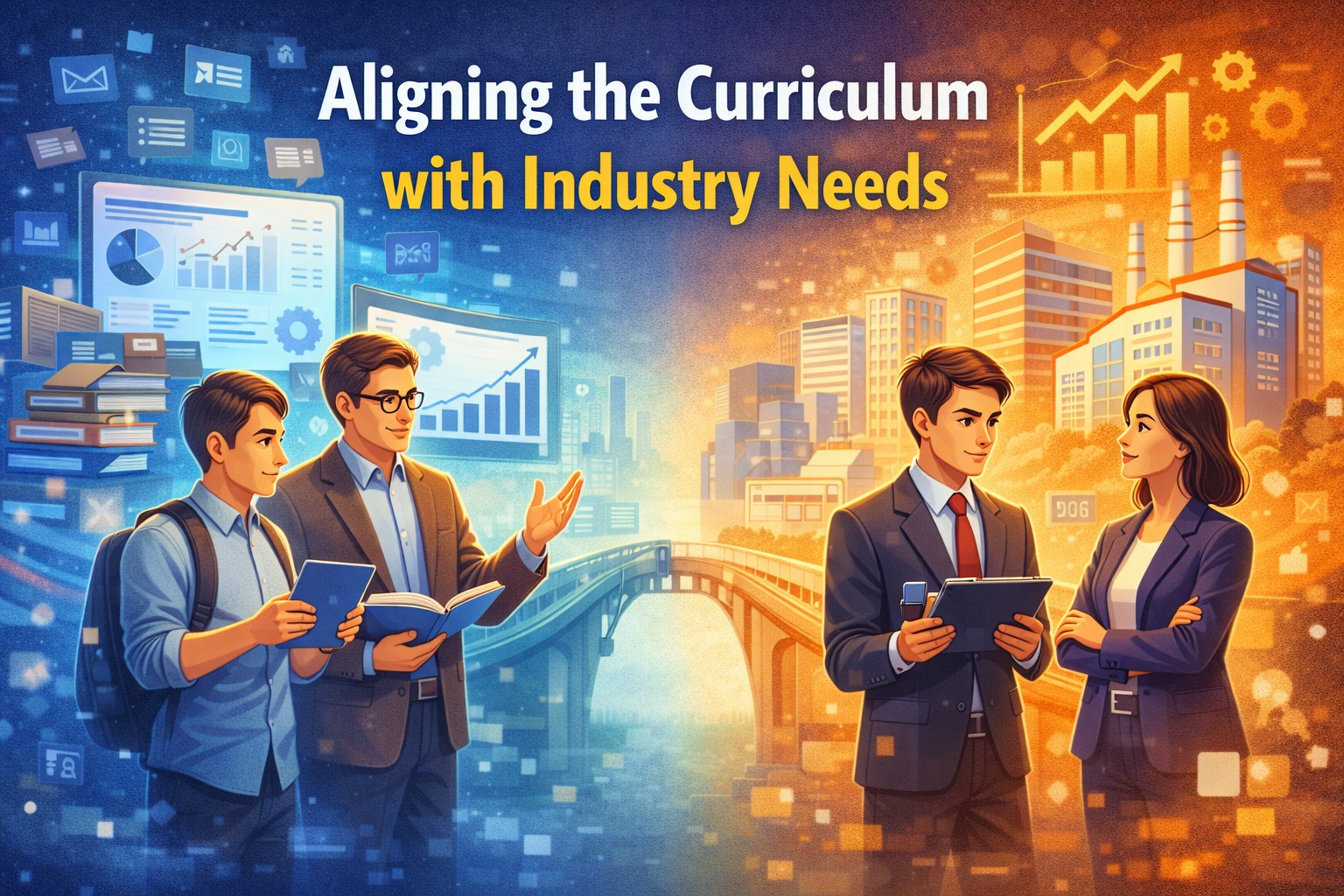
One of the main steps is aligning the education curriculum with the needs of the industry. The curriculum should not focus solely on theory but must also incorporate practical learning, real-world case studies, and the use of up-to-date technologies applied in the workplace.
With a relevant curriculum, students can understand the practical application of knowledge directly and avoid competency gaps upon graduation.
2. Strengthening Internship and Work Placement Programs
Internship programs serve as a concrete bridge between universities and industry. Through internships, students can experience professional work environments firsthand, understand industry culture, and develop skills required by companies.
Well-structured and relevant internship programs help students build work experience while increasing graduates’ competitiveness in the job market.
3. University–Industry Collaboration in Learning
Collaboration between higher education institutions and industry is essential in producing graduates who meet market demands. This collaboration may include guest lectures by industry practitioners, collaborative projects, applied research, and direct mentoring by industry professionals.
Through such collaboration, students gain real insights into challenges and opportunities in the professional world.
4. Developing Students’ Skills and Competencies
In addition to academic knowledge, students must be equipped with supporting skills such as communication, teamwork, problem-solving, and technological adaptability. Industry requires graduates who are not only strong in theory but also capable of working effectively in teams and adapting to change.
These skills can be developed through student organizations, training programs, and project-based activities.
5. The Role of Universities in Building Professional Mindset and Work Ethics
Universities play a vital role in shaping students’ mindset and work ethics. Discipline, responsibility, integrity, and professionalism are values that are highly demanded in the professional world.
By fostering character development during their university years, students will be better prepared to face workplace pressure, performance targets, and professional demands.
Conclusion
Bridging the gap between universities and industry is not solely the responsibility of students, but also of educational institutions and industry stakeholders. Through relevant curricula, internship programs, active collaboration, skill development, and professional character building, university graduates can become job-ready and competitive human resources.
Strong synergy between universities and industry will create brighter and more sustainable career futures for students.
Tentang Penulis
Gusti Ayu Tita
Penulis — Universitas STEKOM
Penulis aktif yang berfokus pada isu-isu akademik, teknologi pendidikan, dan pengembangan sumber daya manusia di lingkungan kampus.