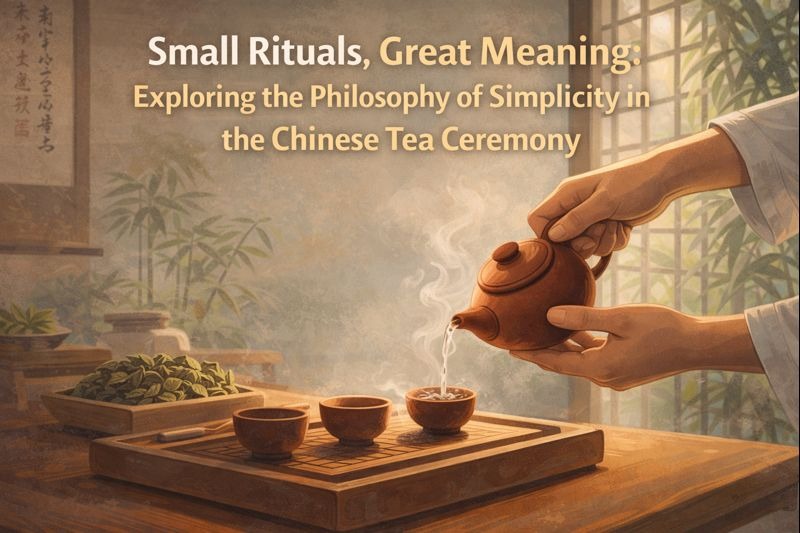
In a fast-paced world, people often forget how it feels to pause and truly be present. Amid this busyness, the Chinese tea ceremony emerges as a seemingly simple tradition with profound meaning. Through calm movements, minimal tools, and mindful processes, this ritual teaches that simplicity is not a lack, but a path toward inner peace and deeper self-understanding.
THE ORIGINS OF THE CHINESE TEA CEREMONY
The Chinese tea ceremony has roots stretching back thousands of years. Initially used as a medicinal drink, tea later became an integral part of social and cultural life. Over time, brewing and serving tea evolved into a ritual reflecting life values.
THE PHILOSOPHY OF SIMPLICITY IN EVERY PROCESS
Simplicity lies at the heart of the Chinese tea ceremony. The absence of excessive decoration highlights the beauty of restraint.
Key values include mindfulness, balance, and humility, conveyed through experience rather than words.
SYMBOLIC MEANING OF TEA UTENSILS
Small teapots and cups encourage slow enjoyment, while natural materials symbolize harmony between humans and nature, aligning with Taoist and Confucian philosophy.
THE TEA CEREMONY AS A REFLECTION OF LIFE
Hot water symbolizes challenges, tea leaves represent individuals, and brewing reflects personal transformation through time and experience.
RELEVANCE IN THE MODERN ERA
In today’s high-pressure world, the tea ceremony’s philosophy teaches the importance of slowing down, appreciating the process, and maintaining balance.
CONCLUSION
The Chinese tea ceremony proves that small rituals can hold great meaning. Within its simplicity lies wisdom about mindfulness, balance, and humility—guidance for living a more meaningful life.
Tentang Penulis
Gusti Ayu Tita
Penulis — Universitas STEKOM
Penulis aktif yang berfokus pada isu-isu akademik, teknologi pendidikan, dan pengembangan sumber daya manusia di lingkungan kampus.