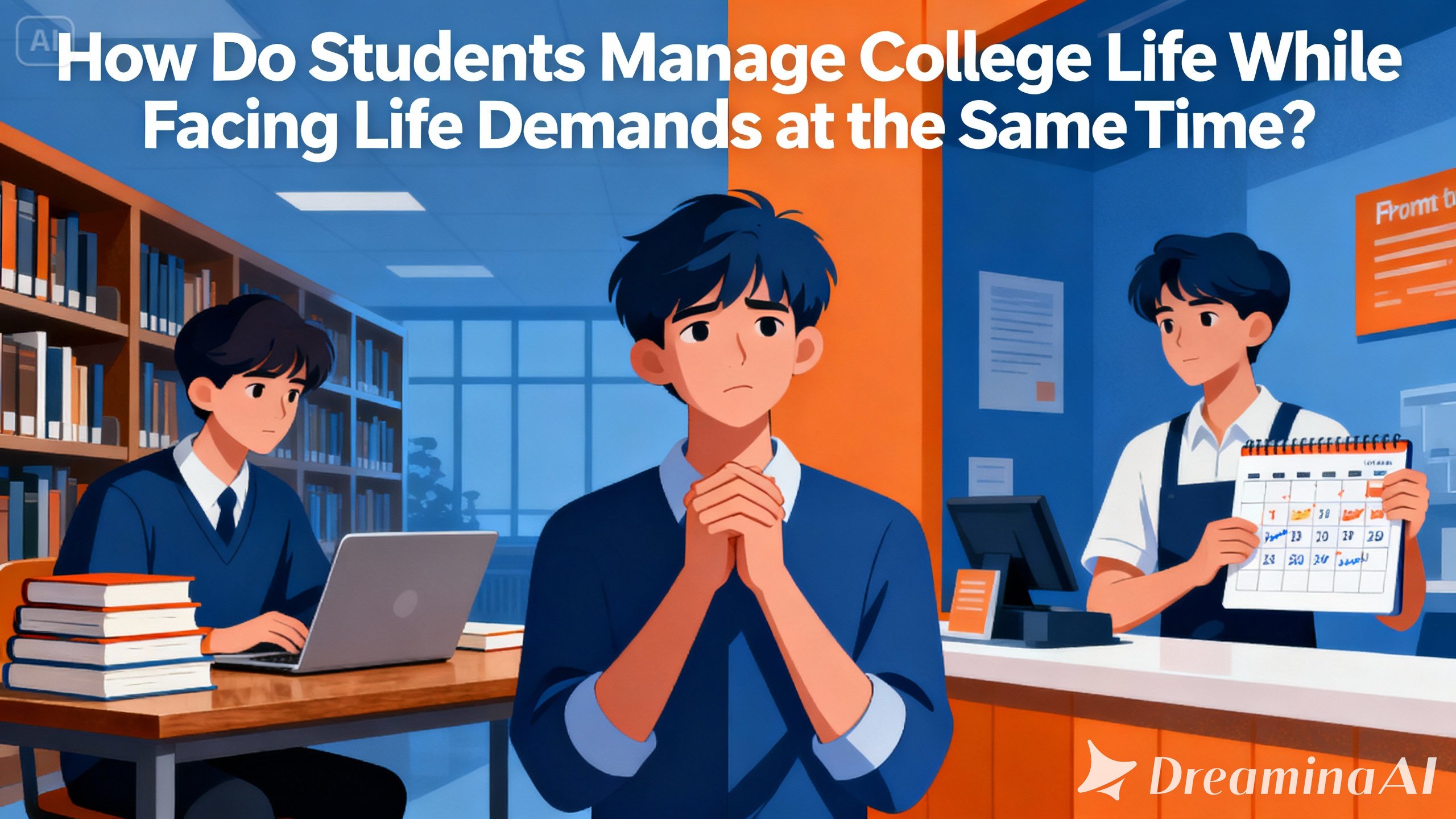
For many people, college is still imagined as a calm period of attending classes, completing assignments, and going home. In reality, for most students today, this image has long collapsed. Life demands come simultaneously with academic demands—without warning and without compromise.
Students are not only studying to graduate but also working to survive. The question is no longer whether this situation is ideal, but how students actually live it in real conditions.
SURVIVAL STRATEGIES USED BY STUDENTS
1. Strict Time Management, Not Just Theory
Students who face dual demands do not have the luxury of procrastination. Time is managed not based on productivity theories, but on the most urgent needs. College, work, and rest must share time realistically.
2. Lowering Expectations Without Losing Direction
Many students learn to accept that they cannot be perfect in everything. Grades still matter, but survival and consistency are far more crucial. This is not about laziness, but about setting priorities to avoid burnout.
3. Utilizing Available Flexibility
Working students often take advantage of flexible options: online classes, negotiable deadlines, or part-time jobs with adaptable schedules. They learn to understand the system rather than fight it head-on.
COLLEGE AND LIFE CAN NO LONGER BE SEPARATED
In the past, life seemed to begin after graduation. Today, life demands begin from the very first semester. Tuition fees, daily needs, family responsibilities, and economic pressures force many students to live in two worlds simultaneously.
Under these conditions, college is no longer a sterile, standalone activity. It blends with real-life realities—work schedules, physical exhaustion, and limited time. Students learn not in ideal conditions, but in available ones.
CONFLICT WITH THE EDUCATION SYSTEM
Unfortunately, higher education systems are often not designed for this reality. Rigid academic calendars, strict attendance policies, and uniform workloads assume that all students live under the same conditions.
As a result, students facing life demands are often labeled as undisciplined or uncommitted. In reality, what occurs is a clash between outdated systems and new realities.
THE INVISIBLE MENTAL BURDEN
Balancing college with life demands is not only physically exhausting—it also carries an unseen mental burden:
- Guilt from being unable to focus fully
- Persistent financial anxiety
- Pressure to appear “fine” at all times
Many students endure this silently, not because it is easy, but because there is no space to express it.
CONCLUSION
Students manage college life alongside life demands by surviving, adapting, and sacrificing many unseen aspects of their lives. They learn under pressure, not under ideal conditions.
If higher education truly aims to educate, it must stand on the same ground as its students—the ground of reality. Education detached from real life will only produce graduates who are academically smart but unprepared for the real world.
**Keywords:**
Tentang Penulis
Gusti Ayu Tita P
Penulis — Universitas STEKOM
Penulis aktif yang berfokus pada isu-isu akademik, teknologi pendidikan, dan pengembangan sumber daya manusia di lingkungan kampus.