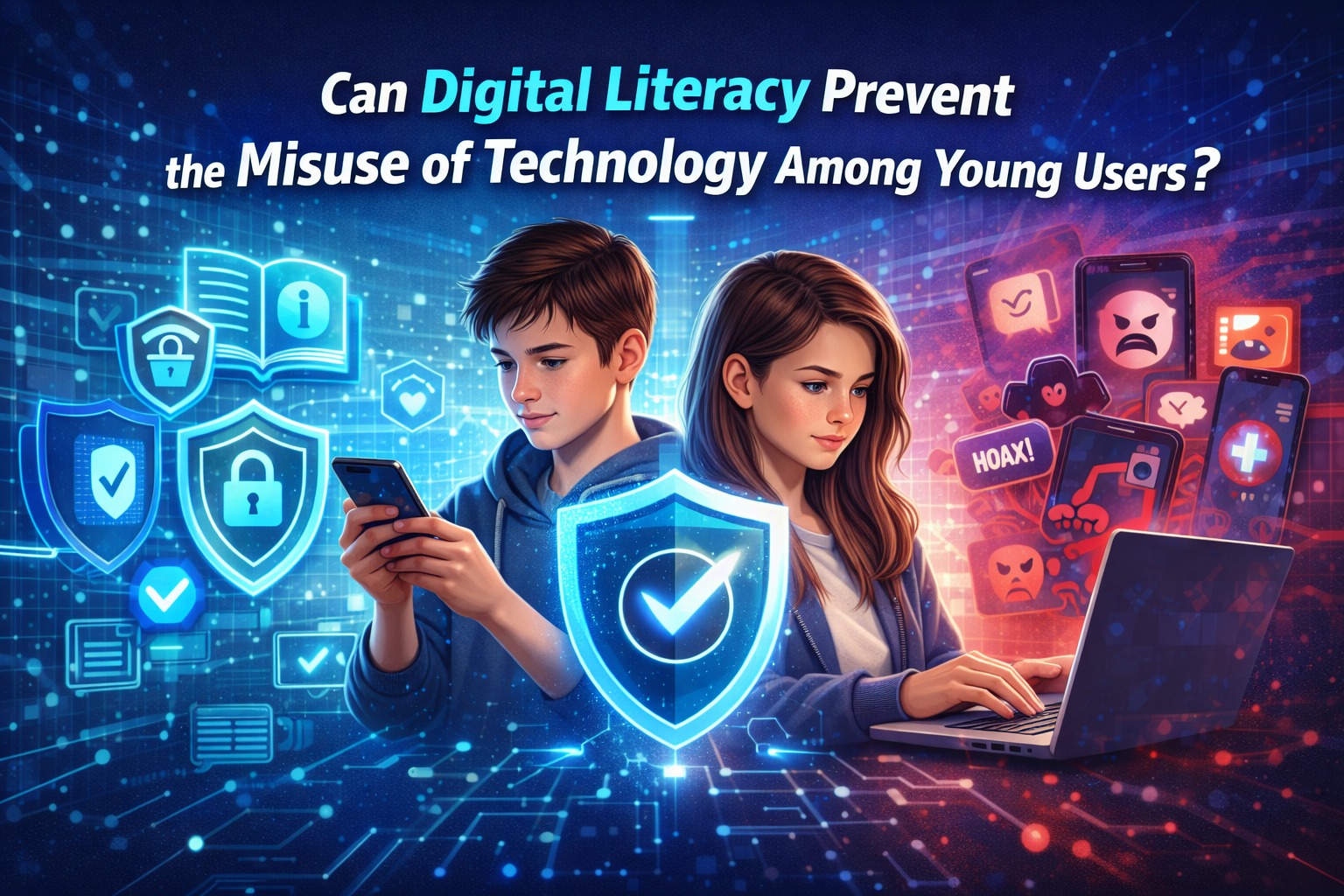
Young people are the most active group of digital technology users. They grow up with smartphones, social media, online games, and various creative platforms. However, high levels of technology use make young users vulnerable to different forms of technology misuse, such as cyberbullying, digital addiction, the spread of misinformation, and actions that threaten personal and others’ privacy. In this context, an important question arises: can digital literacy truly prevent the misuse of technology among young users?
WHAT IS DIGITAL LITERACY?
Digital literacy is the ability to access, understand, analyze, evaluate, and produce information using digital technology wisely and responsibly.
The main elements of digital literacy include
- Understanding digital content
- Digital security and privacy
- Ethics in using technology
- Critical thinking skills toward information
- Communication skills in digital spaces
CHALLENGES FACED BY YOUNG USERS IN THE DIGITAL ERA
Young users face various challenges that make them vulnerable to misusing technology, whether intentionally or unconsciously.
a. Limited self-control and emotional regulation
Adolescents often act impulsively, especially on social media.
b. Pressure from the digital environment
Trends, FOMO (fear of missing out), and viral culture encourage negative behavior.
c. Low awareness of privacy
Many young users share personal data without understanding the risks.
d. Lack of digital ethics education
Schools and families have not fully provided education on online behavior.
e. Unlimited access to various types of content
Including both positive and harmful content.
CAN DIGITAL LITERACY PREVENT TECHNOLOGY MISUSE?
The answer is: **Yes, it can.**
However, digital literacy is not the only solution. It can significantly reduce the risk of technology misuse when applied correctly and consistently.
Here are several reasons why digital literacy helps:
1. Developing Critical Thinking Skills
Young users can distinguish between valid information, misinformation, harmful content, and conflict-provoking material.
2. Increasing Awareness of Privacy and Security
They understand the dangers of sharing personal data and how to protect their accounts.
3. Helping Control Digital Footprints
Young users become more aware that every online post is permanent and can have long-term consequences.
4. Reducing the Risk of Digital Manipulation
Digital literacy teaches how to recognize online scams, phishing attempts, and psychological manipulation by certain platforms.
5. Encouraging Ethical Digital Behavior
Through digital ethics education, young people learn to communicate politely and responsibly online.
LIMITATIONS OF DIGITAL LITERACY
Despite its importance, digital literacy does not automatically prevent technology misuse due to several factors:
a. Emotional and environmental influences
Social pressure often outweighs digital knowledge.
b. Lack of parental supervision
Many parents are unfamiliar with technology, making guidance difficult.
c. Pre-existing digital habits
Young users accustomed to oversharing or toxic behavior may struggle to change even if they understand the risks.
d. Platform algorithms that influence behavior
Algorithms often promote sensitive or controversial content because it attracts engagement
Therefore, while digital literacy is highly beneficial, it must be supported by other factors such as supervision, moral education, and a healthy digital environment.
WAYS TO OPTIMIZE DIGITAL LITERACY FOR YOUNG USERS
1. Integrate digital literacy into formal education
Schools can teach digital security, online ethics, and information evaluation skills.
2. Active parental involvement
Parents need to understand basic technology to guide their children effectively.
3. Building a positive digital culture
Encourage young users to use technology for creative purposes such as design, coding, or educational content.
4. Collaboration between schools, families, and digital platforms
All three play an important role in creating a safe online environment.
5. Strengthening moral values and empathy
Digital literacy should be accompanied by character education to ensure ethical behavior.
CONCLUSION
Digital literacy plays an important role in preventing the misuse of technology among young users. With critical thinking skills, privacy awareness, and digital ethics, adolescents can use technology more responsibly. However, digital literacy alone is not enough. Support from families, schools, and digital communities is essential to create a safe and healthy technological culture for the younger generation.
**Keywords:**
Tentang Penulis
Gusti Ayu Tita
Penulis — Universitas STEKOM
Penulis aktif yang berfokus pada isu-isu akademik, teknologi pendidikan, dan pengembangan sumber daya manusia di lingkungan kampus.