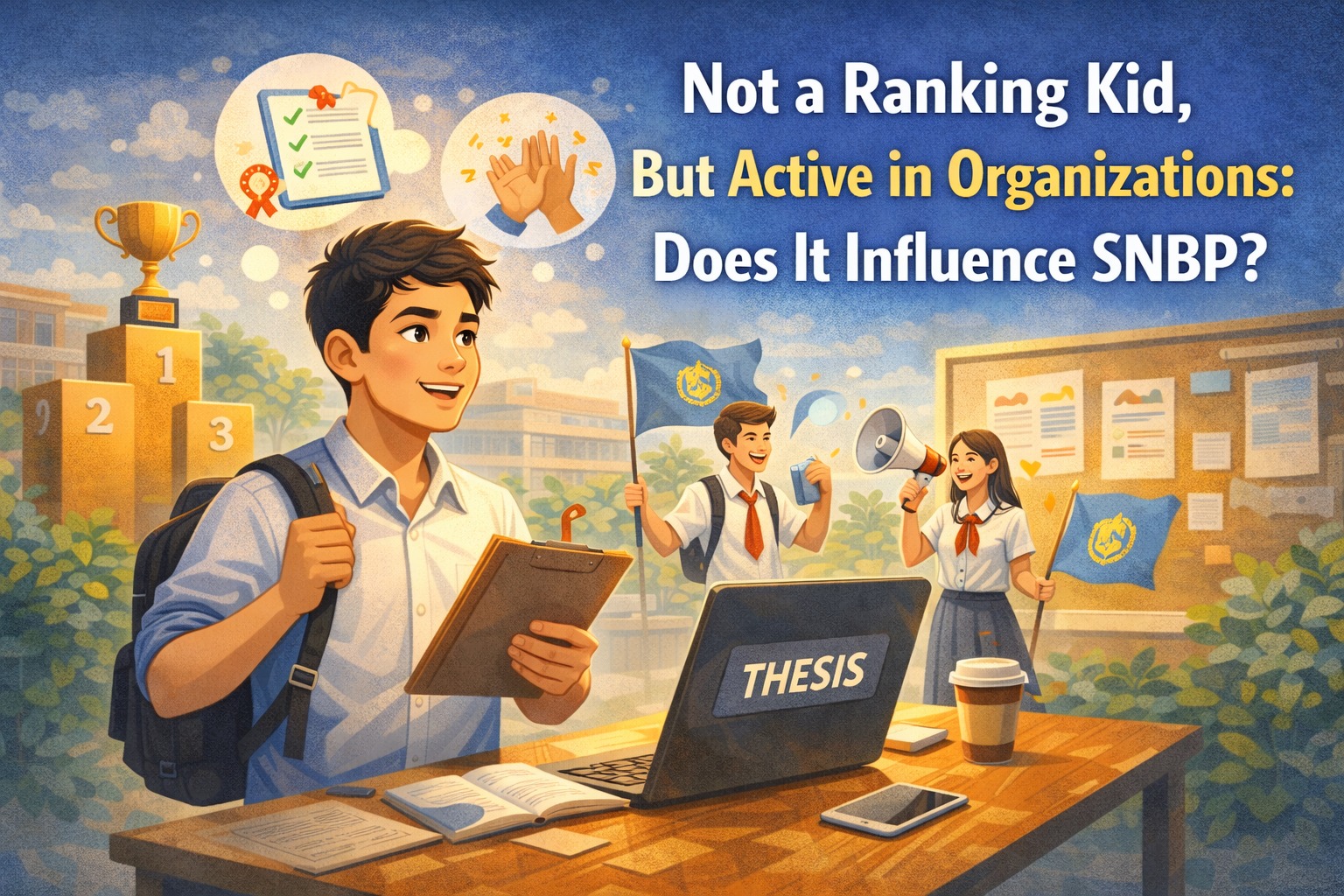
The National Selection Based on Achievement (SNBP) is often perceived as a pathway to public universities that only favors top-ranked students. As a result, many students who are not in the top rankings feel discouraged and choose not to apply. On the other hand, there are students who are highly active in school organizations, committees, and social activities. This raises an important question: can organizational involvement be an added value in SNBP even for students who are not top-ranked? To answer this, it is important to understand how the SNBP assessment system works as a whole.
SNBP IS NOT BASED SOLELY ON CLASS RANKINGS
One important fact about SNBP is that this selection system does not evaluate students based only on class rank. Report card grades are indeed a main component, but what is assessed is the consistency and relevance of grades, not merely ranking position. Students with stable grades and no significant decline still have opportunities even if they are in the middle ranks.
This opens fair opportunities for non–top-ranked students who have strong academic records.
ORGANIZATIONAL INVOLVEMENT SHOWS IMPORTANT SOFT SKILLS
Active participation in school organizations reflects abilities that are not always visible through report card grades. Through organizations, students develop leadership, teamwork, communication, decision-making, and responsibility. These soft skills become added value in SNBP because they show students’ readiness for university life.
Organizational activities also indicate that students are capable of managing time between academic and non-academic responsibilities.
TYPES OF ORGANIZATIONAL ACTIVITIES THAT MATTER
Not all organizational activities carry the same weight. SNBP places more value on activities that are officially recorded and involve clear roles. Examples include being a student council officer, chairperson or vice chair of extracurricular activities, core committee member of school events, or participation in social activities supported by official school certificates.
The more active and consistent the role, the stronger the added value it provides.
THE RELATIONSHIP BETWEEN ORGANIZATIONAL AND ACADEMIC ACHIEVEMENT
Even when actively involved in organizations, students are still required to maintain academic performance. SNBP evaluates the balance between report card grades and non-academic activities. Organizational involvement will not have maximum impact if academic grades decline significantly.
Therefore, time management becomes a crucial factor so that academic and organizational achievements can go hand in hand.
STRATEGIES FOR NON–TOP-RANKED STUDENTS TO MAXIMIZE SNBP OPPORTUNITIES
For students who are not top-ranked but active in organizations, several strategies can be applied. First, focus on keeping report card grades stable, especially in subjects relevant to the chosen major. Second, be active in organizations with clear records and real responsibilities. Third, choose a major that matches academic ability and personal interests, rather than simply following trends.
The right strategy will make a student’s profile appear stronger and more balanced in the eyes of evaluators.
CONFIDENCE AS THE MAIN CAPITAL
Many students fail not because they lack achievements, but because they lack confidence. In fact, SNBP provides equal opportunities for students with diverse achievement backgrounds. The courage to apply, combined with thorough preparation, is a very important first step.
Non–top-ranked students who are active and consistent often possess strong character advantages that not everyone has.
CONCLUSION
Not being a top-ranked student does not mean SNBP opportunities are closed. Organizational involvement can positively influence selection outcomes when accompanied by consistent academic performance. SNBP is designed to assess students holistically, including academics, character, and involvement. With the right strategy and self-confidence, non–top-ranked students still have a strong chance of being accepted through the SNBP pathway.
Tentang Penulis
Gusti Ayu Tita P
Penulis — Universitas STEKOM
Penulis aktif yang berfokus pada isu-isu akademik, teknologi pendidikan, dan pengembangan sumber daya manusia di lingkungan kampus.