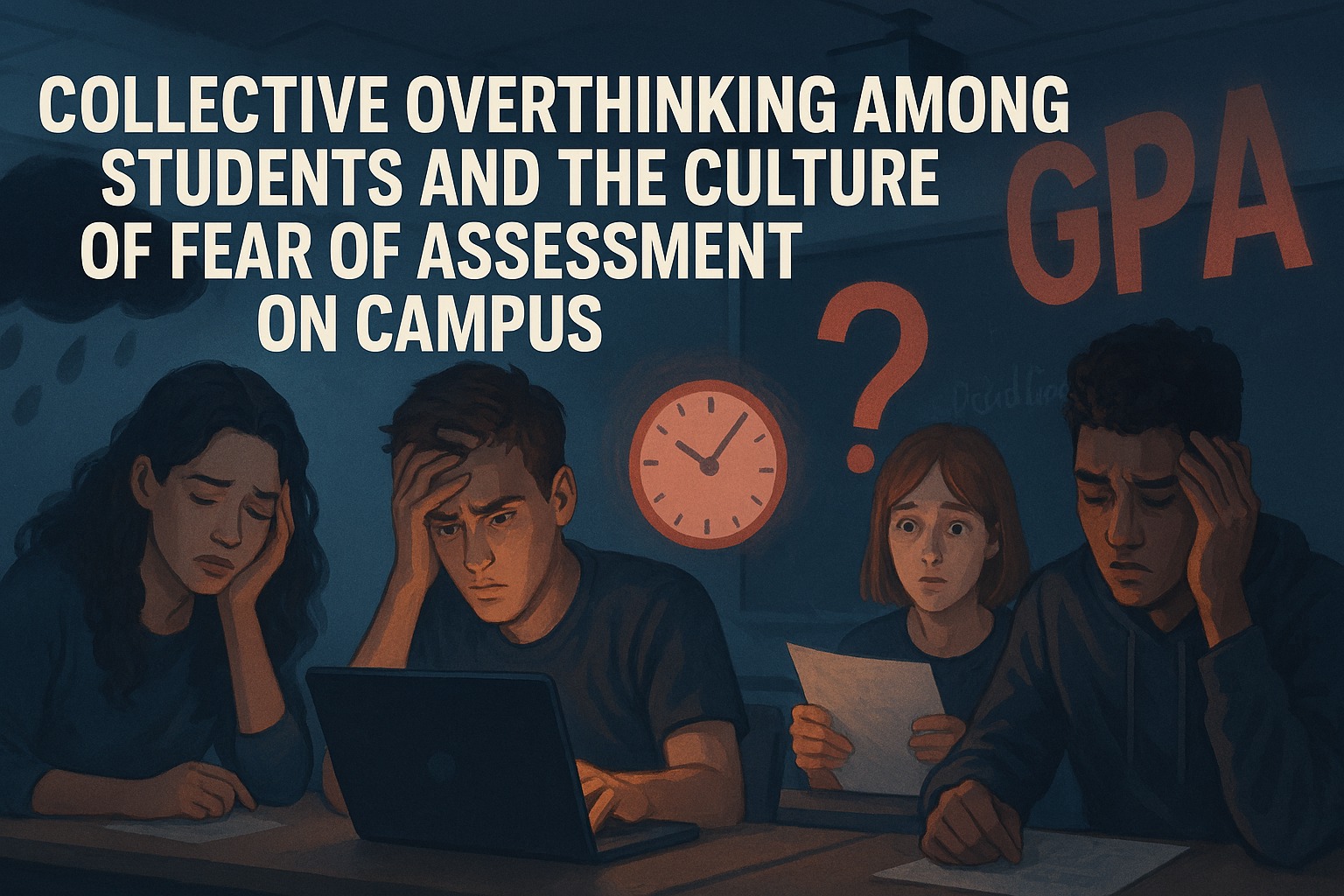
Collective overthinking among students has quietly become a common experience on many campuses. After presentations, exams, or class discussions, students often replay every word they said, analyzing facial expressions from lecturers and peers as if they were decoding hidden criticism. This pattern reflects a deeper issue: a culture of fear of assessment on campus.
In competitive academic environments, evaluation is not just a measurement of performance. It becomes a measure of identity, intelligence, and even self-worth. As a result, students do not simply prepare for assessment. They fear it, internalize it, and overthink it long after it ends.
WHAT IS COLLECTIVE OVERTHINKING IN ACADEMIC SETTINGS
Collective overthinking refers to a shared pattern of excessive rumination that spreads within a group. On campus, this often appears after presentations or graded activities. One student starts questioning their performance, another admits feeling the same, and soon the anxiety becomes normalized.
Instead of processing feedback constructively, students repeatedly revisit minor mistakes. A slight pause during a presentation or a single unclear slide can feel catastrophic. When this reaction is reinforced by peers who are also anxious, overthinking becomes a collective habit rather than an individual struggle.
HOW CAMPUS ASSESSMENT CULTURE FUELS ANXIETY
Assessment systems are designed to evaluate learning outcomes. However, in practice, they often create pressure that extends beyond academics. Grades influence scholarships, internships, future careers, and social reputation. This high-stakes atmosphere amplifies fear.
Students may begin to associate being assessed with being judged as a person. Feedback that should guide improvement is interpreted as proof of inadequacy. Over time, this mindset builds a culture where mistakes are seen as failures rather than part of growth.
Social comparison also plays a role. In classrooms where performance is openly compared, students measure themselves against peers. The fear of looking unprepared or less competent intensifies post-assessment rumination. Even when performance is objectively good, the fear of negative evaluation can overshadow achievement.
THE PSYCHOLOGICAL IMPACT ON STUDENT WELL-BEING
Persistent overthinking affects more than academic performance. It disrupts sleep, lowers concentration, and reduces confidence. Students may avoid participating in future discussions to prevent repeating perceived mistakes.
This cycle can slowly erode self-esteem. When every assessment becomes a source of anxiety, students begin to anticipate failure even before trying. Over time, this expectation shapes behavior, leading to procrastination or perfectionism.
Perfectionism, in particular, strengthens collective overthinking. When students believe that only flawless performance is acceptable, any small imperfection becomes magnified. The campus environment unintentionally rewards visible success while rarely normalizing vulnerability and learning through error.
WHY FEAR OF ASSESSMENT BECOMES NORMALIZED
The normalization of fear happens subtly. Conversations among students often center on grades, difficult lecturers, and harsh feedback. Social media posts about academic stress further reinforce the narrative that anxiety is an unavoidable part of campus life.
When stress is shared collectively, it feels justified and even expected. Students may assume that overthinking is a sign of responsibility or seriousness. In reality, excessive rumination rarely improves performance. Instead, it drains emotional energy that could be used for growth.
Institutions sometimes contribute unintentionally by focusing heavily on numerical achievement. While measurable outcomes are important, overemphasis on scores can overshadow learning processes, creativity, and personal development.
STRATEGIES TO REDUCE COLLECTIVE OVERTHINKING
Reducing collective overthinking requires both personal awareness and cultural shifts. Students can start by reframing assessment as feedback rather than judgment. Writing down specific lessons learned after a presentation can help redirect attention from self-criticism to improvement.
Open discussions about mistakes can also change peer dynamics. When students share not only successes but also learning struggles, they weaken the illusion of constant perfection. This approach fosters a healthier academic climate.
On an institutional level, lecturers can provide balanced feedback that highlights strengths alongside areas for growth. Transparent grading criteria and supportive communication reduce uncertainty, which is a major trigger of overthinking.
BUILDING A HEALTHIER CAMPUS MINDSET
Creating a healthier mindset on campus means redefining what success looks like. Academic evaluation should measure learning progress, not personal worth. When students understand that imperfection is part of mastery, fear of assessment gradually decreases.
Collective overthinking among students is not a sign of weakness. It is a response to systems that equate grades with value. By shifting the narrative from fear to growth, campuses can cultivate resilience, confidence, and a more supportive academic culture.
Tentang Penulis
Gusti Ayu Tita P
Penulis — Universitas STEKOM
Penulis aktif yang berfokus pada isu-isu akademik, teknologi pendidikan, dan pengembangan sumber daya manusia di lingkungan kampus.