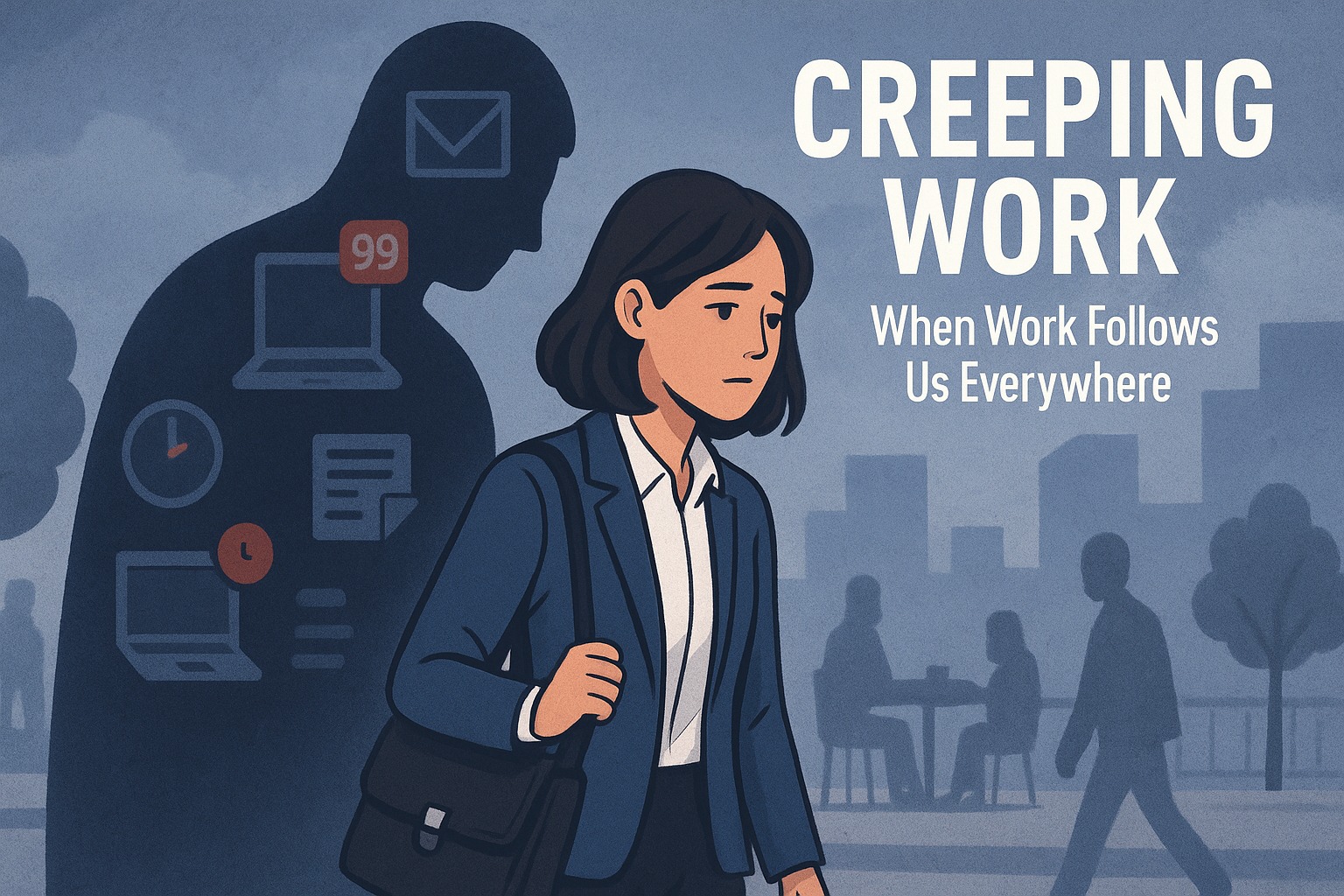
In recent years, professional life has changed rapidly due to technological development and increasingly flexible work cultures. However, this flexibility comes with side effects we often fail to notice, one of which is the phenomenon known as **creeping work**. This term refers to the condition where work slowly infiltrates personal spaces, even during moments that should be free from professional matters. For many workers, creeping work does not appear as a direct command, but rather as a habit formed by constant notifications, expectations of quick responses, and the anxiety of falling behind.
With digital devices always within reach, the line between working and resting becomes increasingly blurred. A simple message from a colleague can appear during dinner, an email may arrive on a day off, and work-related apps are often opened unintentionally. At first, these intrusions may seem mild, but accumulated over time, they can have a significant impact. The mind struggles to fully relax, the body never feels done working, and personal space gradually shrinks. Ultimately, creeping work not only alters work rhythms but also changes how we perceive personal time and quality of life.
This phenomenon is becoming more relevant as modern work culture increasingly glorifies quick responses and constant availability. Workers feel pressured to always be ready, always connected, and always alert. Even without explicit instructions to stay active, these subtle pressures lead people into the habit of working beyond reasonable limits. Therefore, understanding how creeping work forms is an important step before trying to overcome it.
HOW CREEPING WORK HAPPENS
Creeping work emerges from a combination of factors: technology, work culture, and individual mindset. Technology makes communication instant and effortless, while modern work culture instills the belief that continuous availability is a symbol of dedication. On the other hand, many workers fear missing important information or opportunities, pushing them to constantly monitor chats, emails, and project updates even when they are off duty.
Here are the main mechanisms that drive creeping work:
1. Constant Notifications
Notifications affect the brain's dopamine system, creating curiosity and an urge to immediately open messages. When notifications come from work apps, we feel compelled to respond—even while resting. Over time, the brain becomes conditioned to stay alert and can no longer fully disconnect from work.
2. Expectations of Fast Responses at Work
Many organizations operate at a fast communication pace, where slow responses are seen as unprofessional. Even without written rules, this social pressure makes workers feel obligated to reply anytime, even during personal activities or family time.
3. Professional FOMO (Fear of Missing Out)
The fear of missing important information or opportunities drives people to constantly check work chats, emails, and project updates. This professional FOMO disrupts focus and creates anxiety whenever they’re offline.
4. Hustle Culture and the Glorification of Busyness
Work environments that glorify excessive productivity make workers feel the need to appear constantly involved. Busyness becomes a measure of competence, making overtime work feel normal and inevitable.
IMPACTS OF CREEPING WORK ON DAILY LIFE
The effects of creeping work extend beyond productivity and deeply affect mental health, social relationships, and work–life balance. When work infiltrates every part of daily life, the mind and body lose the chance to recover. Over the long term, this can damage emotional stability and overall well-being.
Here are the most common impacts:
1. Mental Fatigue That Is Hard to Recover From
When the brain is constantly under small pressures from work, mental capacity becomes drained. Although it may not feel like severe stress, the buildup of micro-stress can make someone easily irritated, unfocused, and exhausted without a clear cause.
2. Declining Quality of Social Relationships
When work frequently interrupts conversations or shared moments with loved ones, relationships become less warm. Interactions turn superficial and lack emotional presence.
3. Guilt When Resting
Creeping work distorts personal values, making rest feel unproductive. Many people feel guilty for not checking messages or emails—even though rest is healthy and necessary.
4. Slow-Burning Burnout
Burnout caused by creeping work often goes unnoticed because it develops gradually. Symptoms include extreme boredom, loss of motivation, and an inability to enjoy any activities. If not addressed early, this condition requires a long recovery period.
STRATEGIES TO OVERCOME CREEPING WORK
Managing creeping work requires habit changes, courage to set boundaries, and the ability to control responses to digital pressure. These efforts not only restore life balance but also improve work quality, as the brain gets the space it needs to recover and function optimally
Some effective strategies include:
1. Setting Clear Digital Boundaries
Turning off work notifications outside working hours or enabling focus mode creates mental distance. This helps the brain relearn that rest time belongs fully to yourself.
2. Communicating Working Hours with Colleagues and Supervisors
Clarifying your working boundaries helps establish healthier expectations. Teams that understand these limits are usually more supportive and less demanding of immediate responses outside work hours.
3. Implementing Digital Detox Routines
Setting aside device-free time—such as one hour each morning or evening—helps the brain relax. Simple activities like reading or walking reduce reliance on work devices.
4. Differentiating Urgent and Non-Urgent Work
Not all messages need immediate replies. Prioritizing helps reduce the pressure to always stay alert.
CONCLUSION
Creeping work is a subtle phenomenon that quietly erodes the work–life balance of modern workers. As work boundaries become increasingly blurred, we must be more aware of how technology and work culture influence our daily behavior. By understanding its causes, impacts, and strategies for prevention, individuals can reclaim healthier personal space and maintain long-term mental well-being. Overcoming creeping work does not mean reducing dedication, but ensuring that energy, health, and quality of life can endure for the long run.
Tentang Penulis
Gusti Ayu Tita
Penulis — Universitas STEKOM
Penulis aktif yang berfokus pada isu-isu akademik, teknologi pendidikan, dan pengembangan sumber daya manusia di lingkungan kampus.