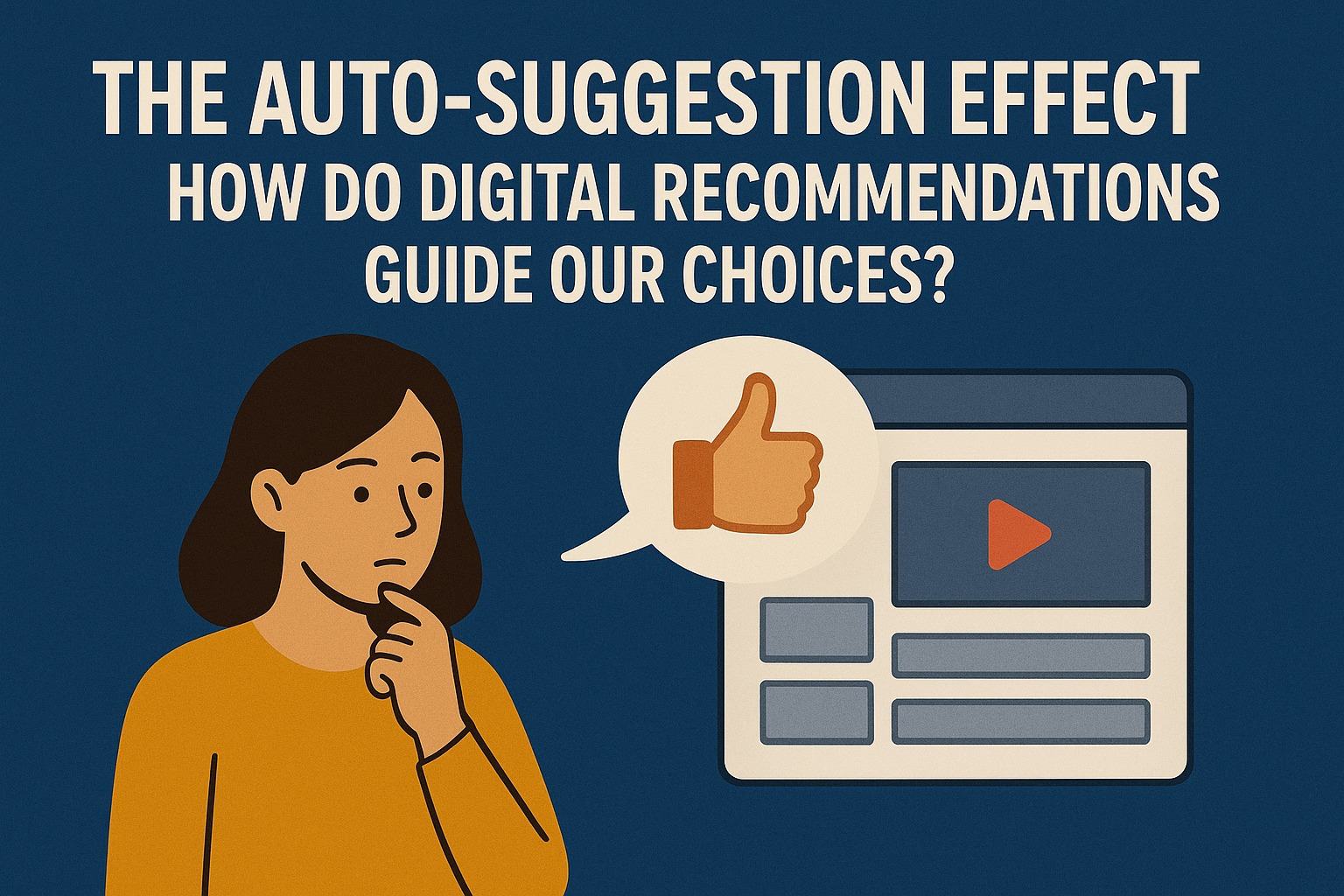
In the digital era, automated recommendations have become a compass that guides our attention and daily decisions. When we open social media, we are immediately presented with content deemed relevant. When shopping, the list of products shown seems to already know what we want. This phenomenon occurs due to the effect of auto-suggestion—a condition where the choices we make are influenced by repeated digital suggestions that appear to match our needs.
This effect works subtly, shaping digital consumption patterns without feeling forceful. While it offers convenience and efficiency, its influence can lead to changes in preferences and habits without our awareness. Therefore, understanding how auto-suggestion works is crucial so users can retain control over their choices, rather than simply following what algorithms prioritize.
WHAT IS THE DIGITAL AUTO-SUGGESTION EFFECT?
The digital auto-suggestion effect appears when the mind receives repeated suggestions until it begins to perceive them as the best option. In the digital world, these suggestions come from recommendation systems constantly adjusted based on user activity. Without realizing it, the brain starts associating recommendations with safe options simply because they frequently appear—not because users have rationally evaluated them.
This phenomenon occurs not only with entertainment content but also with news, products, and other types of information. With continuous exposure, users’ preferences can be formed without broad exploration. The main characteristics of the auto-suggestion effect can be seen through the following features:
1. Relying on behavioral data
Algorithms monitor activities such as clicks, watch time, and other small interactions. From this data, the system constructs a deep understanding of user interests. The more detailed the recorded data, the more precise the recommendations become, making them feel like a reflection of personal preferences.
2. Appearing consistently
Consistent exposure makes the brain perceive certain recommendations as natural choices. The same content or products repeatedly appear, becoming familiar. This sense of familiarity encourages users to choose them without comparing alternatives.
3. Seemingly neutral but actually prioritized
Recommendations appear natural, but the content has undergone curation aligned with the platform’s objectives. Not all options are shown equally—only those predicted to be most beneficial or relevant.
4. Guiding without coercion
Auto-suggestion never forces users. It works by displaying a carefully arranged sequence of content that subtly shifts attention and influences decisions.
HOW ALGORITHMS SHAPE RECOMMENDATIONS
Recommendation algorithms use big data and behavioral patterns to predict user choices. This process involves multiple automated data-processing stages. Before recommendations appear, the system has already gone through a series of steps to ensure the displayed content aligns with user preferences.
Here’s how algorithms form auto-suggestion:
1. Collecting digital footprints
Activities such as searches, content interactions, or viewing duration become part of the digital footprint. This data creates an accurate picture of user preferences. The more frequently it is updated, the stronger its influence on recommendations.
2. Predicting the next action
Based on past patterns, algorithms predict what users are most likely to want next. These predictions use mathematical calculations that tailor recommendations to daily routines.
3. Grouping users based on patterns
Users with similar interests and behaviors are grouped together. Recommendations are then generated based on collective patterns, not just individual activity. This makes suggestions feel highly relevant since they are derived from the behavior of thousands of similar users.
4. Prioritizing content display
Content is not shown randomly. The system prioritizes items with a high likelihood of interaction or those that align with the platform’s goals. Users tend to choose the top-listed options, making the order of appearance a significant driver of choices.
5. Real-time adjustments
Algorithms constantly update recommendations based on the latest behavior. Every small change affects the next set of suggestions, making them feel timely and aligned with immediate needs.
THE IMPACT OF AUTO-SUGGESTION ON HUMAN CHOICES
The auto-suggestion effect greatly influences how we consume content and make decisions. Repeated recommendations form consistent patterns that lead to choice bias. Some common impacts include:
1. Reduced exploration of options
Believing that recommendations already fit their needs, users become reluctant to explore alternatives. This narrows their range of choices and limits their perspective.
2. Shaping long-term preferences
Repeated exposure can change user interests. When certain content frequently appears, users may begin liking it even if they originally weren’t interested.
3. Creating information bias
Recommendations often reinforce existing views. Users only see similar types of information, making it harder to accept new perspectives.
4. Encouraging impulsive consumption
Products or services that constantly appear on the homepage can trigger quick, unplanned decisions. Recommendations that feel “just right” are often used as justification to purchase without careful thought.
STRATEGIES TO HANDLE THE DOMINANCE OF DIGITAL RECOMMENDATIONS
Although auto-suggestion has a strong influence, users can still take steps to control their digital experience. Effective strategies include:
1. Resetting preferences and history
Clearing history can help alter recommendation patterns, giving algorithms a fresh start and offering more varied content.
2. Searching for content manually
By actively searching, users expand their options beyond the recommendation loop. This habit enriches perspectives and reduces dependency on the system.
3. Reducing app usage time
More controlled usage means algorithms have less data to analyze, slightly weakening their predictive power.
4. Reading from multiple sources
Using different platforms helps balance information and avoid bias created by repeated recommendations.
5. Using privacy-control features
Adjusting data permissions limits what algorithms can collect, reducing their influence on recommendations.
SUMMARY
The auto-suggestion effect is a powerful phenomenon shaping user choices in the digital era. Recommendations that appear simple actually form preferences through repeated exposure, behavioral predictions, and content prioritization. By understanding its mechanisms and adopting more intentional usage strategies, users can maintain control over their choices without becoming trapped in automated recommendation loops. Digital awareness is an essential step to remain independent in a world heavily guided by algorithms.
Tentang Penulis
Gusti Ayu Tita
Penulis — Universitas STEKOM
Penulis aktif yang berfokus pada isu-isu akademik, teknologi pendidikan, dan pengembangan sumber daya manusia di lingkungan kampus.