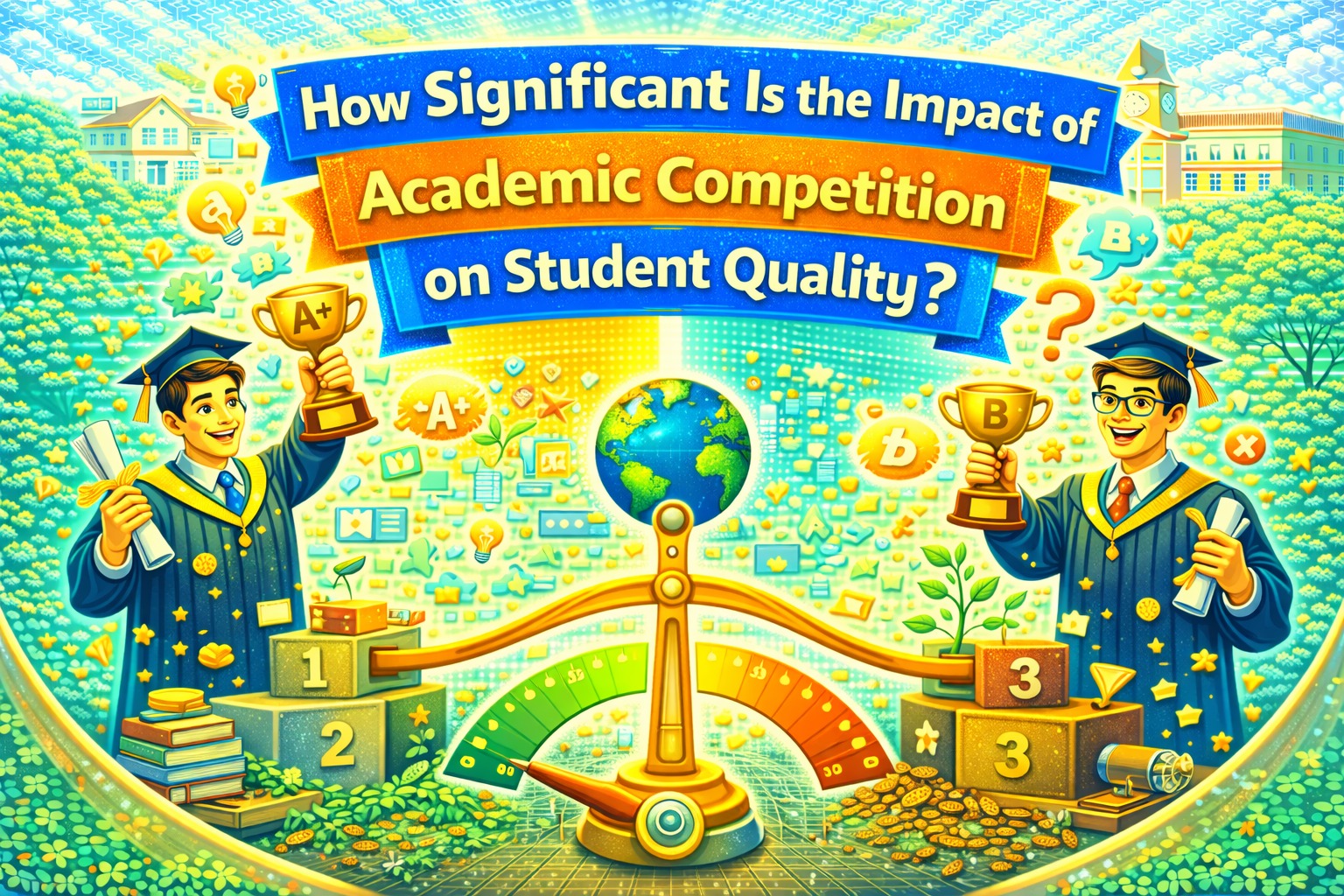
Academic competition has long been a defining feature of modern education. From classroom rankings to national Olympiads, students are constantly measured against one another. While some argue that competition sharpens intelligence and discipline, others believe it may increase stress and reduce collaboration. So, how significant is the impact of academic competition on student quality?
This article explores how academic competition influences student performance, character development, mental health, and long-term readiness for the professional world.
UNDERSTANDING ACADEMIC COMPETITION
Academic competition refers to situations where students strive to outperform their peers in grades, awards, scholarships, or recognition. It can take many forms, including standardized tests, academic contests, honor rankings, and selective admissions.
Competition is often designed to motivate students. When learners are aware of benchmarks and rivals, they may push themselves harder to achieve higher standards. However, the true impact depends on how competition is structured and managed within the educational system.
POSITIVE EFFECTS ON STUDENT QUALITY
When implemented in a healthy environment, academic competition can significantly enhance student quality.
First, it encourages discipline and goal-setting. Students who aim to excel must manage their time effectively, develop consistent study habits, and maintain focus. These skills contribute to stronger academic performance and personal growth.
Second, competition fosters resilience. Not every student wins every contest. Learning to handle setbacks helps students build emotional strength and persistence. Over time, this resilience becomes a valuable trait in both academic and professional settings.
Third, competition can drive innovation and creativity. When students seek to stand out, they often explore unique ideas, develop critical thinking skills, and produce higher-quality work. In this sense, competition can elevate overall academic standards.
NEGATIVE CONSEQUENCES TO CONSIDER
Despite its benefits, academic competition also carries risks if not balanced properly.
Excessive pressure can lead to anxiety, burnout, and decreased motivation. Students who constantly compare themselves to others may develop fear of failure rather than a love of learning. In extreme cases, intense competition may harm self-esteem and mental well-being.
Moreover, competition can reduce collaboration. When students view classmates solely as rivals, teamwork and knowledge-sharing may decline. This is problematic because real-world success often depends on cooperation and communication skills.
Therefore, the impact of academic competition on student quality is not purely positive or negative. It depends largely on context, guidance, and institutional values.
BALANCING COMPETITION AND COLLABORATION
Educational institutions play a crucial role in shaping how competition affects students. Healthy competition should focus on self-improvement rather than comparison alone. Teachers can emphasize personal progress, mastery of skills, and constructive feedback instead of ranking systems that highlight only top performers.
Encouraging group projects alongside individual assessments also helps maintain balance. Students can compete academically while still learning how to collaborate effectively. This combination prepares them not only for exams but also for professional environments where teamwork is essential.
Parents also contribute by promoting effort and growth rather than solely rewarding outcomes. When success is defined by improvement and learning, competition becomes a tool for development rather than a source of stress.
LONG-TERM IMPACT ON PROFESSIONAL READINESS
The ultimate measure of student quality extends beyond grades. It includes adaptability, problem-solving ability, communication skills, and ethical responsibility.
Students exposed to well-managed academic competition often develop ambition and perseverance. These qualities are valuable in competitive job markets. However, if competition fosters fear or unhealthy comparison, it may hinder creativity and long-term confidence.
Employers today increasingly value collaboration, emotional intelligence, and continuous learning. Therefore, the most effective educational systems integrate competitive elements without sacrificing cooperation and well-being.
CONCLUSION
Academic competition significantly influences student quality, but its impact depends on how it is structured and experienced. When balanced with collaboration and emotional support, competition can enhance discipline, resilience, and academic excellence. However, excessive pressure may undermine mental health and intrinsic motivation.
Ultimately, the goal of education is not merely to produce top-ranking students, but to develop capable, confident, and ethical individuals. A balanced approach to academic competition ensures that students grow not only smarter, but also stronger and more adaptable for the future.
Tentang Penulis
Gusti Ayu Tita P
Penulis — Universitas STEKOM
Penulis aktif yang berfokus pada isu-isu akademik, teknologi pendidikan, dan pengembangan sumber daya manusia di lingkungan kampus.