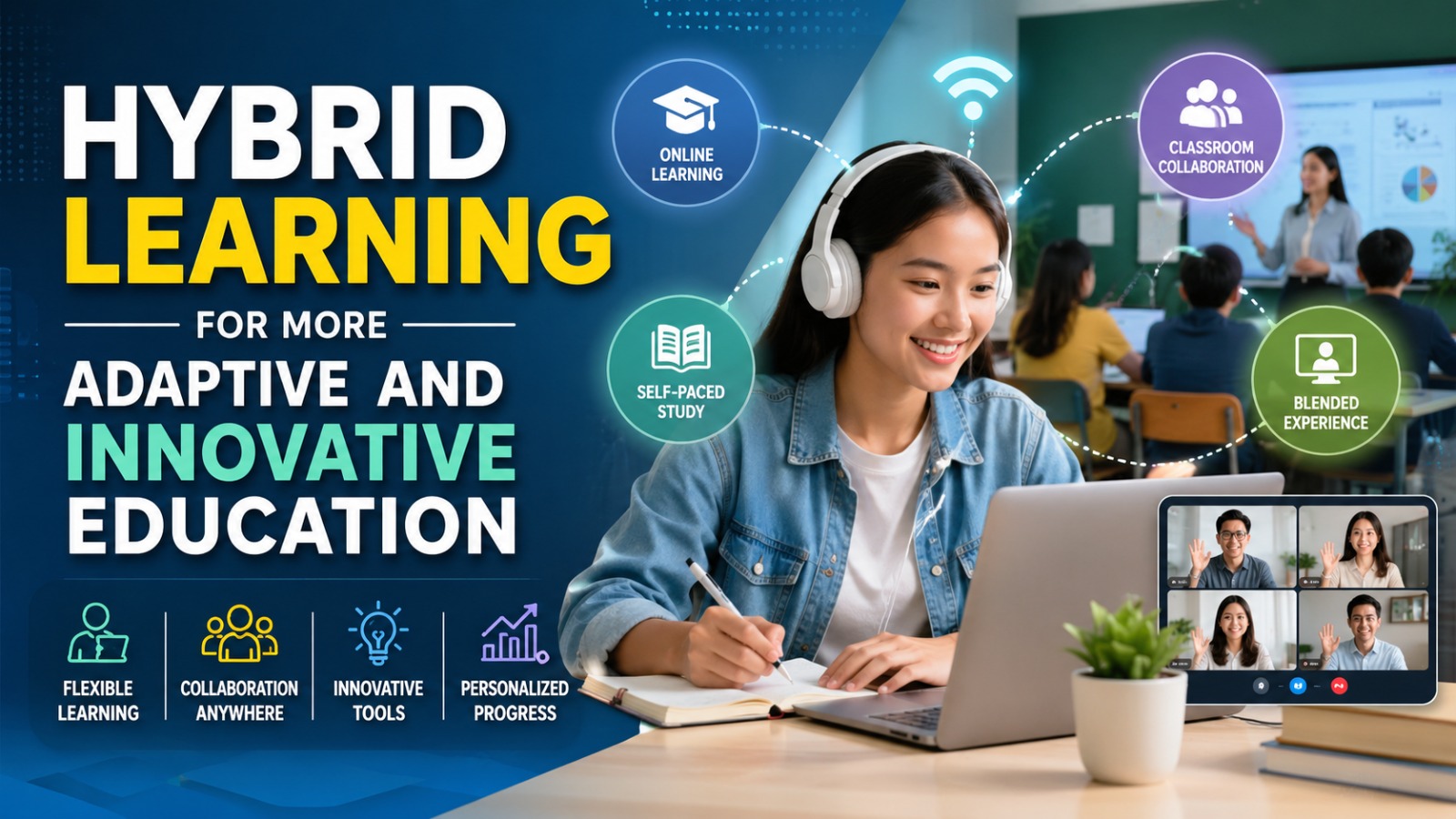
The education landscape has changed dramatically over the last few years. Traditional classroom methods are no longer the only option for students and teachers. Today, schools, universities, and training institutions are increasingly adopting hybrid learning as a practical solution to meet modern educational demands.
Hybrid learning combines face-to-face instruction with online learning activities. This model creates a more flexible environment where students can learn both inside and outside the classroom. As technology continues to evolve, hybrid learning is becoming one of the most effective approaches for building adaptive and innovative education.
WHAT IS HYBRID LEARNING?
Hybrid learning is an educational model that blends physical classroom teaching with digital learning experiences. In this system, students may attend classes in person while also accessing materials, assignments, discussions, and recorded lessons through online platforms.
Unlike purely online learning, hybrid learning maintains direct interaction between teachers and students. At the same time, it offers the convenience of digital access, allowing learners to study according to their pace and schedule.
This balanced approach helps institutions provide better learning continuity while improving educational accessibility.
WHY HYBRID LEARNING IS BECOMING MORE POPULAR
The growing popularity of hybrid learning is closely linked to the increasing demand for flexibility. Students today have different learning styles, personal responsibilities, and varying access to resources. A single teaching method often cannot meet all these needs.
Hybrid learning allows educators to deliver lessons in multiple formats. Some students understand concepts better through classroom discussion, while others absorb information more effectively through videos, digital exercises, or independent study.
As a result, hybrid learning creates a more inclusive educational environment where students have more opportunities to succeed.
BENEFITS OF HYBRID LEARNING IN MODERN EDUCATION
FLEXIBLE LEARNING EXPERIENCE
One of the greatest advantages of hybrid learning is flexibility. Students can access learning materials anytime and from almost anywhere. This allows them to review lessons, repeat difficult topics, and learn at a more comfortable pace.
IMPROVED STUDENT ENGAGEMENT
Digital tools such as interactive quizzes, online discussions, and multimedia presentations can make lessons more engaging. These elements help reduce boredom and encourage students to participate more actively.
BETTER ACCESS TO LEARNING RESOURCES
Hybrid learning gives students access to a wider variety of educational resources. They can use e-books, recorded lectures, online libraries, and educational applications to deepen their understanding.
ENCOURAGES INDEPENDENT LEARNING
Students in hybrid learning environments often develop stronger self-discipline and time-management skills. Since part of the learning process happens independently, learners become more responsible for their academic progress.
HOW HYBRID LEARNING SUPPORTS INNOVATION
Innovation in education is not only about using technology. It is also about changing the way knowledge is delivered and understood.
Hybrid learning supports innovation by allowing teachers to experiment with different instructional methods. Instead of relying only on lectures, educators can combine group discussions, project-based learning, digital collaboration, and personalized feedback.
This approach helps students develop important modern skills such as critical thinking, creativity, communication, and digital literacy. These abilities are essential for success in both higher education and future careers.
CHALLENGES OF HYBRID LEARNING
Although hybrid learning offers many advantages, it also comes with challenges.
Not all students have equal access to stable internet connections or digital devices. Some teachers may also need additional training to use online platforms effectively. In addition, maintaining student motivation outside the classroom can sometimes be difficult.
To make hybrid learning successful, educational institutions need proper planning, reliable technology, and ongoing support for both teachers and students.
THE FUTURE OF HYBRID LEARNING
Hybrid learning is expected to remain an important part of education in the future. Many institutions have realized that combining traditional teaching with digital learning creates stronger and more adaptable learning systems.
As educational technology becomes more advanced, hybrid learning will likely become more personalized, interactive, and efficient. Artificial intelligence, smart learning platforms, and data-based teaching strategies may further improve how students learn.
Rather than replacing classroom education, hybrid learning strengthens it by making education more responsive to the needs of modern learners.
CONCLUSION
Hybrid learning has become a powerful educational model for the digital era. By combining face-to-face interaction with online flexibility, it creates a more adaptive and innovative learning experience.
This approach not only supports academic achievement but also prepares students for a rapidly changing world. For schools, teachers, and learners, hybrid learning offers a practical path toward a smarter and more inclusive future of education.
Tentang Penulis
Gusti Ayu Tita
Penulis — Universitas STEKOM
Penulis aktif yang berfokus pada isu-isu akademik, teknologi pendidikan, dan pengembangan sumber daya manusia di lingkungan kampus.