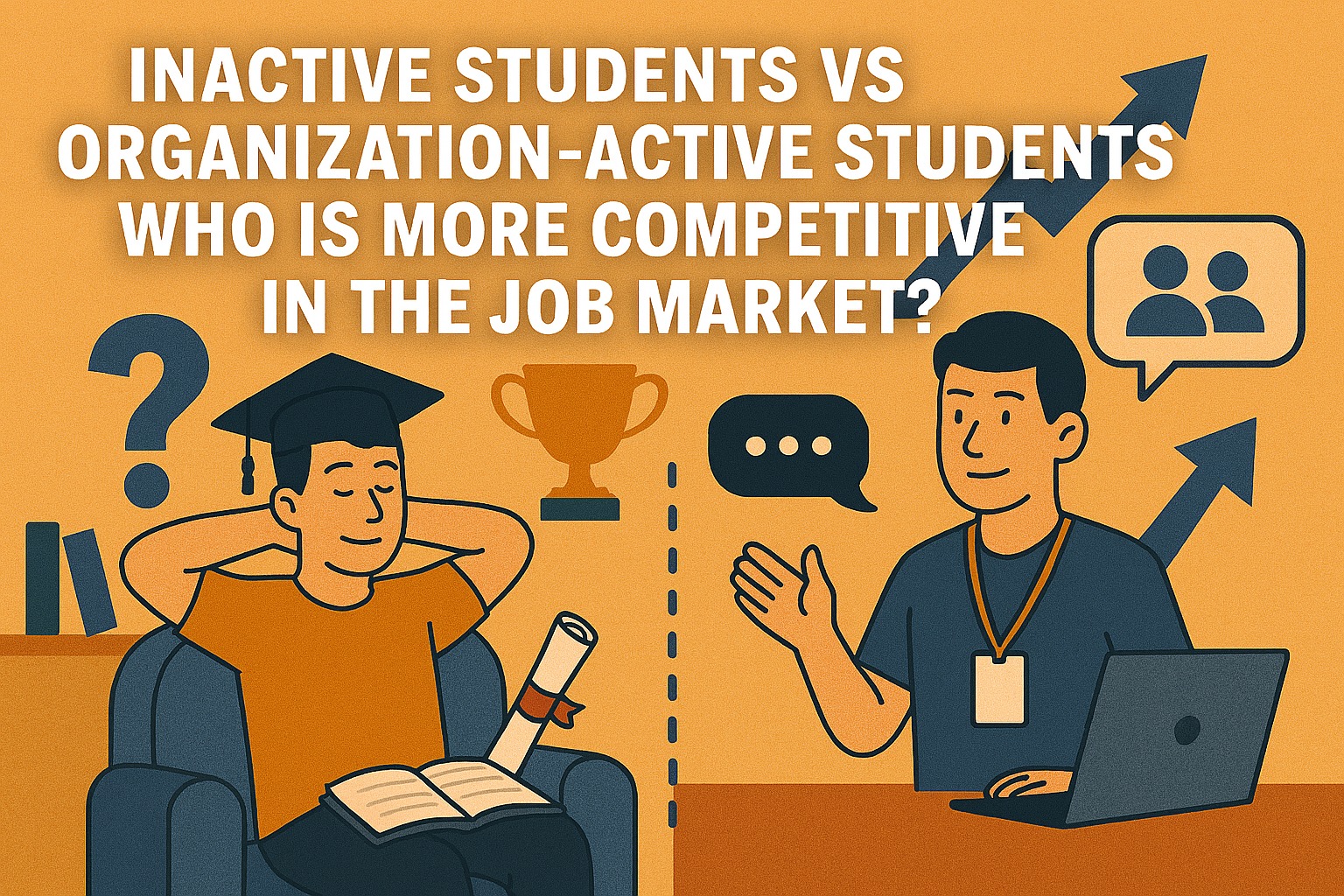
In the campus environment, two types of students are often recognized. Some are known as “butterfly students”—students who simply attend classes and go home—focusing mainly on academic activities. On the other hand, there are students who actively participate in various campus organizations, ranging from student associations to event committees.
This difference in how students experience campus life often raises an interesting question: who is more competitive in the job market—butterfly students or organizationally active students? To answer this, it is important to first understand the strengths of each type of student.
CHARACTERISTICS OF BUTTERFLY STUDENTS
Butterfly students usually focus more on academic activities. They come to campus to attend lectures, complete assignments, and study independently without being heavily involved in organizations.
The advantage of this approach is that students have more time to focus on learning and understanding their academic material. As a result, butterfly students often achieve high GPAs because they can dedicate most of their time to academic pursuits.
In addition, focusing on academics helps students gain a deeper understanding of theories and concepts in their field of study. This is especially valuable for jobs that require strong technical or analytical abilities.However, students who focus solely on academics sometimes have limited experience in teamwork or social interaction.
ADVANTAGES OF ORGANIZATIONALLY ACTIVE STUDENTS
Unlike butterfly students, organizationally active students are involved in various activities outside the classroom. They often attend organizational meetings, manage campus events, or participate in committees.
Through these activities, students can develop many soft skills that are essential in the professional world. Skills such as communication, leadership, teamwork, and time management are often shaped through organizational experience.
Additionally, students who actively participate in organizations usually have broader networks. These connections can open new opportunities, such as internships, collaborative projects, or information about job vacancies.Facing different challenges within organizations also helps students become more confident and adaptable to dynamic situations.
FACTORS COMPANIES CONSIDER
In the recruitment process, companies generally do not evaluate candidates based on just one aspect. They assess applicants comprehensively, including both academic ability and interpersonal skills.
A strong GPA often serves as an initial requirement to filter applicants. However, organizational experience often becomes an added value that makes a candidate stand out to recruiters.Companies typically look for individuals who are not only academically capable but also able to collaborate with others, communicate effectively, and handle challenges in the workplace.
Therefore, the combination of academic performance and organizational experience is often considered the ideal candidate profile.
BALANCE IS THE KEY TO COMPETITIVENESS
Rather than strictly comparing butterfly students and organizationally active students, the best approach is to find a balance between the two. Students who can maintain strong academic performance while also participating in organizational activities often have more comprehensive advantages.
By having a good GPA and organizational experience, students can demonstrate both academic competence and practical skills. This combination makes them appear more prepared to face the increasingly complex demands of the professional world.
The ability to manage time between academic responsibilities and organizational activities also proves that students can handle multiple responsibilities effectively.
CONCLUSION
The debate between butterfly students and organizationally active students does not really have a right or wrong answer. Both types of students have their own strengths that can become valuable assets in the job market.
Butterfly students generally possess strong academic understanding, while organizationally active students tend to develop more practical experience and social skills. However, students who are able to combine both aspects usually have greater opportunities to become competitive candidates in the workforce.
Ultimately, career success is not determined by a single factor, but by a person’s ability to continue learning, adapting, and developing themselves.
Tentang Penulis
Gusti Ayu Tita P
Penulis — Universitas STEKOM
Penulis aktif yang berfokus pada isu-isu akademik, teknologi pendidikan, dan pengembangan sumber daya manusia di lingkungan kampus.