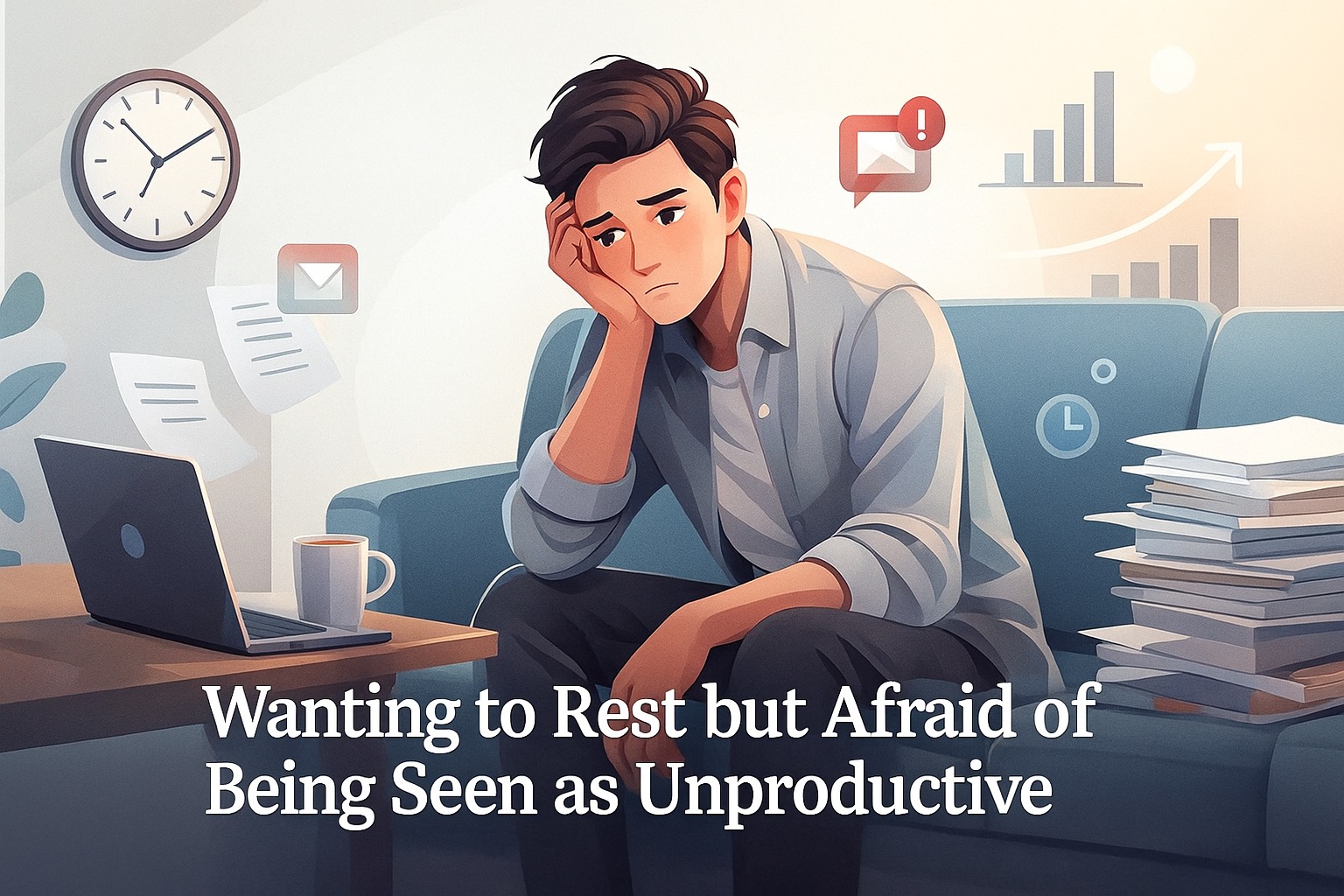
In today’s fast-paced era, rest is often misunderstood as a sign of laziness. Many people carry guilt whenever they pause, as if taking a break is an enemy of achievement. Ironically, the culture of “always being busy” has turned exhaustion into a badge of honor. This leads to a quiet, unsettling question: does resting truly make us unproductive, or does it only *appear* that way in the eyes of others?
This tension brings us to a modern dilemma: wanting to pause, yet fearing being labeled as someone who doesn’t work hard. In this article, we explore the roots of that fear, its impact on performance and mental health, and how to shift our mindset so that rest becomes a strategy—not a stigma.
WHY REST IS SEEN AS THE ENEMY OF PRODUCTIVITY
The negative perception of rest didn’t form overnight. It emerged from a culture that glorifies busyness. Social media amplifies narratives of instant success and non-stop work, shaping an “ideal work ethic” that resembles a marathon with no finish line. In many workplaces, dedication is equated with always being online. As a result, taking a break feels risky: a fear of being seen as less committed, falling behind, or missing opportunities.
But the brain is not a machine that runs endlessly. Biologically, we need recovery phases to optimize focus and creativity. Without pauses, the result is not increased output but accumulated errors, rushed decisions, and depleted mental energy. This flawed perception traps many people in a paradox: working longer while producing less.
THE IMPACT OF DELAYING REST ON PERFORMANCE
Delaying rest may feel heroic for a moment, but the consequences are real. Concentration shortens, emotions become more fragile, and work quality declines. Over time, the body begins sending subtle signals—headaches, sleep problems, a drop in motivation. Ironically, many respond by “working harder” rather than “resting smarter.”
What seems like stable performance is actually fragile. When mental energy drains, analytical thinking weakens. The result? More time spent fixing preventable mistakes—mistakes that could have been avoided if we had simply taken a moment to breathe. Delayed rest is not just a missed recovery opportunity; it’s a missed chance to work more sharply.
REST IS NOT THE OPPOSITE OF WORK—IT IS PART OF THE STRATEGY
The paradigm must shift: rest is not the opposite of productivity but a key component of it. Breaks give the brain time to reorganize information, restore focus, and spark ideas. Many breakthroughs happen during moments of pause—while taking a walk, showering, or gazing at the sky.
With this understanding, rest turns from a “moral burden” into a “work tool.” Just like software needs updates, humans need resets. Without them, performance declines even when working hours increase.
SIGNS YOU NEED A BREAK
Your Focus Breaks Easily
Difficulty concentrating for more than a few minutes is an early sign of mental fatigue. If simple tasks feel heavy, your cognitive battery is running low.
Your Emotions Become More Sensitive
Feeling irritable or anxious for no clear reason often appears when emotional energy is drained. Rest helps recalibrate emotional responses.
Your Productivity Drops
Working longer yet producing the same (or less) output is a strong signal that your mind and body need to pause.
Recurring Physical Discomfort
Neck tension, eye strain, and headaches are the body’s way of saying it needs rest.
HOW TO TAKE BREAKS WITHOUT FEELING JUDGED
Set Clear Boundaries
Define your “off hours” and stick to them. Consistency helps build healthy expectations in your work environment.
Communicate Professionally
Not every break needs to be hidden. Expressing the need to rest—with reasonable explanation—is often more accepted than silently enduring fatigue.
Prioritize High-Value Tasks
Being productive doesn’t mean being busy—it means being impactful. Organize tasks based on value, not volume.
Create Micro-Break Rituals
Short breaks of 5–10 minutes can prevent major burnout. Even simple stretches help revive focus.
BUILDING A HEALTHY WORK CULTURE
The most effective change starts with individuals and spreads to teams. When one person normalizes responsible rest, they give silent permission for others to do the same. Organizations benefit too: burnout decreases, decision quality improves, and loyalty rises.
Healthy work culture is born from open dialogue about workload—not from competition over who works the longest. Measure performance by results, not by hours online. When this happens, rest stops being a sign of weakness—it becomes a symbol of working smart.
CONCLUSION
Fear of being seen as unproductive often makes people delay rest, even though this habit can harm health and reduce work quality. Rest is not laziness—it is a biological and mental necessity that allows the body and mind to function optimally.
By reframing our perspective on rest, we can work with sharper focus, greater emotional stability, and better overall outcomes. True productivity is not measured by how long we work, but by how effectively we use our energy. Taking a break doesn’t mean stepping back—it is a smart step forward, enabling us to go even further.
Tentang Penulis
Gusti Ayu Tita
Penulis — Universitas STEKOM
Penulis aktif yang berfokus pada isu-isu akademik, teknologi pendidikan, dan pengembangan sumber daya manusia di lingkungan kampus.