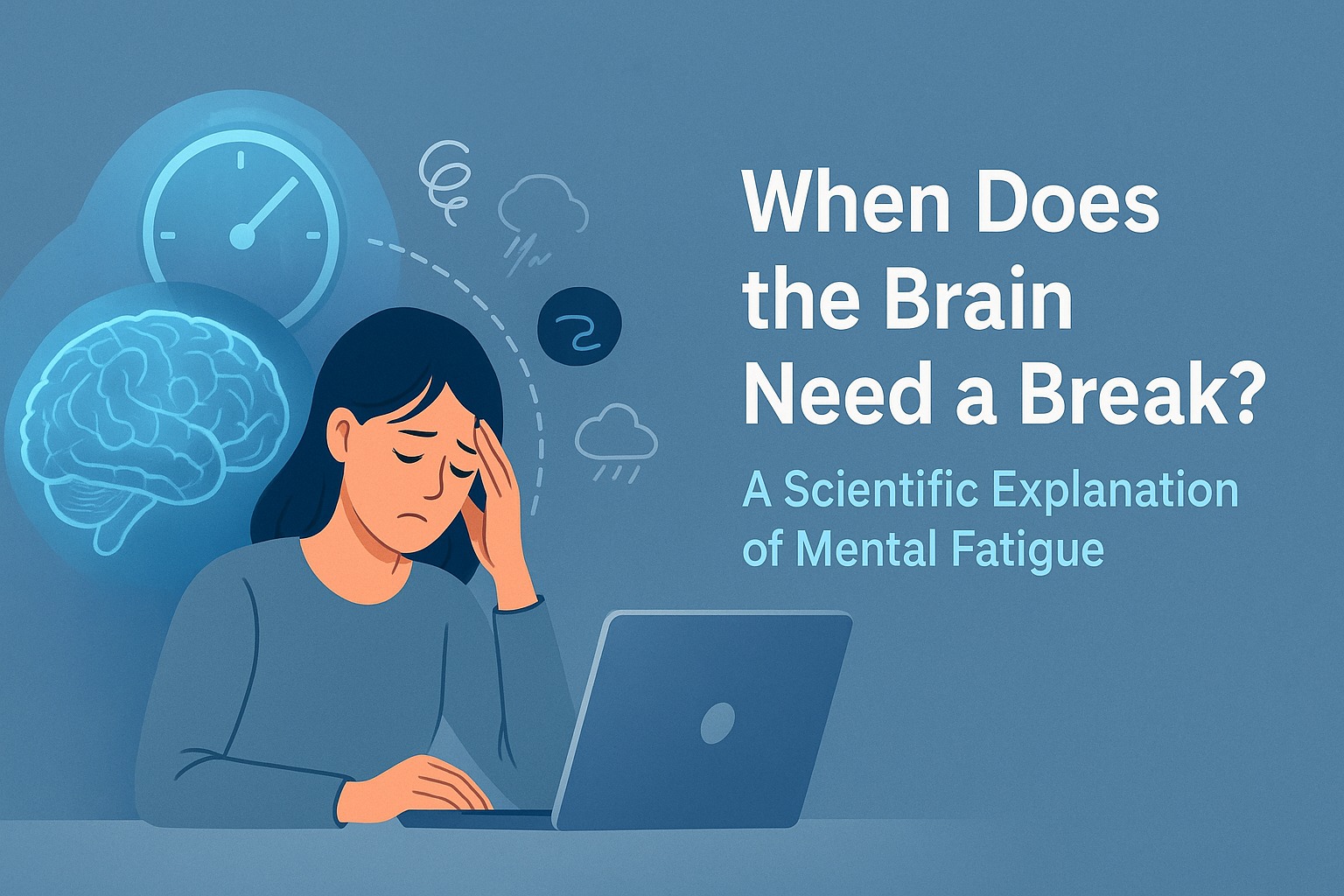
In the modern era, where productivity is constantly emphasized, many people push themselves to keep thinking, working, and processing information without rest. As a result, a condition known as **mental fatigue** or mental exhaustion often arises. Although it’s not physically visible, this condition can significantly affect one’s thinking ability, concentration, and emotional stability.According to neuroscience research, the human brain has limited capacity to process information and make decisions. Just like a muscle, the brain also needs rest to restore energy and maintain optimal cognitive function.This article explores how the brain works when experiencing fatigue, the signs that indicate it needs rest, and scientific ways to restore focus and mental energy.
WHAT IS MENTAL FATIGUE ACCORDING TO NEUROSCIENCE
Mental fatigue is a condition where the brain becomes exhausted due to prolonged cognitive activity. Activities such as working without breaks, studying intensively, or constantly consuming digital information can deplete the central nervous system’s energy.
In neuroscience, this occurs when neurotransmitters like dopamine and serotonin decrease after being overused to maintain focus. When these chemicals drop, the brain struggles to stay attentive, process data, and regulate emotions.
Moreover, the prefrontal cortex, which is responsible for decision-making and planning, begins to slow down. As a result, people become more prone to poor judgment, frustration, and procrastination.
SIGNS THAT YOUR BRAIN IS STARTING TO FATIGUE
Mental fatigue often goes unnoticed because it doesn’t cause clear physical symptoms. However, several indicators can signal that your brain needs a break:
1. Difficulty concentrating and easily distracted — The brain loses its ability to maintain long-term focus, even on simple tasks.
2. Reduced decision-making ability — The prefrontal cortex becomes less active, leading to impulsive or delayed decisions.
3. Feeling anxious, stressed, or irritable — The amygdala becomes more active when the brain is tired, making emotional control harder.
4. Lack of motivation — Dopamine activity decreases, reducing enthusiasm for normally enjoyable tasks.
5. Difficulty remembering new information — The hippocampus, which manages short-term memory, becomes less efficient.
If these signs persist, it means the brain has reached its limit and needs recovery time.
HOW THE BRAIN FUNCTIONS WHEN TIRED
When someone forces their brain to think continuously without rest, glucose levels—the brain’s main fuel—drop. Low glucose slows communication between neurons and decreases cognitive performance.
Mental fatigue also lowers dopamine activity, which regulates motivation and pleasure. Consequently, a person may feel unmotivated even after physical rest.
Studies show that after 90 to 120 minutes of intense mental work, brain activity significantly declines. This explains why short breaks are essential for maintaining long-term productivity.
WHEN DOES THE BRAIN ACTUALLY NEED REST?
The brain needs rest once cognitive activity exceeds normal capacity. Rest doesn’t mean doing nothing, but rather allowing the brain to reprocess information and restore neural connections.
Key times when the brain needs rest include:
1. After more than two hours of intense focus— The prefrontal cortex becomes saturated and requires a short break.
2. When you lose focus and make repeated mistakes — This signals slowed neural connectivity.
3. When feeling bored even though work isn’t finished — The brain sends emotional fatigue signals.
4. In the evening — Brain activity naturally declines, making sleep crucial for neural recovery.
SCIENTIFIC WAYS TO RESTORE FOCUS AND MENTAL ENERGY
To keep the brain healthy and prevent mental fatigue, here are some science-backed strategies:
- Get enough quality sleep — Sleep clears chemical buildup in the brain and repairs neural connections. Ideally, sleep 7–8 hours per night.
- Practice active rest — Light activities like walking, stretching, or short meditation improve blood flow and speed up recovery
- Use the Pomodoro method — Work for 25 minutes, rest for 5 minutes. This helps maintain focus and prevents cognitive burnout.
- Reduce digital distractions — Turning off notifications or staying away from screens for a few hours calms the nervous system.
- Eat brain-boosting foods — Nutrients like omega-3s, antioxidants, and complex glucose from fruits and grains sustain brain energy.
- Practice mindfulness or deep breathing — These techniques reduce amygdala activity (linked to stress) and enhance emotional balance.
Applying these methods helps the brain regain its clarity, productivity, and overall mental resilience.
THE IMPORTANCE OF GIVING YOUR BRAIN A BREAK
Giving your brain time to rest isn’t a sign of weakness—it’s a form of mental intelligence. A refreshed brain performs better in problem-solving, decision-making, and adaptability.
Rest also boosts creativity. When the brain relaxes, the default mode network becomes active, promoting imagination, reflection, and new ideas.
In short, rest not only restores energy but also enhances deep thinking and creativity.
CONCLUSION
The human brain has a limited capacity for cognitive strain. When pushed continuously without breaks, it leads to mental fatigue, reducing productivity and mental well-being.
Taking sufficient rest is essential to maintain balance between effort and recovery. By recognizing the signs of fatigue and practicing healthy routines, we can train our brains to remain strong, focused, and creative amid the demands of modern life.
Tentang Penulis
Gusti Ayu Tita
Penulis — Universitas STEKOM
Penulis aktif yang berfokus pada isu-isu akademik, teknologi pendidikan, dan pengembangan sumber daya manusia di lingkungan kampus.