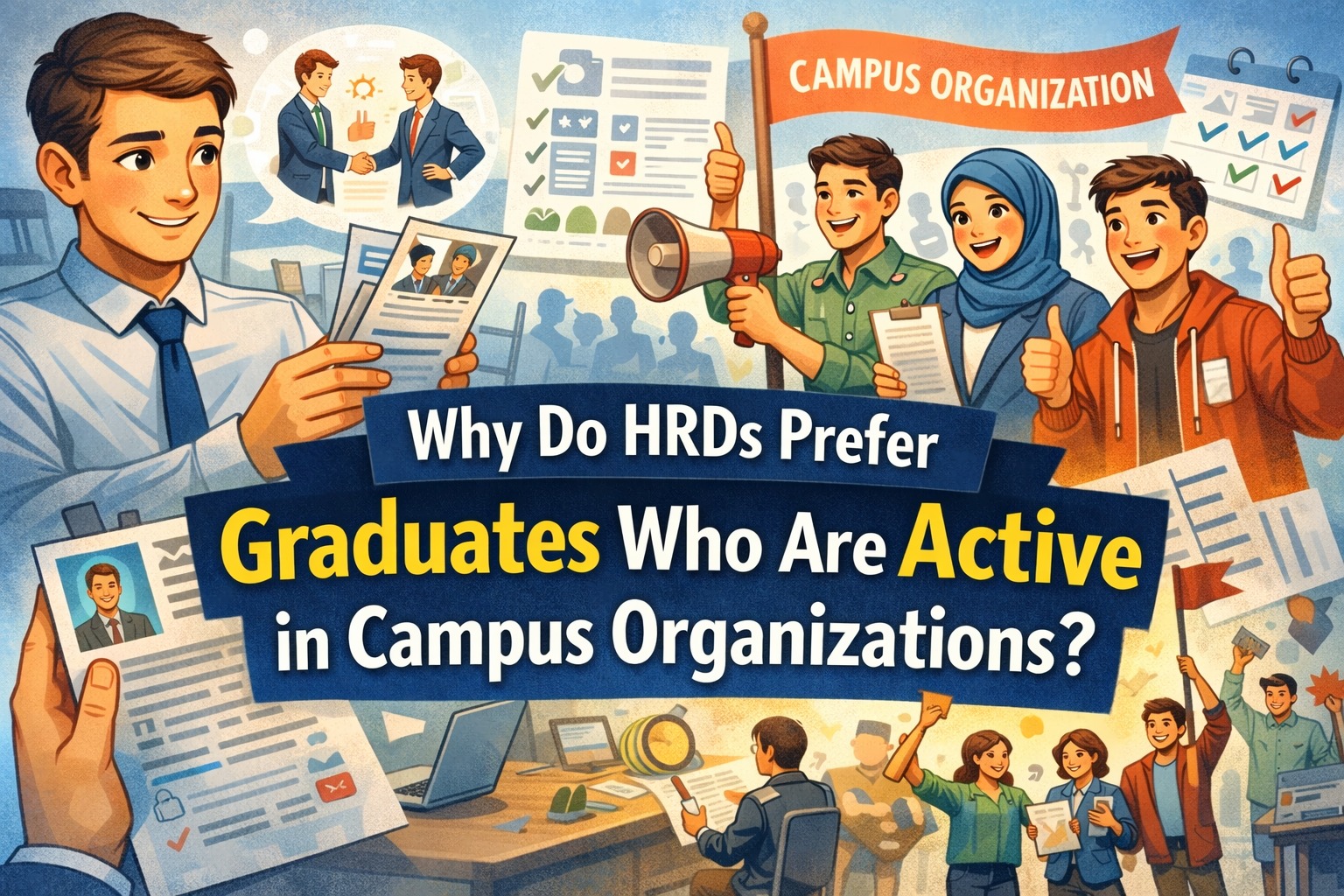
Why HR Professionals Prefer Graduates Active in Campus Organizations
Amid intense competition in the job market, academic grades are no longer the only determining factor. Many companies pay greater attention to graduates who are actively involved in campus organizations. This phenomenon is not without reason. For HR professionals, organizational experience often reflects a candidate’s readiness to face the dynamic demands of the professional world. So, what makes graduates who are active in campus organizations more attractive to HR recruiters? Here is the explanation.
Campus Organizations as Training Grounds for the Workplace
Being active in campus organizations is not merely a way to fill free time. Within these organizations, students learn to face real situations such as working in teams, managing conflicts, and achieving shared goals. These experiences closely resemble real workplace conditions.
HR professionals view campus organizations as a “miniature workplace” that helps shape character, work ethic, and a professional mindset from an early stage.
Stronger Communication Skills
One of the most sought-after skills in the corporate world is effective communication. Students who are active in organizations are accustomed to public speaking, expressing ideas, participating in discussions, and negotiating with others.
These abilities provide significant added value, as employees are expected not only to have technical expertise but also to communicate ideas clearly and collaborate with diverse teams.
Evidence of Leadership and Responsibility
Holding positions such as chairperson, secretary, or event coordinator demonstrates that an individual has handled responsibility. HR recruiters see this experience as evidence of leadership, discipline, and decision-making skills.
Even without holding top positions, active involvement still shows commitment and seriousness in carrying out assigned roles.
Resilience and Adaptability Under Pressure
Organizing events, meeting deadlines, and resolving internal organizational issues train students to handle pressure effectively. Since the workplace is full of targets and challenges, HR professionals tend to favor candidates who are already familiar with such situations.
Graduates who are active in organizations are generally more adaptable and less likely to panic when facing change.
Added Value Beyond GPA
A high GPA is important, but it does not always guarantee job readiness. HR recruiters often view organizational experience as a key differentiator among candidates with similar academic backgrounds.
Campus organizations provide added value that may not appear on academic transcripts but becomes highly visible during recruitment and job interviews.
Active Participation Is Not Just a Formality
It is important to note that HR professionals do not merely look at whether someone has joined an organization, but how active they were and what roles they played. Real contributions, lessons learned, and the impact created matter far more than simply listing an organization on a CV.
Conclusion
The reason HR professionals prefer graduates who are active in campus organizations lies in the non-academic skills developed naturally through these experiences. From communication and leadership to mental resilience, these competencies serve as essential assets in the professional world.
For students, being active in organizations is not just about gaining experience, but also a long-term investment in future career success.
Tentang Penulis
Gusti Ayu Tita P
Penulis — Universitas STEKOM
Penulis aktif yang berfokus pada isu-isu akademik, teknologi pendidikan, dan pengembangan sumber daya manusia di lingkungan kampus.