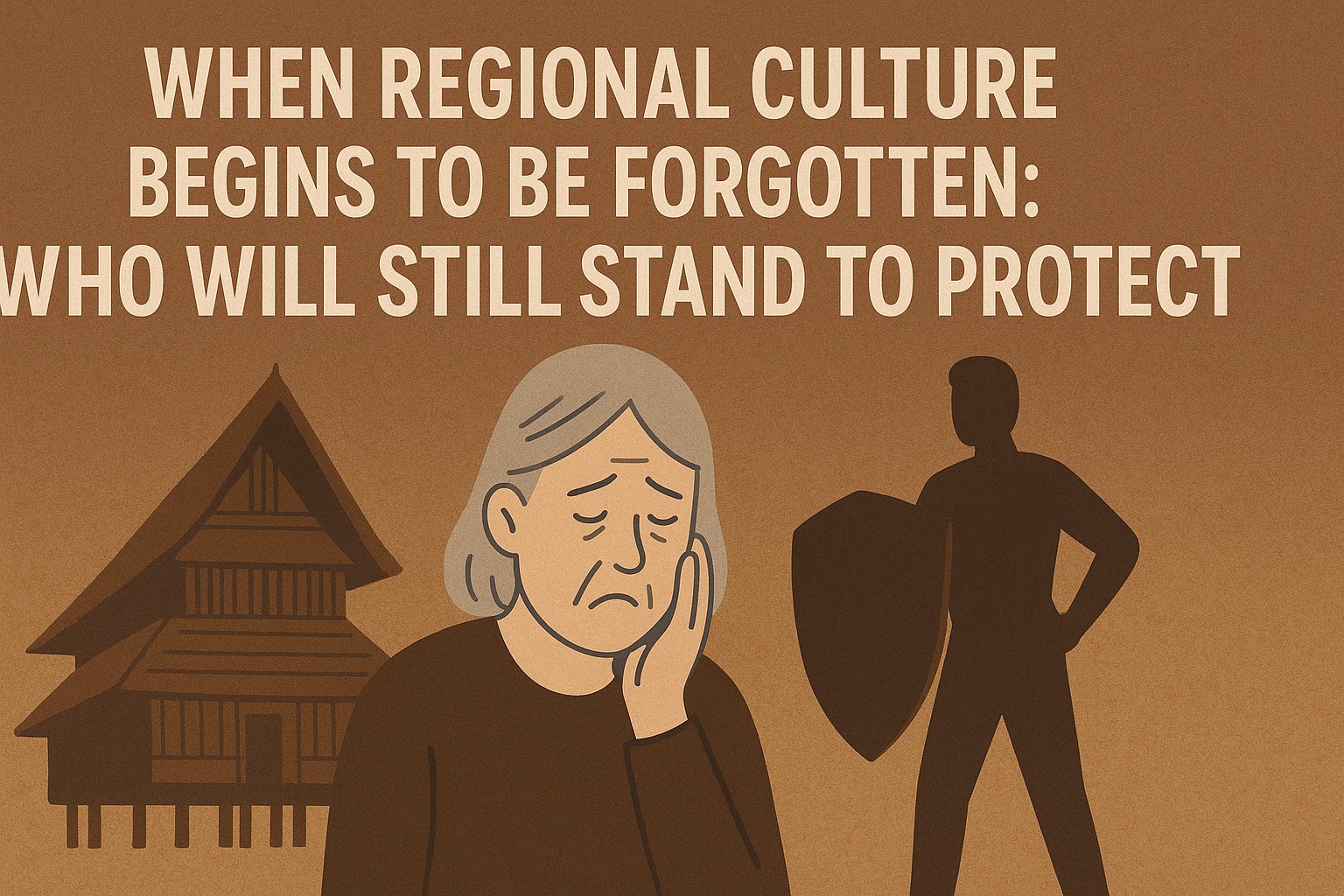
Regional culture is a living identity embedded in every movement of society—from language, arts, values, and traditions to the way people perceive the world. However, amid rapid modernization, regional culture is increasingly pushed aside by an instant lifestyle. Many young people are losing their connection to local heritage because they feel more familiar with global culture, which is seen as cooler or more relevant. This raises an important question: who is still willing to stand and preserve regional culture before it truly disappears?
To ensure culture does not become a memory stored only in museums or digital archives, collective awareness is needed to preserve it. Preservation efforts do not have to be grand; what matters most is continuity and sincerity. This article discusses why regional culture is being forgotten, who is responsible for protecting it, and the concrete steps that can be taken to keep it alive amid changing times.
REGIONAL CULTURE IN THE MODERN ERA: WHY IS IT BEING SIDELINED?
The influx of global influence makes foreign culture easily absorbed by society, especially young people. Social media, digital entertainment, and international trends shape how today’s generation views their own cultural identity. As a result, many local traditions are no longer understood in essence—they are remembered only as ceremonial performances. In reality, regional culture serves as a foundational root of national character.
This phenomenon is not just a matter of preference, but also the lack of accessible spaces for local culture to grow in modern contexts. Many cultural activities are only carried out during specific events with no continuity. If this persists, regional culture will gradually fade and lose its relevance in daily life.
Factors contributing to the decline of regional culture include:
1. The overwhelming influence of global culture
Digital media speeds up the spread of global trends, causing local culture to appear old-fashioned and unappealing to some.
2. Lack of cultural regeneration
Many traditional artists, cultural figures, and local craftsmen have no successors. When they stop creating, a piece of culture disappears with them.
3. Limited support from surrounding communities
Schools and communities often fail to provide consistent and enjoyable cultural exposure.
4. Perception that local culture has no economic value
Many believe regional culture lacks financial prospects, even though many creative industries can grow when managed well.
WHO SHOULD BE RESPONSIBLE FOR PRESERVING REGIONAL CULTURE?
Cultural preservation is not the responsibility of one party—it requires collective effort. Without synergy, cultural preservation becomes merely symbolic with no substantial impact. Culture can survive only when supported by a collaborative ecosystem that keeps it alive in various aspects of life.
This responsibility should not be seen as a heavy burden. Instead, it should be viewed as an opportunity to express pride in local identity. With proper collaboration, culture can become powerful, relevant, and functional.
Key contributors to cultural preservation include:
1. Local communities as primary heirs
They understand their culture best. Their support determines whether a tradition thrives or fades.
2. Younger generations as future bearers
Their role is crucial. The more they understand their culture, the stronger their regional identity becomes.
3. Government as provider of regulations and facilities
The government can contribute through programs, funding, and cultural development policies.
4. Cultural communities as grassroots movers
These groups have the flexibility to create creative activities and revive traditions with fresh approaches.
5. Creative industry players who draw inspiration from culture
Music, fashion, film, and design can bring local culture into the mainstream while enhancing its economic value.
CONCRETE STEPS TO REVIVE LOCAL CULTURE
Cultural preservation does not require overly complex or expensive methods. Everyone can contribute according to their ability and interest. What matters is consistency and sincerity in maintaining cultural identity.
Cultural revitalization should be relevant to today’s generation while preserving original values.
Some practical steps include:
1. Using local products in daily life
Purchasing local creations supports traditional craftsmen and helps keep culture alive.
2. Organizing regular cultural activities
Simple activities such as art performances, craft workshops, or small festivals can help sustain cultural awareness.
3. Presenting culture in modern formats
For example, integrating traditional elements into digital content, modern fashion, or contemporary music.
4. Introducing culture to children from an early age
Teach local languages, traditional dances, folklore, and traditional games to instill cultural identity from childhood.
CONCLUSION
Regional culture is a shared identity that must be protected collectively. Amid the intensity of globalization, local culture is becoming increasingly forgotten and may disappear if no one steps up to preserve it. Cultural preservation requires cooperation among communities, youth, governments, and creative industry players. With simple yet consistent efforts, culture can remain alive and relevant.
Preserving culture is not merely about nostalgia—it is about maintaining national identity in the face of changing times.
Tentang Penulis
Gusti Ayu Tita
Penulis — Universitas STEKOM
Penulis aktif yang berfokus pada isu-isu akademik, teknologi pendidikan, dan pengembangan sumber daya manusia di lingkungan kampus.