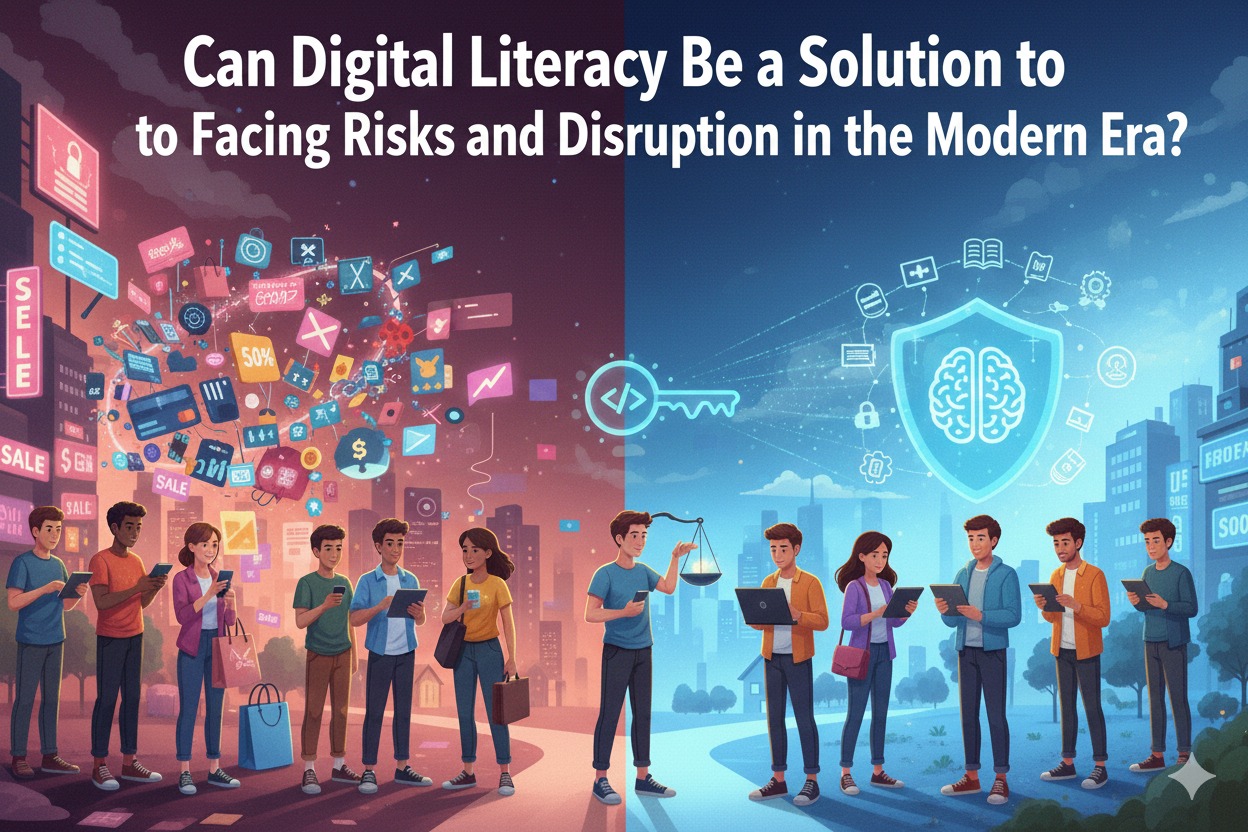
The modern era is marked by rapid and continuous change. Technology is advancing at an unprecedented pace, influencing nearly every aspect of human life—from the economy and education to social interaction. Amid these dynamics, digital literacy has emerged as an essential skill that enables individuals and societies to face the risks and disruptions brought about by digitalization.
UNDERSTANDING DIGITAL LITERACY IN A TURBULENT ERA
Digital literacy is no longer limited to basic technical skills in using digital devices. It encompasses a deeper understanding of how technology works, the ability to evaluate and verify information, and awareness of digital ethics and cybersecurity.
This competence is crucial in navigating fast-paced and often unpredictable changes. Without sufficient digital literacy, individuals are more vulnerable to misinformation, online fraud, and the misuse of personal data.
RISKS ARISING FROM DIGITAL DISRUPTION
Digital disruption introduces various risks that are not always immediately visible. These include:
* The spread of false information that undermines public trust
* Digital inequality between those with and without access to technology
* Cyberattacks targeting personal and organizational data
* Technology dependence that influences mindset and social behavior
Without adequate digital skills, these challenges can escalate into serious threats in everyday life.
DIGITAL LITERACY AS A SHIELD AGAINST DISRUPTION
Digital literacy serves as both a protective shield and a solution in confronting modern disruptions. With strong digital literacy, individuals are able to:
* Identify misleading or invalid information
* Use technology efficiently and productively
* Protect personal data and digital privacy
* Adapt skills to meet the demands of the digital workforce
* Think critically when responding to technological trends and changes
These abilities empower individuals to remain resilient and confident in rapidly changing environments.
THE IMPORTANCE OF ADAPTATION IN WORK AND EDUCATION
Today’s workforce is highly dependent on technological competence. Organizations require employees who can operate digital platforms, understand data, and collaborate virtually. Likewise, the education sector increasingly relies on digital tools as integral components of the learning process.
Digital literacy acts as a bridge that helps individuals remain relevant and competitive in both professional and academic settings.
DIGITAL LITERACY FOR BUILDING SOCIAL RESILIENCE
Beyond technical skills, digital literacy also contributes to social resilience. Communities with strong digital literacy are better prepared to adapt to disruption, as they are capable of critical thinking, behavioral adjustment, and healthy digital interaction.
By understanding ethical communication, reducing the spread of harmful content, and fostering constructive online discourse, society can create a safer and more harmonious digital environment.
CONCLUSION
Digital literacy plays a fundamental role as a solution to the risks and disruptions of the modern era. With adequate digital competence, individuals and communities can navigate technological change with greater confidence, reduce vulnerability to digital threats, and seize opportunities created by digital transformation. Ultimately, digital literacy is not merely a skill—it is a strategic necessity for building a resilient and adaptive future.
Tentang Penulis
Gusti Ayu Tita
Penulis — Universitas STEKOM
Penulis aktif yang berfokus pada isu-isu akademik, teknologi pendidikan, dan pengembangan sumber daya manusia di lingkungan kampus.