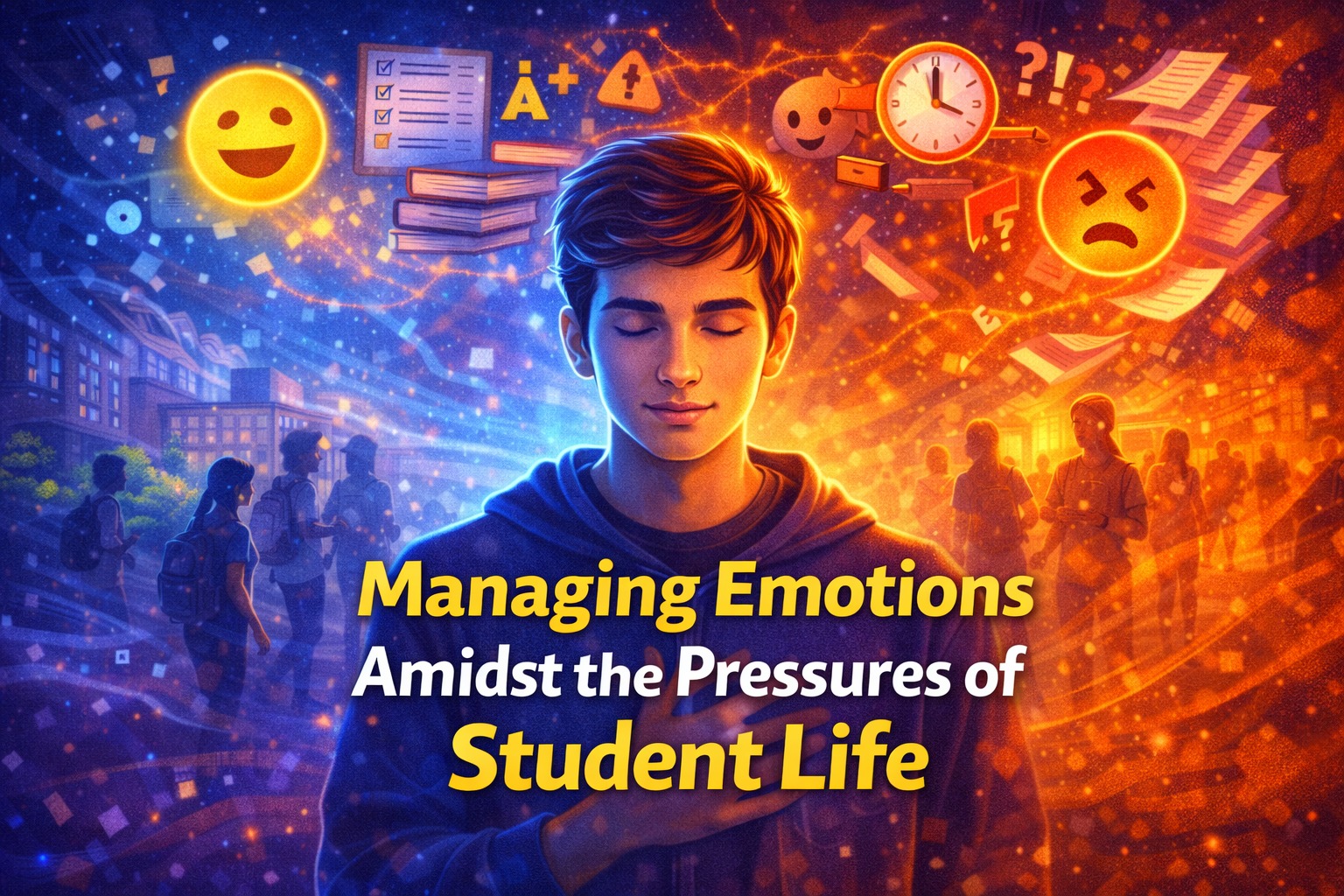
The Importance of Emotional Management in Student Life
Student life is closely associated with various pressures, both academic and non-academic. Accumulating assignments, academic performance demands, financial issues, and social relationship dynamics make students vulnerable to emotional exhaustion. Unfortunately, emotional management is often overlooked, even though it plays a crucial role in maintaining balance during university life. Managing emotions does not mean suppressing or ignoring feelings, but rather understanding and responding to them in a healthy way. Students who manage their emotions effectively tend to be more adaptive when facing campus life pressures.
Sources of Pressure in Student Life
Pressure in student life comes from multiple aspects. Academic burdens such as assignment deadlines, examinations, and grade expectations are major sources of stress.
Financial pressure, especially for students living independently, also significantly contributes to emotional strain.
Social factors play an important role as well. Family expectations, peer comparison, and the influence of social media can trigger feelings of inadequacy and anxiety about the future.
The Impact of Poorly Managed Emotions
Emotions that are not managed properly can negatively affect students’ mental and physical health.
Prolonged stress can reduce concentration, disrupt sleep patterns, and decrease learning motivation.
In the long term, this condition may lead to burnout, excessive anxiety, and social withdrawal. Therefore, recognizing and managing emotions early is an essential need for students.
The Importance of Emotional Awareness
Emotional awareness is the ability to recognize current feelings and understand their causes. Many students are accustomed to ignoring feelings of fatigue or pressure in order to appear productive.
Emotional awareness helps students identify when they need rest or professional support.
This awareness becomes the first step toward building better mental well-being.
Healthy Strategies for Managing Emotions
There are various strategies students can apply to manage emotions amid pressure. Managing time realistically, maintaining balance between academic responsibilities and rest, and expressing emotions through positive activities such as exercise or journaling can help reduce stress.
Sharing concerns with trusted friends or using campus counseling services is a wise and healthy option.
Emotional management is not about handling everything alone, but about recognizing the need for support.
The Role of the Environment in Supporting Emotional Health
The campus environment and family support play a significant role in helping students manage emotions.
An open, supportive, and stigma-free environment allows students to feel safe expressing their feelings.
Universities that provide discussion spaces, mental health education, and counseling services help students cope with pressure in a more balanced way.
Toward a More Balanced Student Life
Managing emotions is an essential life skill, not a sign of weakness.
Students who understand and regulate their emotions are better prepared to face academic challenges and post-graduation life.
With strong self-awareness and supportive surroundings, students can experience university life in a healthier, more productive, and more meaningful way.
Tentang Penulis
Gusti Ayu Tita P
Penulis — Universitas STEKOM
Penulis aktif yang berfokus pada isu-isu akademik, teknologi pendidikan, dan pengembangan sumber daya manusia di lingkungan kampus.