Why Educational Digitalization in Indonesia Often Fails to Run Effectively
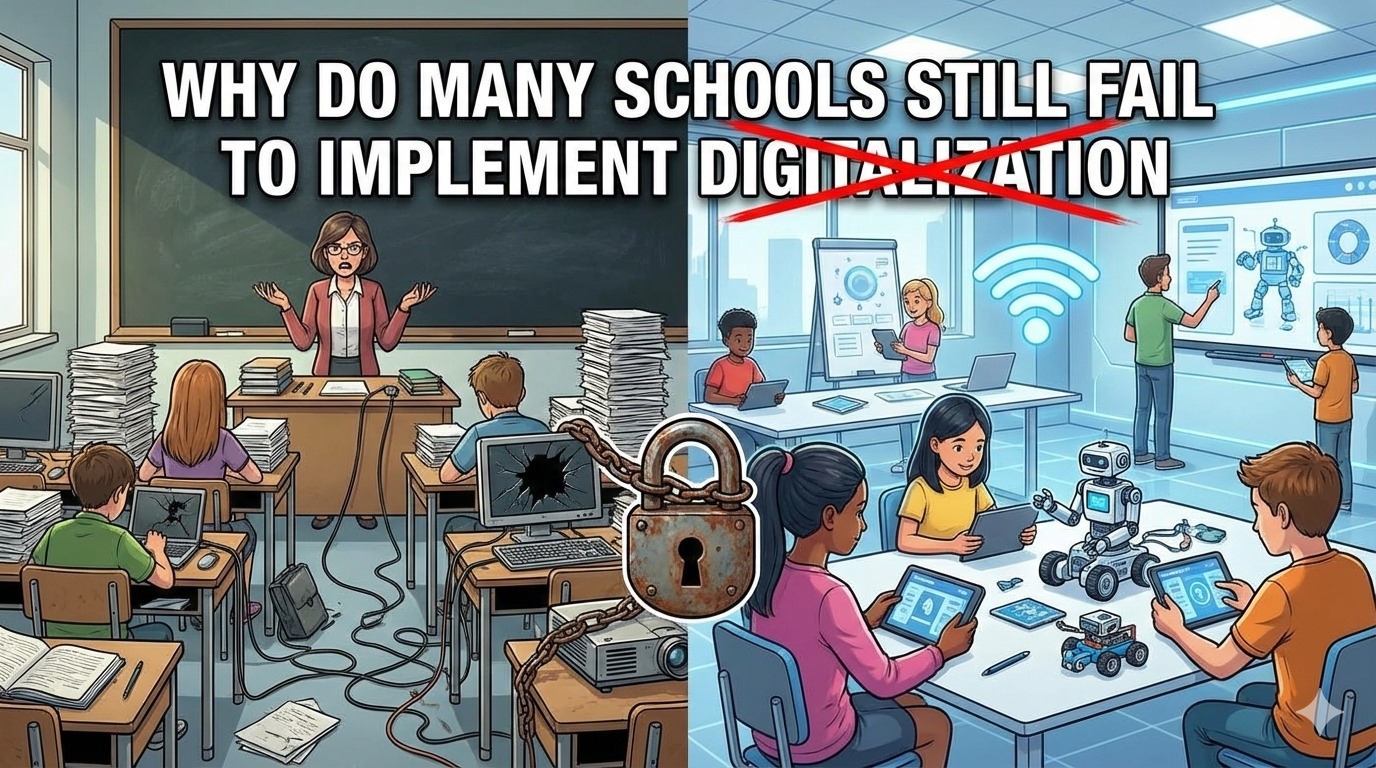
Educational digitalization has become a hot topic in Indonesia’s education sector. Governments, schools, and teachers are racing to integrate technology into teaching and learning processes. However, behind this enthusiasm, many schools have not yet managed to implement digitalization effectively.
So, what are the main causes? Is it limited facilities, human resources, or a lack of understanding of the true purpose of digitalization itself?
1. Unequal Technological Infrastructure
One of the main reasons for the failure of school digitalization is the unequal distribution of technological infrastructure.
Schools in major cities may already have fast internet access and adequate digital devices. However, in rural areas, internet connectivity is often limited, and some schools still lack basic equipment such as computers or projectors in classrooms.
Without proper infrastructure support, digitalization programs remain slogans without real implementation.
2. Lack of Teacher Training and Digital Literacy
School digitalization is not only about devices, but also about teachers’ readiness to use them.
Many teachers still have limited digital literacy skills. As a result, technology that should simplify learning instead complicates the teaching process.
Continuous and practical teacher training is essential so educators can use technology creatively and effectively in the classroom.
3. Insufficient Support and Inconsistent Policies
Digitalization programs often stop midway due to a lack of support from local governments or related institutions.
Without clear policies, sustainable funding, and regular evaluation, schools struggle to maintain digital transformation efforts.
In fact, successful digital transformation requires strong collaboration between governments, schools, and the wider community.
4. Misplaced Focus: Technology vs. Educational Goals
Many schools focus too much on technology rather than on educational objectives.
Digitalization is not merely about replacing chalkboards with screens, but about how technology can improve learning quality.
When the focus shifts to simply “following trends,” the real benefits of digitalization become difficult for students to experience.
5. Gaps in Student Access and Readiness
Not all students have equal access to digital devices.
Many still lack laptops, tablets, or stable internet connections at home. This makes digital learning uneven and risks widening educational inequality.
Schools need inclusive solutions to ensure all students can actively participate in digital learning.
CONCLUSION: SCHOOL DIGITALIZATION MUST START WITH THE RIGHT UNDERSTANDING
Educational digitalization is not just about replacing books with screens—it is about transforming the mindset behind teaching and learning.
To be effective, schools must build strong foundations, including adequate infrastructure, competent teachers, and supportive policies.
With careful planning and commitment, digitalization can become a real innovation rather than merely an illusion of educational modernization.
Tentang Penulis
Gusti Ayu Tita
Penulis — Universitas STEKOM
Penulis aktif yang berfokus pada isu-isu akademik, teknologi pendidikan, dan pengembangan sumber daya manusia di lingkungan kampus.