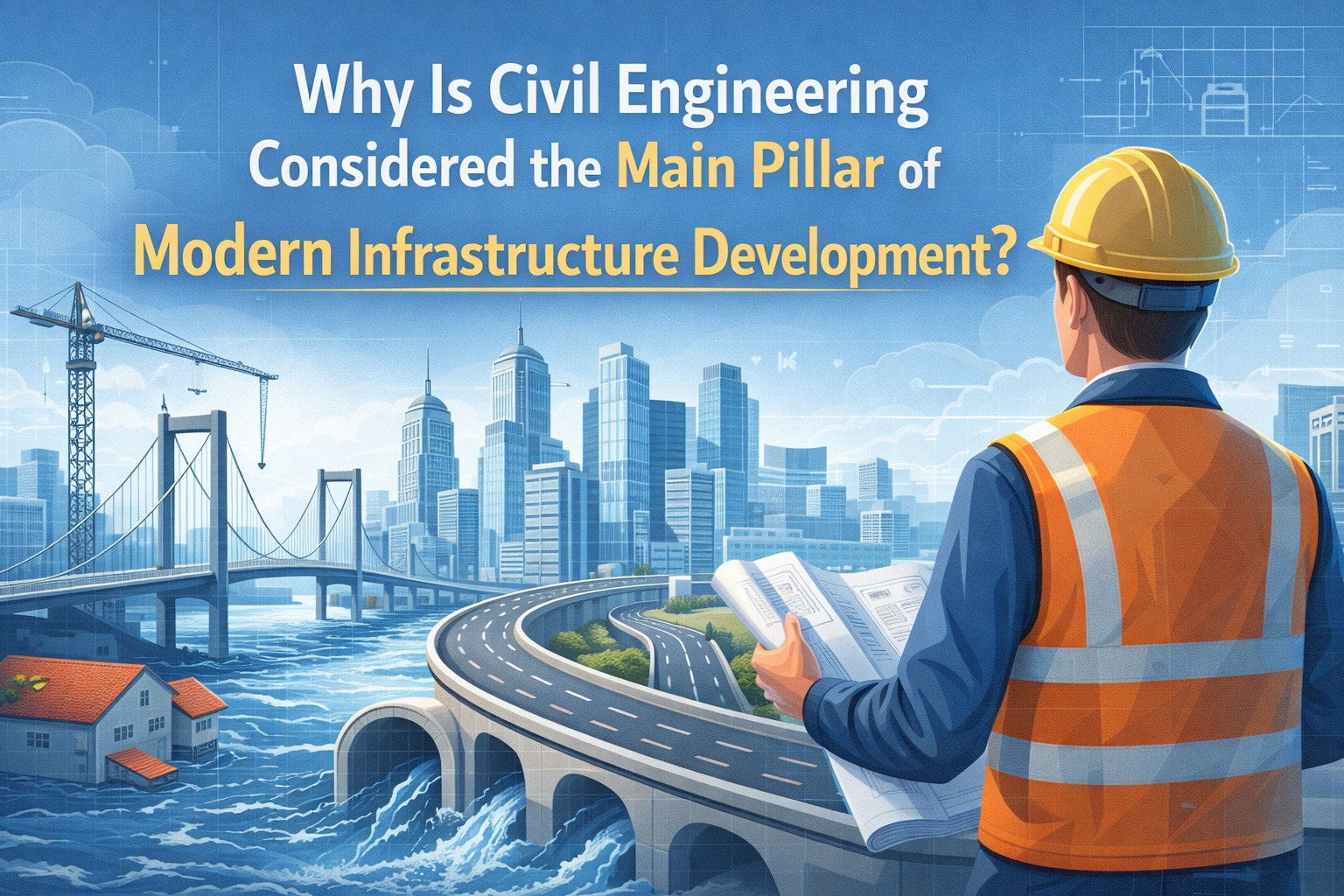
Why is Civil Engineering often referred to as the main pillar of modern infrastructure development? In an ever-evolving world, the demand for modern infrastructure continues to grow. From highways, bridges, and skyscrapers to drainage systems and water management, all require solid expertise from civil engineering professionals. It is no surprise that Civil Engineering is widely regarded as the backbone of modern development. This article explores why civil engineering plays such a vital role in shaping contemporary civilization.
What Is Civil Engineering?
Civil Engineering is a branch of engineering that focuses on the planning, construction, supervision, and maintenance of infrastructure. Its scope of work is broad and includes:
- Building and structural construction
- Transportation systems and highways
- Dams and water resource management
- Bridge structures
- Environmental and sanitation infrastructure
The diversity of these fields makes civil engineering one of the most strategic disciplines in creating a well-organized and advanced society.
The Role of Civil Engineering in Modern Infrastructure Development
1. Creating Safe and Durable Infrastructure
One of the primary roles of civil engineering is ensuring that every structure is strong, safe, and long-lasting. Civil engineers design buildings and infrastructure that can withstand natural disasters such as earthquakes and floods, thereby safeguarding public safety.
2. Connecting Regions and Driving Economic Growth
Highways, railways, bridges, and airports are the results of civil engineering expertise. These infrastructures facilitate the movement of people and goods, expand trade access, and accelerate regional economic growth.
3. Supporting Urban Modernization
Smart city concepts, modern public spaces, integrated mass transportation systems, and comprehensive drainage networks are integral outcomes of civil engineering innovation. This discipline serves as a key driver in developing more efficient and environmentally friendly cities.
4. Addressing Environmental Challenge
Civil engineering is not only about building structures but also about improving environmental conditions. Engineers design sanitation systems, waste treatment facilities, and clean water management solutions that enhance the quality of life for communities.
Skills Acquired by Civil Engineering Students
Civil engineering students are equipped with essential skills such as:
- Structural and material analysis
- Project and construction management
- Transportation planning
- Hydrological modeling
- Use of engineering software such as AutoCAD, SAP2000, and Civil 3
These competencies prepare graduates to tackle major challenges in modern infrastructure projects.
Career Opportunities for Civil Engineering Graduates
With the growing demand for infrastructure development, career prospects in civil engineering are extensive, including roles such as:
- Structural engineer
- Transportation engineer
- Construction manager
- Engineering consultant
- Urban planner
- Geotechnical and environmental engineer
Both public and private sectors highly depend on professionals from this field.
Conclusion
It is no coincidence that Civil Engineering is regarded as the main pillar of modern infrastructure development. From building foundations to urban modernization, civil engineering plays a critical role in creating safe, efficient, and sustainable environments. For individuals interested in the world of construction and eager to contribute to national development, civil engineering is a highly relevant and promising field of study.
Tentang Penulis
Gusti Ayu Tita
Penulis — Universitas STEKOM
Penulis aktif yang berfokus pada isu-isu akademik, teknologi pendidikan, dan pengembangan sumber daya manusia di lingkungan kampus.