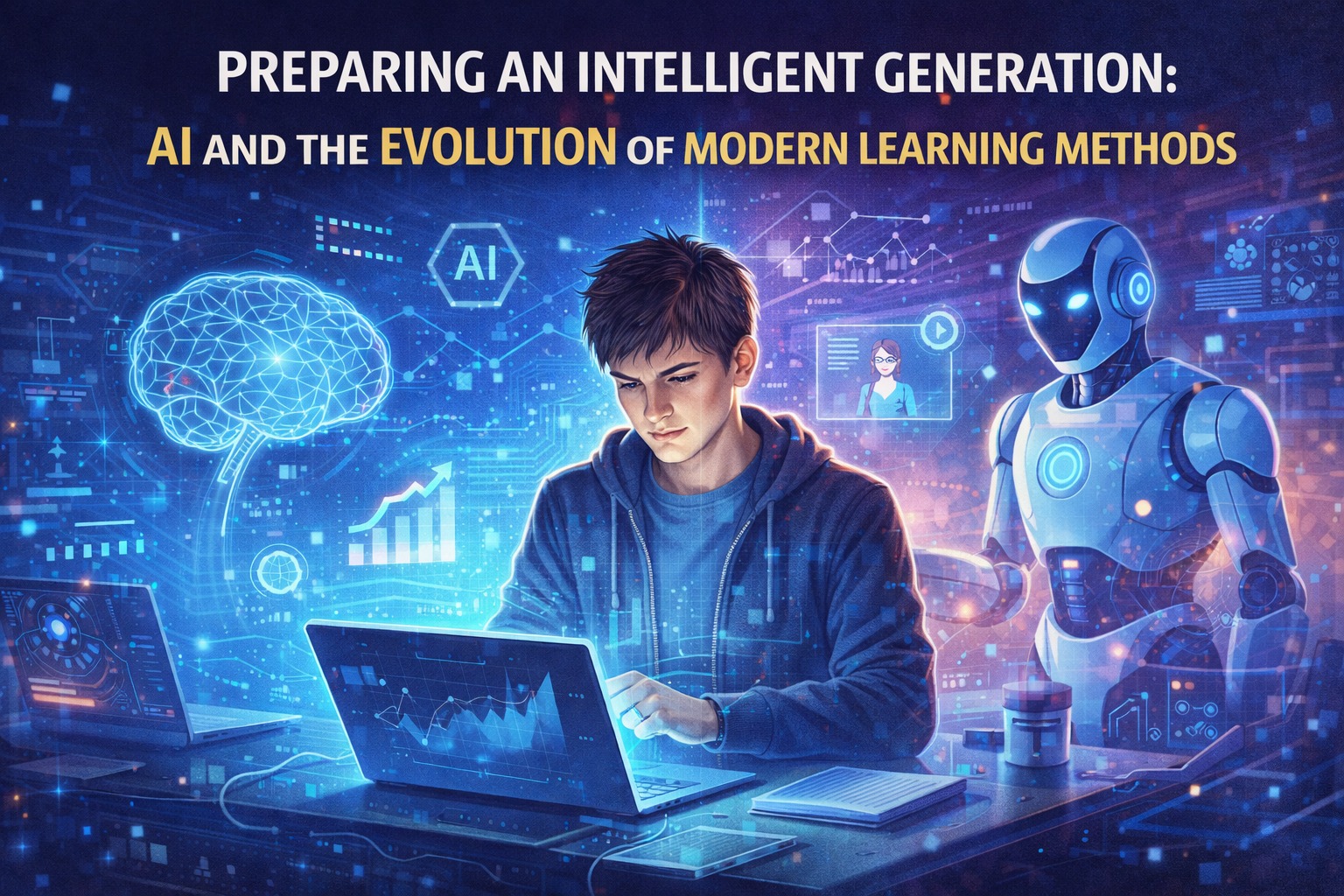
In today’s rapidly evolving digital era, artificial intelligence (AI) has become a new foundation in the world of education. What was once considered traditional learning—memorization, completing assignments, and following a linear curriculum—has now transformed into a more dynamic, personalized, and adaptive learning experience. AI is no longer merely a tool; it has become a catalyst that reshapes how future generations understand the world.
In this context, preparing an intelligent generation means equipping learners with the ability to think critically, solve problems, collaborate, and adapt. These skills are strengthened by technologies designed to understand each learner’s unique needs. This article explores how AI is shaping modern learning methods and why it is essential for the future of education.
THE EVOLUTION OF LEARNING METHODS IN THE ERA OF INTELLIGENT TECHNOLOGY
Learning methods have undergone significant transformation with the integration of AI into classrooms. Education no longer relies on a one-size-fits-all approach; instead, it is moving toward more detailed and meaningful personalization.
Some key elements of this evolution include:
Digitalization of Learning Materials
All learning resources are now available online in various formats. Students can study in ways that suit their needs, such as videos, audio content, simulations, or text.
Individualized Learning Supported by AI
Algorithms analyze students’ learning patterns. Each student receives materials tailored to their abilities rather than being limited to general classroom standards.
Data-Based Progress Monitoring
AI systems analyze student performance in real time. Teachers can conduct evaluations more quickly and provide appropriate interventions.
Through this evolution, education shifts from a passive process to an active learning experience that fosters independence and curiosity.
THE ROLE OF AI IN SHAPING AN INTELLIGENT GENERATION
AI not only changes learning methods but also helps develop students’ abilities to understand and overcome future challenges. Several key roles of AI in shaping an intelligent generation include:
1. Personalized Learning Based on Individual Needs
One of AI’s greatest strengths is its ability to adapt learning materials to each student’s level of understanding. AI can adjust content based on:
Learning speed
Preferred learning styles
Common challenges encountered
Performance on previous exercises
With this level of personalization, students neither feel left behind nor bored, as the learning process continuously aligns with their abilities.
2. Providing Instant and Accurate Feedback
AI systems can analyze students’ answers within seconds and provide corrections along with explanations. Immediate feedback allows students to correct mistakes right away, significantly improving learning effectiveness.
3. Encouraging Independent Learning
AI enhances students’ ability to learn independently through digital learning assistants, adaptive modules, and personalized content recommendations.
Examples of AI support for independent learning include:
Chatbot-based learning guidance
Automatic concept explanations
Recommendations for videos or articles based on needs
Targeted practice on unmastered topics
As a result, students become more proactive and less dependent on external assistance.
CHANGES IN THE ROLE OF TEACHERS IN MODERN LEARNING
Despite AI’s growing role in managing learning processes, teachers remain central figures in education. The key change lies in how teachers carry out their roles.
1. From Instructor to Facilitator
Teachers now focus more on guiding the learning process rather than merely delivering content. With AI handling materials and assessments, teachers can dedicate more attention to character development, creativity, and students’ critical thinking skills.
2. Using Data to Inform Instructional Decisions
AI provides detailed reports on student performance. Teachers can identify learning difficulties, student interests, and long-term progress to design more effective learning strategies.
3. Enhancing Human Interaction
With reduced administrative burdens, teachers have more opportunities for emotional and social interaction with students. Stronger teacher-student relationships help create a healthier and more supportive learning environment.
THE BENEFITS OF AI FOR STUDENTS IN THE MODERN LEARNING ERA
AI offers numerous advantages for today’s learners, including:
More Flexible Learning
Students can learn anytime and anywhere through digital platforms. Learning is no longer confined to physical classrooms.
Increased Learning Motivation
Interactive experiences make learning more engaging. Educational games and challenge-based modules make the learning process more enjoyable.
Development of Future-Ready Skills
AI encourages students to develop skills such as data analysis, problem-solving, and digital literacy—competencies that are essential in an ever-changing job market.
CHALLENGES THAT NEED TO BE ADDRESSED
The implementation of AI in education also presents challenges that require serious attention:
1. Unequal Access to Technology
Many regions still lack adequate infrastructure. This inequality can widen the gap in educational quality.
2. Overdependence on Technology
Students may lose independent thinking skills if AI provides all the answers. A balance between technology and conventional methods is essential.
3. Educational Data Privacy
Student data must be protected with strong security systems. Data misuse can lead to serious ethical issues.
CONCLUSION
AI opens a new chapter in education. Modern learning methods supported by technology can enhance learning quality, accelerate understanding, and provide more personalized experiences for students. However, the success of education still depends on maintaining a balance between technology and the human touch.
Preparing an intelligent generation means using AI as a tool to support learning—not to replace educators. Through harmonious collaboration between teachers, students, and technology, future education can become more inclusive, adaptive, and relevant to real-world needs.
Tentang Penulis
Gusti Ayu Tita
Penulis — Universitas STEKOM
Penulis aktif yang berfokus pada isu-isu akademik, teknologi pendidikan, dan pengembangan sumber daya manusia di lingkungan kampus.