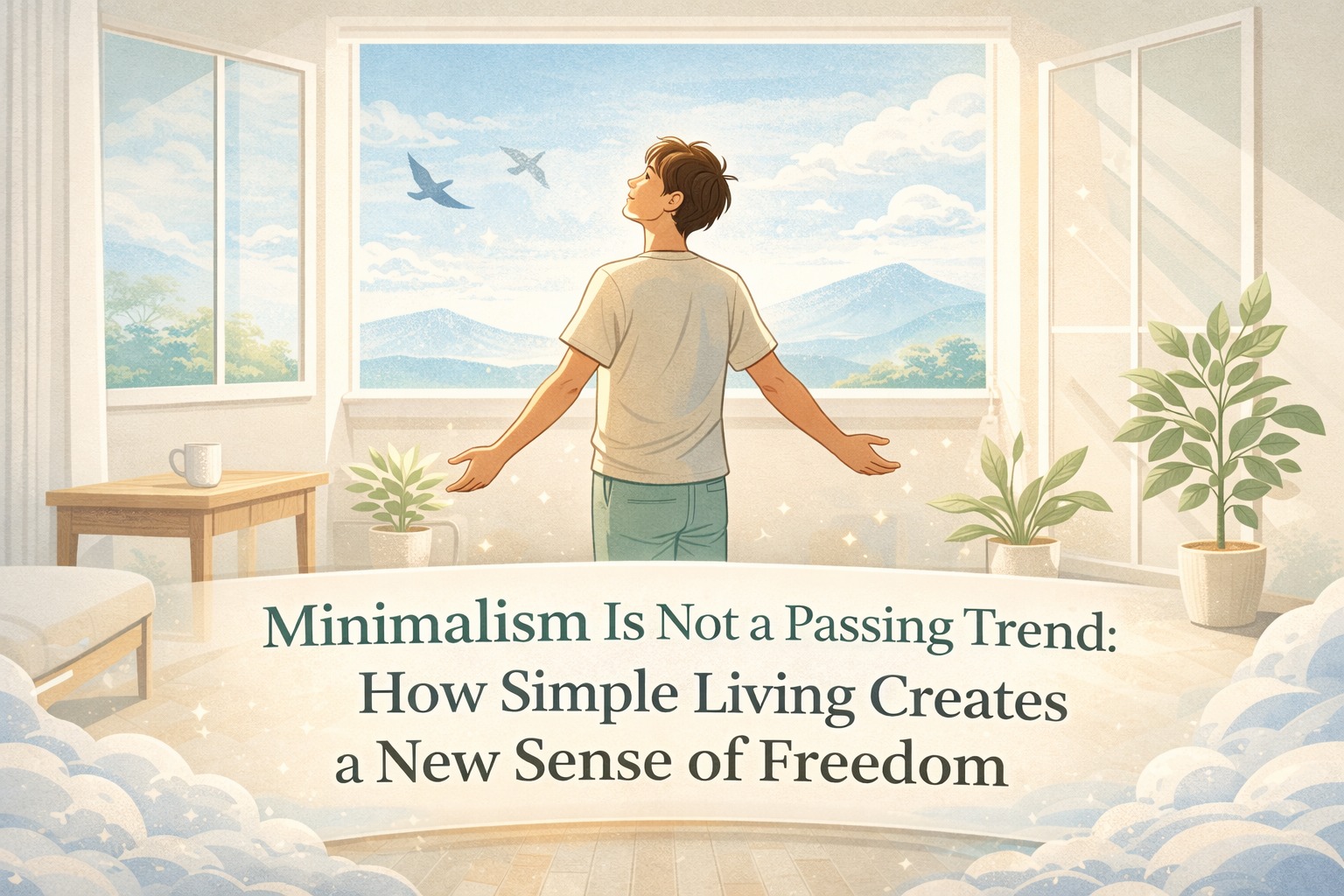
In an era where information, possessions, and life demands continue to increase, many people are finding breathing space through the concept of simple living. Minimalism is no longer seen as a temporary lifestyle trend, but as a response to mental exhaustion caused by an increasingly crowded world. Living minimally is not just about getting rid of belongings, but about deciding what truly matters in life.
THE MEANING OF MINIMALISM AND ITS TRUE ESSENCE
Many people mistakenly believe that minimalism means living with very few possessions or rejecting comfort. In reality, minimalism is a life approach focused on values, meaning, and balance. Its core purpose is to minimize unnecessary things so life feels lighter and more intentional.
Minimalism aims to help individuals:
- Reduce Distractions
Removing irrelevant elements allows the mind to focus on meaningful things.
- Optimize Energy
The fewer things to manage, the more energy can be directed toward what truly matters.
- Increase Self-Awareness
Simple living builds the habit of evaluating needs rather than momentary desires.
WHY MINIMALISM IS BECOMING A NECESSITY IN THE INFORMATION ERA
Digital development exposes people to far more stimuli than previous generations. Interaction, entertainment, work, and shopping all happen on a single screen, increasing mental load.
Key reasons why minimalism is becoming increasingly relevant include:
1. Information Overload
Excessive notifications, ads, and content force the brain to work nonstop. Minimalism helps filter information and clear the mind.
2. Lifestyle Pressure
Media often promotes unrealistic standards of success. Minimalism shifts focus away from proving self-worth through possessions.
3. Productivity Demands
Modern life equates productivity with busyness. Minimalism reframes productivity from “being busy” to “being meaningful.”
BENEFITS OF MINIMALIST LIVING FOR MENTAL AND EMOTIONAL HEALTH
Simple living creates new space—not only in the home but also in the mind. The benefits are tangible:
- Reduced Stress
A tidy, uncluttered environment makes the brain feel safer and calmer.
- Easier Decision-Making
Fewer choices lead to faster, less exhausting decisions.
- Improved Quality of Life
Focus shifts back to relationships, experiences, and meaningful time rather than possessions.
- More Emotional Stability
Minimalism reduces anxiety driven by consumerist impulses
These benefits show that minimalism is not just about clean aesthetics, but also a form of mental protection.
APPLYING MINIMALISM IN DAILY LIFE
Minimalism does not have to be extreme. It is a gradual process that starts with small steps and continues consistently
1. Decluttering Physical Spaces
Physical space affects mental conditions. Start by organizing:
- Wardrobes
- Work desks
- Rarely used items
By reducing items that no longer serve a purpose, spaces become more functional and easier to maintain.
2. Managing Digital Consumption
Minimalism also applies to the digital world:
- Delete unused applications
- Disable unnecessary notifications
- Reduce scrolling time
Lower digital exposure improves focus and mental well-being.
3. Simplifying Commitments
Life often feels overwhelming not because of possessions, but because of activities.
- Learn to say no
- Prioritize value-driven activities
- Reduce multitasking
With fewer commitments, more energy can be dedicated to what truly matters.
4. Conscious Consumption
Minimalism teaches individuals to ask before purchasing:
- Is this truly needed?
- Will this provide long-term value?
- Is this just a momentary desire?
Conscious consumption saves money, reduces regret, and helps protect the environment.
A NEW FORM OF FREEDOM THROUGH SIMPLE LIVING
Freedom in minimalism is not just about having more space or a tidier home—it comes from a shift in mindset. Simple living frees individuals from social pressure, material obsession, and unnecessary anxiety.
Forms of freedom that are most strongly felt include:
- Freedom to choose without being influenced by trends
- Freedom to focus on meaningful relationships
- Freedom from material competition
- Freedom to manage time intentionally
Minimalism creates space for what makes life truly meaningful—not just what looks good, but what genuinely feels good.
CONCLUSION
Minimalism is not a trend that will disappear in a few years. Instead, it is evolving into a way of life that restores personal control. By reducing what is non-essential, individuals regain space, time, and energy.
In a world that is increasingly busy and full of distractions, simple living becomes a modern form of freedom—the freedom to live according to personal values rather than external pressure. Minimalism is a journey toward calmness, clarity, and a higher quality of life.
**Keywords:**
Tentang Penulis
Gusti Ayu Tita
Penulis — Universitas STEKOM
Penulis aktif yang berfokus pada isu-isu akademik, teknologi pendidikan, dan pengembangan sumber daya manusia di lingkungan kampus.