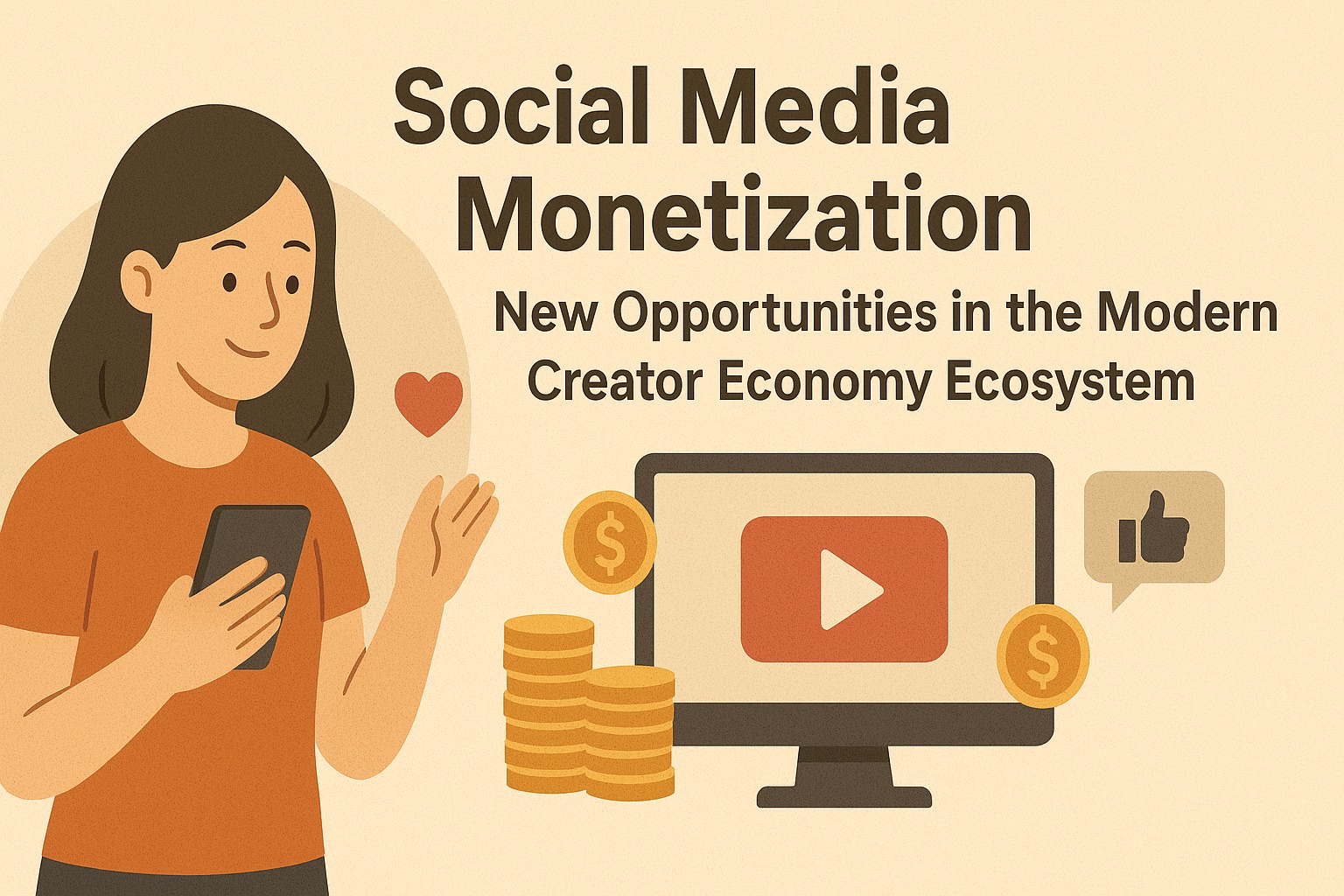
Social media is no longer just a space for sharing stories and entertainment—it has evolved into a promising source of income. Millions of creators around the world utilize digital platforms to build an audience, create content, and generate revenue from their online activities. This transformation has formed a new ecosystem known as the creator economy, where personal branding and community serve as primary assets. The following discussion explores how social media opens doors to monetization, the business models emerging from it, and the challenges creators face in the digital era.
THE DEVELOPMENT OF SOCIAL MEDIA IN THE DIGITAL ECONOMY
Social media continues to grow rapidly alongside the increasing number of internet users. Platforms such as Instagram, YouTube, TikTok, and Twitter are not only communication tools but also digital showcases for creativity.
In an economic context, social media serves as an effective marketing tool capable of reaching audiences on a global scale. Creators can present their work, interact directly with fans, and build trust without intermediaries.
THE CONDITIONS OF THE CREATOR ECONOMY ECOSYSTEM
The creator economy reflects a shift in work patterns—from traditional systems toward models based on individual skills and creativity. Anyone can become a creator as long as they consistently produce relevant content.
A defining characteristic of this ecosystem is the close relationship between creators and their audience. The connection formed is not merely transactional—it grows into a community built on shared interests and values.
POPULAR SOCIAL MEDIA MONETIZATION MODELS
Various monetization models give creators flexibility in determining their revenue sources.
1. Advertising and Endorsements
Brand collaboration.
Product reviews.
Paid campaigns.
These partnerships provide financial benefits while expanding creator reach.
2. Premium Content Subscription
Access to exclusive content.
Paid membership features.
Limited interaction for members.
This model supports long-term and continuous income.
3. Live Streaming and Donations
Direct support from fans.
Real-time interaction.
Audience appreciation for creative work.
This format strengthens the emotional bond between creators and their community.
THE ROLE OF PERSONAL BRANDING IN MONETIZATION
Personal branding is a key factor in monetization success. A strong identity helps creators gain audience trust.
Creators who consistently deliver values and maintain a unique communication style tend to attract brands and communities more easily. Authenticity and consistency are the foundation for long-term influence.
CHALLENGES IN SOCIAL MEDIA MONETIZATION
Intense competition demands continuous creativity. Platform algorithm changes can also affect content reach.
Additionally, relying on a single platform poses risk—policy changes can impact income. For this reason, diversifying content distribution and revenue streams is crucial.
STRATEGIES TO OPTIMIZE CREATOR INCOME
Building a loyal community is one of the most important strategies. Creators must maintain two-way communication, respond to their audience, and foster a sense of belonging.
Utilizing analytic data allows creators to understand audience behavior patterns. This information helps develop more relevant content and determine the most effective publishing timing.
CONCLUSION
Social media monetization has opened new economic opportunities in the modern creator world. By maximizing creativity, technology, and the power of community, creators can build sustainable income sources. Although challenges exist, the right strategies and adaptability will allow social media to remain a valuable long-term economic asset.
Tentang Penulis
Gusti Ayu Tita
Penulis — Universitas STEKOM
Penulis aktif yang berfokus pada isu-isu akademik, teknologi pendidikan, dan pengembangan sumber daya manusia di lingkungan kampus.