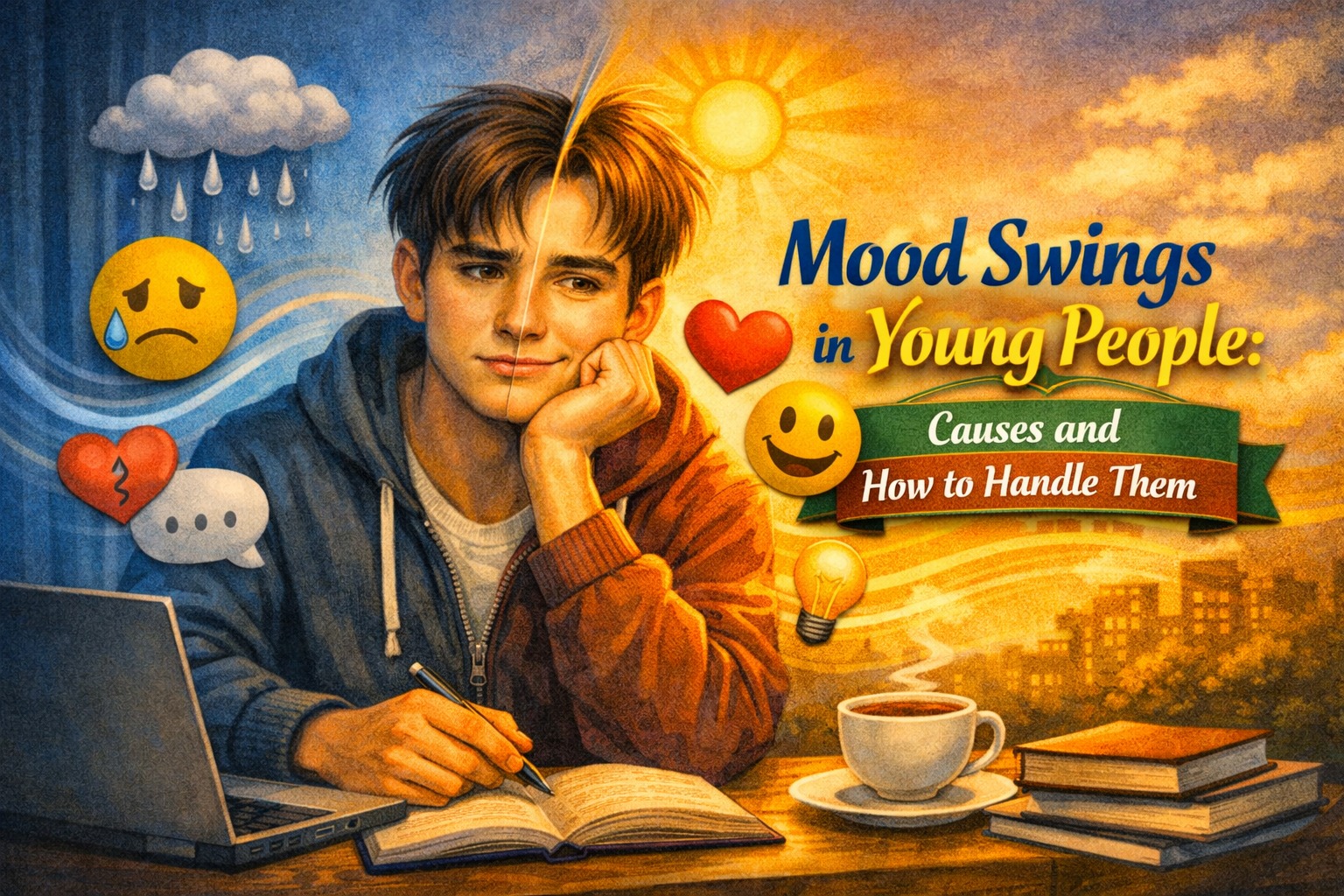
Young people often experience emotional changes that can happen suddenly and intensely. One moment they may feel excited and motivated, while the next they may become irritated, sad, or anxious. These emotional ups and downs, commonly known as mood swings, are a natural part of growing up. However, when mood swings become too frequent or difficult to control, they can affect relationships, school performance, and mental health.
Understanding the causes of mood swings and learning healthy ways to manage them is important for teenagers and young adults who want to maintain emotional balance and improve their quality of life.
WHAT ARE MOOD SWINGS?
Mood swings are rapid or noticeable changes in emotional state. A person may move from feeling happy to feeling angry, stressed, or upset within a short period of time. These emotional shifts can be mild or intense depending on the situation and individual condition.
In young people, mood swings are common because adolescence and early adulthood are periods of major physical, emotional, and social changes. Hormones, academic pressure, friendships, and family expectations all play important roles in shaping emotions.
CAUSES OF MOOD SWINGS IN YOUNG PEOPLE
HORMONAL CHANGES
One of the biggest causes of mood swings is hormonal change. During puberty, the body produces hormones that affect both physical growth and emotional responses. These hormonal fluctuations can make young people more sensitive, emotional, or reactive to situations around them.
ACADEMIC AND SOCIAL PRESSURE
Students often face pressure from school assignments, exams, and future career expectations. At the same time, they also deal with friendship issues, social acceptance, and online interactions. Stress from these challenges can easily trigger emotional instability.
LACK OF SLEEP
Many teenagers and young adults do not get enough rest because of busy schedules, excessive screen time, or unhealthy habits. Sleep deprivation can reduce emotional control and increase irritability, anxiety, and sadness.
FAMILY PROBLEMS
Conflict within the family, lack of communication, or high parental expectations can affect a young person's emotional well-being. Feeling misunderstood or unsupported may lead to frequent emotional changes.
SOCIAL MEDIA INFLUENCE
Social media can create unrealistic standards and comparison culture. Constant exposure to edited lifestyles and negative comments may lower self-esteem and increase emotional stress.
MENTAL HEALTH CONDITIONS
Sometimes mood swings are connected to mental health issues such as anxiety, depression, or bipolar disorder. If emotional changes become extreme or long-lasting, professional support may be needed.
HOW TO HANDLE MOOD SWINGS EFFECTIVELY
MAINTAIN A HEALTHY LIFESTYLE
Eating nutritious food, exercising regularly, and getting enough sleep can help stabilize emotions. Physical health and mental health are closely connected.
LEARN TO MANAGE STRESS
Young people can reduce stress by practicing relaxation techniques such as meditation, deep breathing, journaling, or listening to music. Managing stress helps prevent emotional overload.
TALK TO SOMEONE YOU TRUST
Sharing feelings with parents, friends, teachers, or counselors can provide emotional relief and support. Open communication helps young people feel understood and less isolated.
LIMIT SOCIAL MEDIA USAGE
Reducing screen time and avoiding toxic online environments can improve emotional health. Following positive and educational content may also help create a healthier mindset.
DEVELOP POSITIVE HOBBIES
Creative activities such as drawing, reading, sports, or playing music can improve mood and reduce emotional tension. Hobbies provide a healthy outlet for emotions.
SEEK PROFESSIONAL HELP IF NECESSARY
If mood swings become severe and interfere with daily life, consulting a psychologist or mental health professional is a wise step. Early support can prevent more serious emotional problems in the future.
THE IMPORTANCE OF EMOTIONAL AWARENESS
Young people should understand that having emotions is normal. The key is not to avoid emotions, but to learn how to recognize and manage them properly. Emotional awareness helps individuals respond to challenges in healthier and more mature ways.
Parents, teachers, and society also play important roles in supporting the emotional development of young people. Providing a safe and understanding environment can help teenagers grow into emotionally strong individuals.
CONCLUSION
Mood swings in young people are influenced by many factors, including hormonal changes, stress, family issues, and social media exposure. Although emotional ups and downs are common during adolescence, they should not be ignored when they become overwhelming.
By maintaining healthy habits, building emotional awareness, and seeking support when needed, young people can learn to manage their emotions more effectively. Emotional balance is an important part of personal growth and mental well-being.
Tentang Penulis
Gusti Ayu Tita P
Penulis — Universitas STEKOM
Penulis aktif yang berfokus pada isu-isu akademik, teknologi pendidikan, dan pengembangan sumber daya manusia di lingkungan kampus.