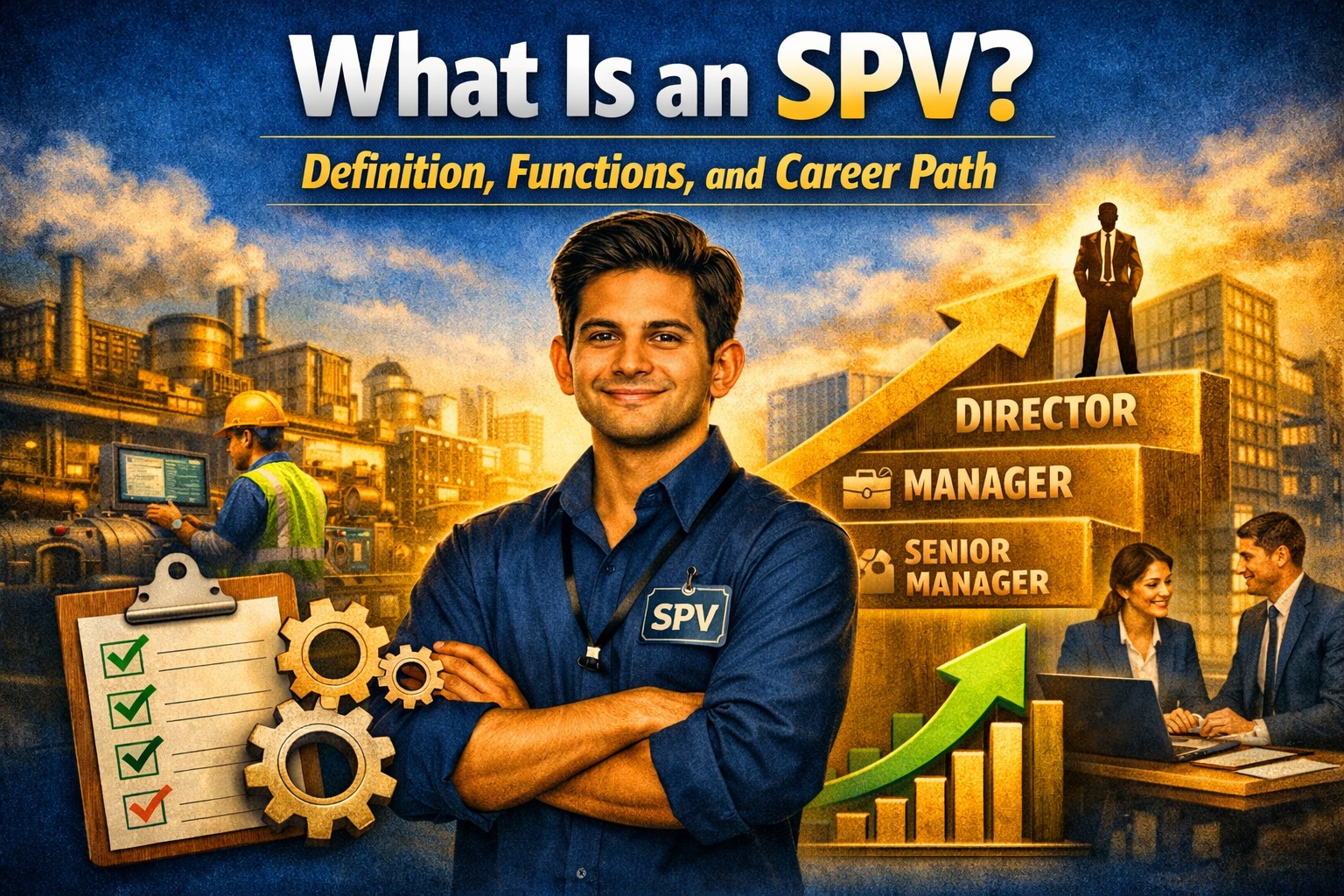
In the professional world, the term SPV is commonly used in many industries such as retail, manufacturing, logistics, hospitality, and office administration. SPV stands for Supervisor, a position that plays an important role in managing employees and ensuring daily operations run smoothly.
Many companies rely on supervisors to bridge the gap between management and operational staff. Because of this, understanding the definition, functions, and career path of an SPV is essential for anyone interested in building a successful professional career.
DEFINITION OF AN SPV
An SPV, or Supervisor, is a professional responsible for overseeing and coordinating the work of employees within a department or operational unit. Supervisors ensure that tasks are completed according to company standards, deadlines, and objectives.
The SPV position is generally placed between staff-level employees and higher management. Supervisors not only monitor employee performance but also help management implement company policies effectively.
MAIN FUNCTIONS OF AN SPV
The role of an SPV involves several important functions that support business productivity and operational efficiency.
MONITORING DAILY OPERATIONS
One of the primary functions of an SPV is supervising daily work activities. Supervisors ensure employees perform their duties correctly and operations continue without major problems.
Regular monitoring helps identify issues quickly and allows supervisors to take immediate action.
MANAGING EMPLOYEE PERFORMANCE
SPVs are responsible for evaluating employee productivity, work quality, and discipline. They monitor attendance, task completion, and overall performance to ensure company targets are achieved.
Performance management helps maintain high workplace standards.
PROVIDING GUIDANCE AND SUPPORT
Supervisors help employees understand their responsibilities and provide support when challenges occur. They answer questions, give instructions, and assist employees in solving workplace problems.
Supportive supervisors often help improve employee confidence and motivation.
MAINTAINING WORKPLACE DISCIPLINE
An SPV ensures employees follow company regulations, safety procedures, and workplace policies. Maintaining discipline is important for creating a productive and professional environment.
Workplace discipline also helps reduce operational risks and conflicts.
ACTING AS A COMMUNICATION BRIDGE
Supervisors act as intermediaries between employees and management. They communicate company policies to staff and report operational updates or employee concerns to higher management.
Good communication helps improve teamwork and operational efficiency.
SOLVING WORKPLACE PROBLEMS
Workplace conflicts and operational issues are common in many industries. SPVs are expected to handle problems professionally and find practical solutions that benefit both employees and the company.
Problem-solving skills are essential for effective supervision.
RESPONSIBILITIES OF AN SPV IN DIFFERENT INDUSTRIES
The responsibilities of a supervisor may differ depending on the industry and company structure.
SPV IN MANUFACTURING
Manufacturing supervisors focus on production processes, quality control, workplace safety, and production targets. They monitor factory workers and ensure operations run efficiently.
SPV IN RETAIL
Retail SPVs supervise store employees, customer service, inventory management, and sales performance. They help maintain customer satisfaction and store organization.
SPV IN LOGISTICS
In logistics companies, supervisors manage warehouse operations, delivery schedules, and inventory movement. Accuracy and efficiency are very important in this field.
SPV IN HOSPITALITY
Hospitality supervisors oversee hotel or restaurant operations, customer service quality, and staff coordination to ensure guests receive excellent service.
SPV IN OFFICE ADMINISTRATION
Office supervisors manage administrative tasks, workflow coordination, and employee productivity within office environments.
SKILLS REQUIRED TO BECOME AN SPV
To become a successful SPV, individuals need both technical and soft skills.
LEADERSHIP SKILLS
Supervisors must be able to guide, motivate, and manage teams effectively. Strong leadership helps improve employee performance and workplace morale.
COMMUNICATION SKILLS
Clear communication is important for giving instructions, handling conflicts, and coordinating with management and employees.
PROBLEM-SOLVING ABILITY
An SPV must be able to analyze situations quickly and find effective solutions to operational challenges.
TIME MANAGEMENT
Supervisors often handle multiple responsibilities at once. Good time management helps ensure tasks are completed efficiently.
EMOTIONAL INTELLIGENCE
Managing employee relationships requires patience, empathy, and emotional control. Emotional intelligence helps supervisors maintain a positive work environment.
CAREER PATH OF AN SPV
The SPV position is often considered a stepping stone toward higher management roles. Many professionals start their careers as staff members before being promoted to supervisor positions.
After gaining experience as an SPV, career advancement opportunities may include:
- Assistant Manager
- Department Manager
- Operations Manager
- Branch Manager
- Senior Management Positions
Career growth usually depends on performance, leadership ability, industry experience, and professional development.
BENEFITS OF BECOMING AN SPV
Working as a supervisor provides many professional benefits. SPVs gain leadership experience, improve communication skills, and develop problem-solving abilities.
The role also offers opportunities for career advancement and greater responsibility within a company.
CHALLENGES OF BEING AN SPV
Although rewarding, the SPV role also comes with challenges. Supervisors often face pressure from management targets, employee conflicts, and operational demands.
Balancing company expectations with employee needs requires professionalism and strong leadership.
WHY THE SPV ROLE IS IMPORTANT
Supervisors play a critical role in maintaining productivity and ensuring company operations run efficiently. They directly influence employee performance and workplace culture.
Without effective supervisors, communication problems and operational inefficiencies may increase within an organization.
CONCLUSION
An SPV, or Supervisor, is an important professional position responsible for managing employees and supporting daily business operations. Supervisors help maintain productivity, workplace discipline, and operational efficiency across various industries.
With strong leadership, communication, and problem-solving skills, an SPV can build a successful career path toward higher management positions. As companies continue to grow, the demand for skilled supervisors will remain essential in the professional world.
Tentang Penulis
Gusti Ayu Tita P
Penulis — Universitas STEKOM
Penulis aktif yang berfokus pada isu-isu akademik, teknologi pendidikan, dan pengembangan sumber daya manusia di lingkungan kampus.