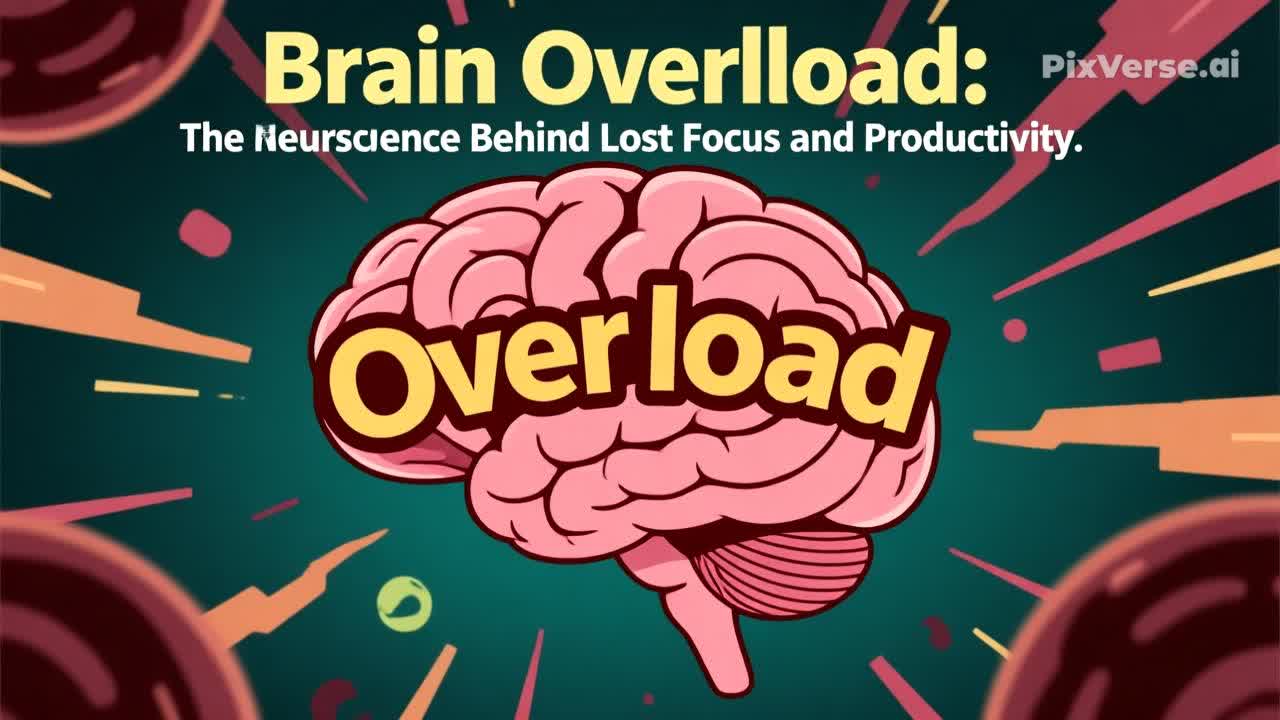
In the midst of the fast-flowing digital information stream, modern humans are living in conditions unlike anything previously experienced. Every second, notifications, emails, instant messages, and social media updates compete for our attention. As a result, many people struggle to focus, experience mental fatigue, and see a drastic decrease in productivity. This phenomenon is known as brain overload — a state in which the brain receives too much information, making it unable to process effectively.
But what exactly happens inside the brain during overload? How does neuroscience explain the loss of focus and the decline in clear thinking? And, most importantly, how can we restore optimal brain performance despite constant digital distractions?
UNDERSTANDING WHAT BRAIN OVERLOAD IS
The human brain is a remarkable organ designed to process information efficiently, yet it still has limits. In neuroscience, there is a term called *working memory* — a short-term memory system that stores information currently being processed. Working memory has a very limited capacity, able to hold only about 4–7 pieces of information at one time.
When we constantly absorb new information — from phone notifications, work emails, and social media — the working memory fills up. As a result, the brain can no longer store important information effectively, and the ability to focus begins to decline.
The most affected area is the *prefrontal cortex*, responsible for concentration, decision-making, and self-control. When this area is overloaded, the nervous system becomes fatigued, resulting in symptoms such as difficulty concentrating, forgetfulness, and reduced productivity.
THE NEUROSCIENCE BEHIND LOSING FOCUS
Neurologically, focus decline is closely linked to the brain’s dopamine system. Dopamine is a neurotransmitter that produces pleasure and motivation. Each time we receive a new stimulus — a notification, an incoming message, or a short video — the brain releases dopamine, encouraging us to seek more stimulation.
This creates a cycle of information addiction. The brain becomes conditioned to fast, instant rewards and loses patience for tasks requiring long-term focus. This is why many people struggle to read long texts, study, or work without checking their phones.
Cortisol, the stress hormone, also increases when the brain works excessively. Continuously high cortisol levels reduce sleep quality, weaken memory, and accelerate brain cell aging. Brain overload therefore affects not only focus but also long-term mental and physical health.
PRODUCTIVITY IMPACT IN THE DIGITAL ERA
Excessive information intake drains mental energy and directly lowers productivity. Every time someone switches between tasks — for example, from writing a report to opening social media — the brain needs about 23 minutes to fully refocus. This is known as switching cost.
Multitasking, often considered a sign of productivity, actually decreases cognitive efficiency by up to 40%, according to Stanford research. The human brain cannot perform two complex tasks simultaneously — it only switches rapidly between them, wasting energy without delivering maximum results.
This condition is worsened by digital social pressure: work alerts, expectations to respond instantly, and the fear of missing out (FOMO). All of this keeps the brain in constant hyper-alert mode, leading to chronic fatigue and weakened deep thinking ability.
NEUROSCIENCE STRATEGIES TO OVERCOME BRAIN OVERLOAD
Despite the challenge, neuroscience offers practical strategies to help the brain rest, recover, and perform more effectively:
1. Practice single-task focus (monotasking)
Avoid multitasking. Focus on one task until completion. Research shows monotasking can increase efficiency by up to 40% and reduce stress.
2. Use microbreaks
Every 60–90 minutes, rest for 5–10 minutes. Light stretching or mindful breathing improves circulation and resets concentration.
3. Limit digital distractions
Do regular digital detoxes. Disable unnecessary notifications and schedule specific times to check messages or media.
4. Train mindfulness and meditation
Just 10 minutes daily strengthens attention networks and lowers stress responses.
5. Get consistent, quality sleep
During sleep, the brain filters unnecessary information and repairs neural networks. Lack of sleep can reduce focus and memory by up to 30%.
6. Manage information intake wisely
Apply an information diet — select only meaningful, structured content that benefits your goals.
CONCLUSION: FOCUS IS THE NEW LUXURY
In a world filled with endless distractions, focus has become a new form of luxury. Neuroscience reminds us that the brain has limits and requires balance — stimulation must be paired with stillness, information with reflection.
By understanding how the brain works and adopting habits that support its natural rhythm, we can regain control of attention and productivity. The goal is not to reject digital life, but to navigate it wisely.
Focus is not about avoiding technology — it is about mastering our mental rhythm so the brain stays sharp, calm, and capable of producing its best work.
Tentang Penulis
Gusti Ayu Tita
Penulis — Universitas STEKOM
Penulis aktif yang berfokus pada isu-isu akademik, teknologi pendidikan, dan pengembangan sumber daya manusia di lingkungan kampus.