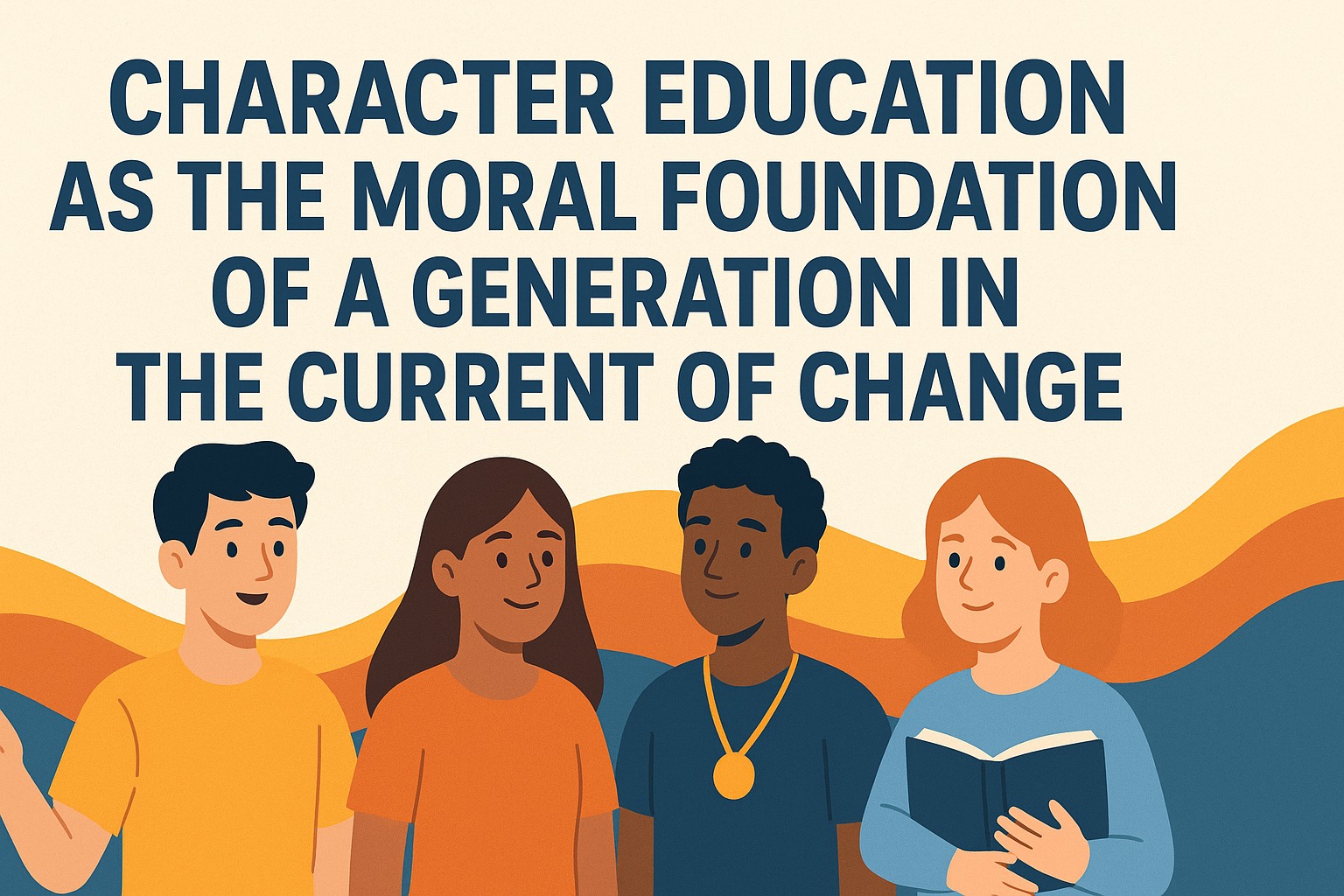
In today’s rapidly changing world, education can no longer rely solely on academic achievement. Technological advancement, shifting lifestyles, and the surge of information present young people with moral challenges far more complex than those faced by previous generations. In this situation, character education becomes a foundational force for building strong moral values. Schools, families, and social environments play a vital role in instilling these values so that the younger generation grows into individuals with integrity. Character formation is not an instant process — it requires continuous development that shapes thoughts, habits, and daily behavior.
With the increasing influence of digital culture, character education becomes a crucial shield to prevent students from being swept away by the tide of modern change. Children need clear guidance about moral values, ethics, and positive behavior as provisions for real life. Therefore, schools are not only places for academic learning, but also environments where morals and self-awareness, empathy, and responsibility are shaped.
THE MEANING OF CHARACTER EDUCATION IN THE MODERN ERA
Character education in the modern era emphasizes the development of moral values that guide students to behave wisely amidst life’s complexities. Values such as honesty, discipline, compassion, and responsibility become the foundation for building mentally strong individuals. In this fast-paced technological environment, character ensures that students are not only intellectually capable, but also morally grounded in their actions.
Character education is, essentially, a systematic effort to cultivate good habits within students. The process includes training positive behavior through daily interactions, both inside and outside the school environment. Thus, character education is not an additional component — it is the soul of education itself, directing students to grow into mature and civilized individuals.
Key values in character education include:
1. Integrity
Encouraging honesty and consistency between words and actions, enabling students to earn trust and act responsibly.
2. Discipline
Not only in obeying school rules but in managing time, maintaining commitment, and completing tasks efficiently.
3. Empathy and compassion
Important in an increasingly individualistic era; students are guided to understand others’ feelings and contribute meaningfully to their community.
4. Personal responsibility
Building habits of task completion, wise decision-making, and accepting consequences with maturity.
THE ROLE OF SCHOOLS IN CHARACTER DEVELOPMENT
Schools hold a strategic role as institutions that systematically shape the character of young people. Through curriculum, routine behavior, and teacher modeling, students learn moral values not only by listening — but by practicing them daily. A positive school culture significantly influences the success of character development.
Schools must foster an environment that reflects moral values through every interaction. The mindset built through daily habits eventually forms strong, lasting character.
Ways schools can implement character education:
1. Teacher example and leadership
Teachers serve as real role models — their discipline, responsibility, and kindness strongly imprint on students.
2. Routine character-building activities
Greeting traditions, classroom cleanliness, ceremonies, and community service embed positive habits.
3. Project-based learning
Group projects teach collaboration, responsibility, and respect for diverse viewpoints.
4. Extracurricular activities that build values
Sport, arts, and student organizations foster sportsmanship, creativity, and leadership.
5. A safe and inclusive school environment
Schools must prevent bullying and discrimination, allowing students to grow confidently with empathy.
CHALLENGES OF CHARACTER EDUCATION IN THE DIGITAL ERA
Modern shifts introduce challenges that require character education to adapt creatively. Social media, the internet, and instant gratification heavily shape mindsets, often reducing patience and resilience. Without strong character, students may lose direction.
Exposure to negative content — hate speech, hedonistic culture, and shallow trends — becomes unavoidable. Thus, character education must train students to use technology wisely, not blindly follow harmful digital patterns.
Key challenges include:
1. Strong influence of social media
Students need guidance to understand digital ethics and boundaries.
2. Instant and fast-paced culture
Reduced tolerance for process — character education must reintroduce patience and effort.
3. Weak family communication
Busy parents reduce value-based guidance at home.
4. Unfiltered digital access
Leading to skewed understanding of moral values.
CONCLUSION
Character education serves as the foundation for young people to face rapid societal change. By instilling values such as integrity, empathy, discipline, and responsibility, students develop the ability to distinguish right from wrong in real life. Schools, families, and communities must collaborate so character education does not remain theoretical — but becomes habitual and identity-forming. When character education thrives, future generations will grow into moral, civilized individuals capable of contributing positively to society.
Tentang Penulis
Gusti Ayu Tita
Penulis — Universitas STEKOM
Penulis aktif yang berfokus pada isu-isu akademik, teknologi pendidikan, dan pengembangan sumber daya manusia di lingkungan kampus.