
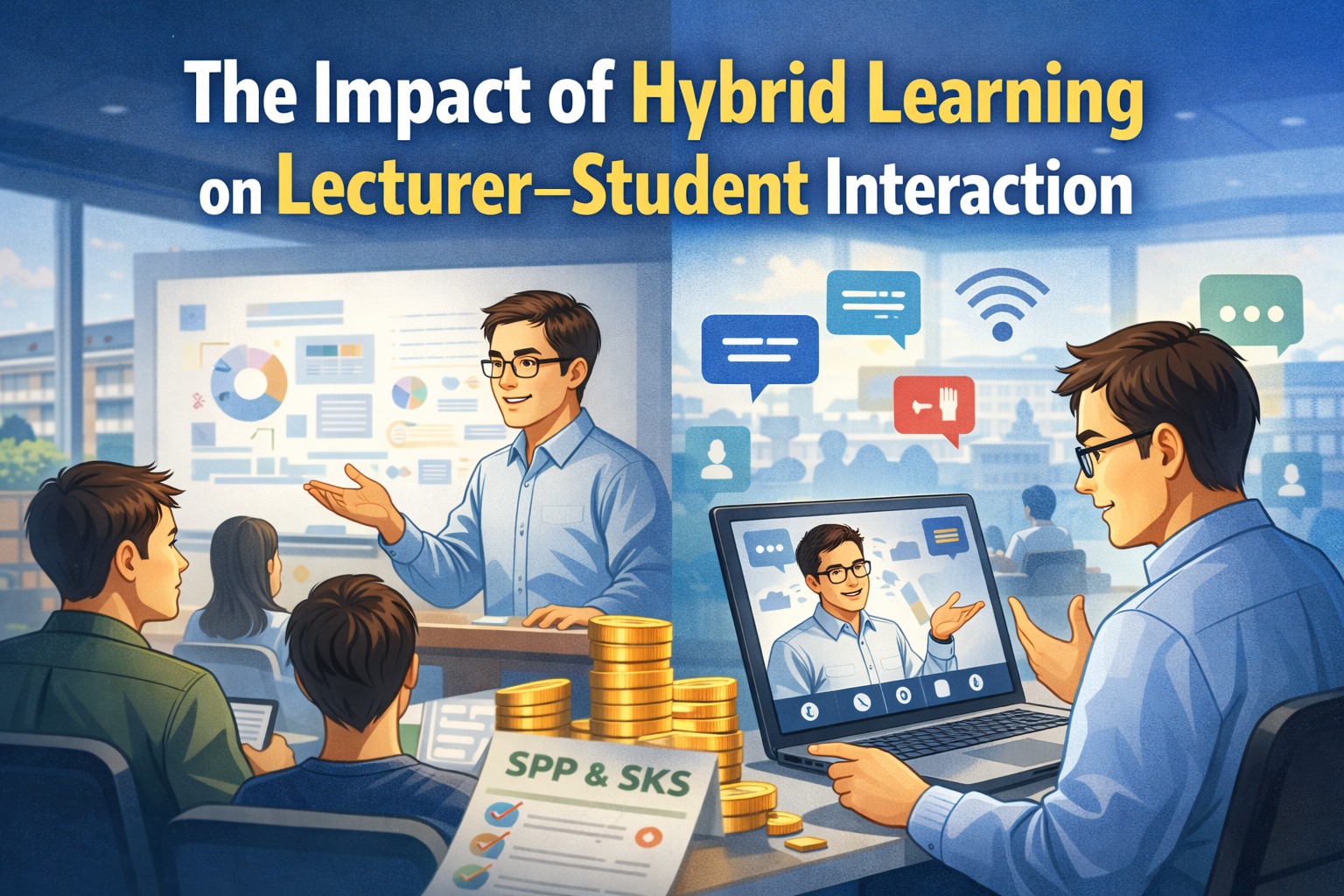
The implementation of hybrid learning has brought major changes to learning dynamics in higher education. This system combines face-to-face lectures with online learning, allowing the learning process to extend beyond the classroom. However, behind the flexibility it offers, an important question arises regarding how hybrid learning affects interaction between lecturers and students. Effective interaction is a key element of successful learning, making it essential to understand both the positive impacts and challenges of hybrid learning on academic relationships.
THE CONCEPT OF INTERACTION IN THE LEARNING PROCESS
Lecturer–student interaction includes two-way communication in delivering material, discussions, question-and-answer sessions, and academic guidance. In conventional learning, interaction occurs directly and spontaneously in the classroom.
In hybrid learning systems, interaction patterns adjust because some communication takes place through digital media such as learning platforms, discussion forums, and video conferences.
CHANGES IN COMMUNICATION PATTERNS IN HYBRID LEARNING
Hybrid learning changes how lecturers and students communicate. Interaction no longer occurs only during face-to-face sessions but also through written messages, online discussions, and digital materials.
This shift makes communication more flexible and well-documented. However, online communication often feels less personal compared to direct classroom interaction.
POSITIVE IMPACTS OF HYBRID LEARNING ON INTERACTION
One positive impact of hybrid learning is increased access to communication between lecturers and students. Students have more opportunities to ask questions through online forums or private messages without waiting for class schedules.
Additionally, students who tend to be passive during face-to-face sessions often feel more comfortable expressing their opinions online. This can increase participation and engagement in the learning process.
CHALLENGES OF INTERACTION IN HYBRID SYSTEMS
Despite offering flexibility, hybrid learning also presents challenges in building effective interaction. Differences in internet connection quality, limited online time, and delayed responses can hinder communication.
Limited emotional interaction is another challenge, as nonverbal expressions and social closeness are more difficult to establish in digital spaces.
THE ROLE OF LECTURERS IN MAINTAINING INTERACTION QUALITY
Lecturers play a crucial role in fostering active interaction in hybrid learning systems. Interactive teaching strategies, the use of varied learning media, and openness to online communication help maintain student engagement.
Providing clear and timely feedback is also essential so that students feel acknowledged and supported throughout the learning process.
THE ROLE OF STUDENTS IN HYBRID INTERACTION
Students are required to be more proactive in hybrid learning environments. Actively asking questions, participating in online discussions, and utilizing available communication tools are key factors in building healthy interaction.
Students’ awareness and willingness to participate actively help create more dynamic academic relationships even without constant face-to-face meetings.
EFFORTS TO IMPROVE LECTURER–STUDENT INTERACTION
Improving interaction quality requires collaboration between lecturers and students. Scheduling regular face-to-face discussion sessions, using interactive forums, and leveraging effective communication technologies can strengthen academic relationships.
A balanced approach between online and offline learning is essential to ensure optimal interaction.
CONCLUSION
Hybrid learning significantly affects lecturer–student interaction. It creates opportunities for more flexible and inclusive communication but also poses challenges in building emotional closeness and engagement. With appropriate teaching strategies and active student participation, hybrid learning can continue to support effective and high-quality academic interaction.
Tentang Penulis
Gusti Ayu Tita P
Penulis — Universitas STEKOM
Penulis aktif yang berfokus pada isu-isu akademik, teknologi pendidikan, dan pengembangan sumber daya manusia di lingkungan kampus.