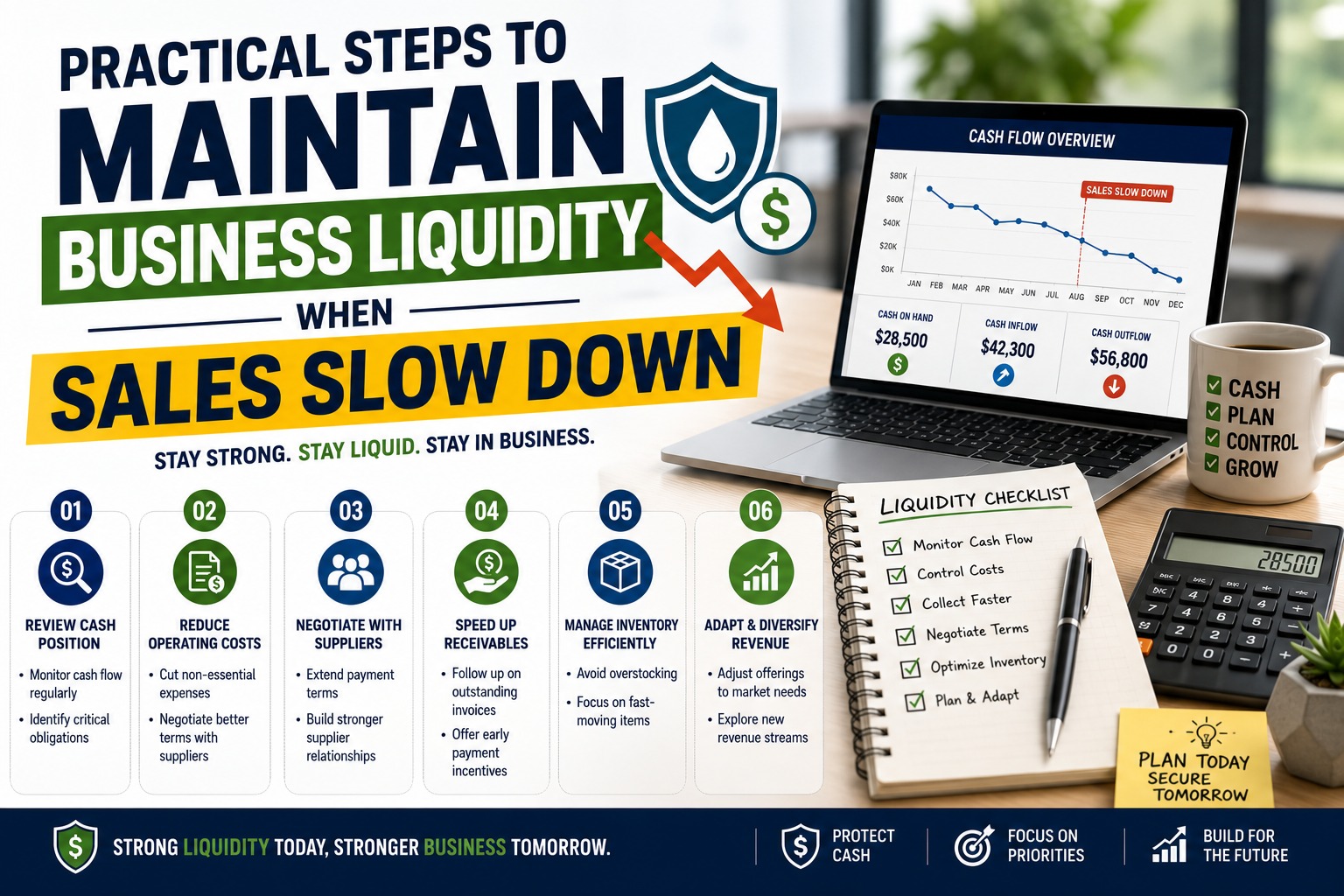
Every business experiences periods when sales decline. Economic uncertainty, seasonal trends, market competition, or changing consumer behavior can all reduce revenue. During these challenging times, maintaining business liquidity becomes extremely important.
Liquidity refers to a company’s ability to meet short-term financial obligations, including salaries, rent, supplier payments, and operational expenses. Even profitable businesses can face serious financial difficulties if cash flow becomes unstable.
By implementing practical liquidity management strategies, businesses can survive slow sales periods while protecting long-term stability and growth.
UNDERSTANDING BUSINESS LIQUIDITY
Business liquidity measures how easily a company can access cash or convert assets into cash to cover immediate expenses.
Strong liquidity allows businesses to:
- Pay operational costs on time
- Maintain supplier relationships
- Avoid excessive debt
- Respond to emergencies quickly
- Continue daily operations smoothly
Poor liquidity, however, can lead to delayed payments, operational disruptions, and financial instability.
MONITOR CASH FLOW CONSISTENTLY
Cash flow management is one of the most important steps during declining sales periods. Business owners should track all incoming and outgoing cash carefully.
Important areas to monitor include:
- Daily revenue
- Fixed operational expenses
- Outstanding invoices
- Supplier payments
- Debt obligations
Regular cash flow analysis helps businesses identify financial problems early and make faster adjustments.
REDUCE NON-ESSENTIAL EXPENSES
When revenue decreases, businesses should immediately review spending and eliminate unnecessary costs.
Common expenses that can often be reduced include:
- Unused software subscriptions
- Excess marketing expenses
- Non-urgent travel costs
- Energy waste
- Overstocked inventory
Cutting unnecessary spending helps preserve cash reserves without affecting core operations.
PRIORITIZE ESSENTIAL PAYMENTS
During slow sales periods, businesses must prioritize payments that directly support operations.
Essential expenses usually include:
- Employee salaries
- Rent and utilities
- Supplier obligations
- Loan payments
- Core operational costs
Delaying non-critical expenses can help businesses maintain stability until sales recover.
IMPROVE ACCOUNTS RECEIVABLE COLLECTION
Late customer payments can worsen liquidity problems. Businesses should strengthen their invoice collection processes to improve cash inflow.
Effective collection strategies include:
- Sending invoices immediately
- Offering digital payment options
- Following up on overdue accounts
- Providing early payment incentives
Faster receivable collection improves cash availability and reduces financial pressure.
NEGOTIATE FLEXIBLE PAYMENT TERMS
Strong communication with suppliers and creditors can help businesses manage short-term liquidity challenges.
Businesses may negotiate:
- Extended payment deadlines
- Lower monthly installments
- Temporary payment reductions
- Flexible supply agreements
Many suppliers prefer flexible arrangements over losing long-term customers entirely.
MAINTAIN EMERGENCY CASH RESERVES
Emergency cash reserves provide financial protection during periods of reduced revenue.
Businesses should ideally maintain reserves that cover several months of operational expenses.
Emergency funds help companies:
- Avoid panic borrowing
- Handle unexpected costs
- Maintain operational continuity
- Reduce financial stress
Building reserves gradually during profitable periods strengthens long-term financial security.
OPTIMIZE INVENTORY MANAGEMENT
Excess inventory ties up cash that could be used for operational needs. Businesses should evaluate inventory levels carefully during sales slowdowns.
Strategies to improve inventory management include:
- Reducing slow-moving stock
- Offering discounts for old inventory
- Ordering smaller quantities
- Focusing on high-demand products
Efficient inventory control improves liquidity and minimizes storage costs.
DIVERSIFY REVENUE STREAMS
Relying on a single source of income increases financial vulnerability. Diversifying revenue streams can help stabilize cash flow when sales decline in one area.
Possible diversification strategies include:
- Offering new services
- Expanding online sales
- Introducing subscription models
- Targeting different customer segments
Multiple income sources reduce dependency on a single market condition.
REVIEW PRICING STRATEGIES
In some situations, adjusting pricing strategies can improve sales performance and liquidity.
Businesses may consider:
- Limited-time promotions
- Product bundles
- Flexible payment plans
- Loyalty discounts
Pricing adjustments should balance customer demand with profitability to avoid damaging long-term financial health.
AVOID EXCESSIVE SHORT-TERM DEBT
Short-term loans may provide temporary cash relief, but excessive borrowing can create larger financial problems later.
Businesses should carefully evaluate:
- Interest rates
- Repayment ability
- Loan terms
- Overall financial impact
Debt should be used strategically and only when necessary.
USE FINANCIAL FORECASTING
Financial forecasting helps businesses prepare for future liquidity challenges before they become severe.
Forecasting should include:
- Expected sales trends
- Upcoming expenses
- Seasonal demand changes
- Potential financial risks
Accurate forecasting improves decision-making and allows businesses to plan proactively.
STRENGTHEN CUSTOMER RELATIONSHIPS
Maintaining strong relationships with existing customers can improve business stability during slow periods.
Loyal customers are more likely to:
- Continue purchasing
- Recommend the business
- Provide recurring revenue
Excellent customer service and consistent communication help preserve long-term customer loyalty.
CONCLUSION
Maintaining business liquidity during sales slowdowns requires careful financial management and proactive decision-making. Businesses that monitor cash flow, reduce unnecessary expenses, optimize inventory, and strengthen receivable collection processes are better positioned to survive difficult periods.
Practical liquidity strategies not only protect daily operations but also support long-term business sustainability. By preparing financially and adapting quickly to market changes, businesses can remain stable even during challenging economic conditions.
Tentang Penulis
Gusti Ayu Tita P
Penulis — Universitas STEKOM
Penulis aktif yang berfokus pada isu-isu akademik, teknologi pendidikan, dan pengembangan sumber daya manusia di lingkungan kampus.