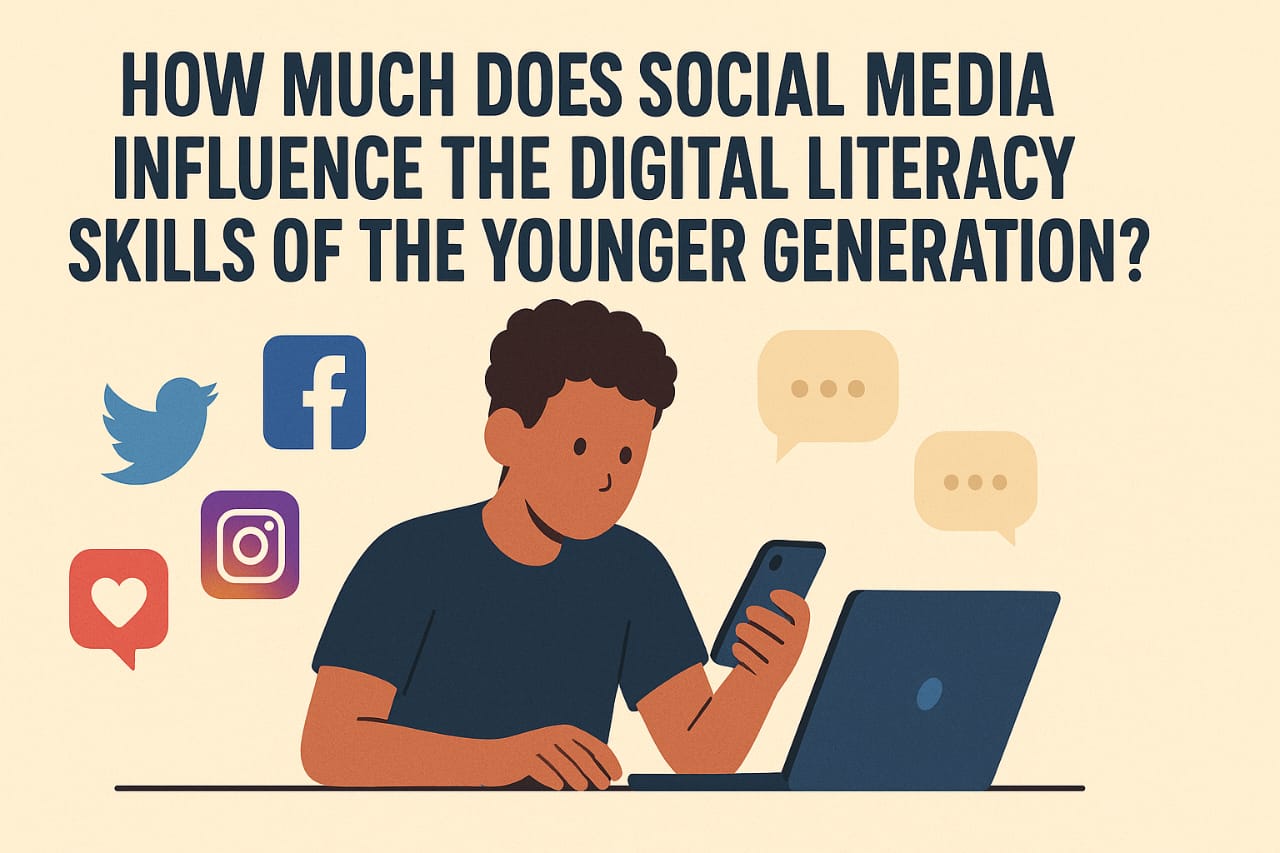
The development of digital technology has brought significant changes to daily life, especially for the younger generation who grow up surrounded by limitless information. Social media has become one of the most widely used platforms. However, an important question arises: to what extent does social media influence the digital literacy skills of young people?
This article explores its impact in depth—both the benefits and the risks that must be considered.
WHAT IS DIGITAL LITERACY?
Digital literacy is a person's ability to access, understand, evaluate, create, and share information through digital technology.
These abilities include several important skills, such as:
• Critical thinking when receiving information
• Understanding how digital platforms work
• Protecting personal data and privacy
• Practicing ethics when communicating and sharing information
Without strong digital literacy, individuals are more vulnerable to hoaxes, negative content, and information manipulation.
THE ROLE OF SOCIAL MEDIA IN SHAPING DIGITAL LITERACY
Social media has two sides—it can build digital skills, yet also weaken them.
a. Positive Influence
• Fast and diverse access to information
• Helps strengthen evaluation and verification skills
• Encourages creativity through content creation
• Supports personal branding and a positive digital footprint
b. Negative Influence
• Exposure to unfiltered information
• Fast-scroll culture reduces focus and deep reading skills
• Risk of cyberbullying and data misuse
• Potential addiction and FOMO (Fear of Missing Out)
IMPACTS OF SOCIAL MEDIA ON DIGITAL LITERACY
Some real effects social media has on young people's literacy development include:
• Enhancing information-verification skills
• Increasing awareness of digital privacy
• Strengthening understanding of digital ethics
• Risk of shallow analysis due to information overload
HOW TO OPTIMIZE SOCIAL MEDIA POSITIVELY
To ensure social media supports digital literacy growth, several steps can be taken:
• Follow reliable educational accounts
• Practice *Think Before Share*
• Set daily usage limits
• Learn to create positive and quality content
• Join digital-literacy classes, webinars, or training
Conclusion
Social media has a major influence on the digital literacy of young people.
Its impact can be highly positive when used wisely—but it may lower literacy quality if not balanced with critical thinking and online ethics.
The key lies in maximizing benefits and minimizing risks through strong digital-literacy education.
Tentang Penulis
Gusti Ayu Tita
Penulis — Universitas STEKOM
Penulis aktif yang berfokus pada isu-isu akademik, teknologi pendidikan, dan pengembangan sumber daya manusia di lingkungan kampus.