The Impact of Digital Technology on Workforce Performance
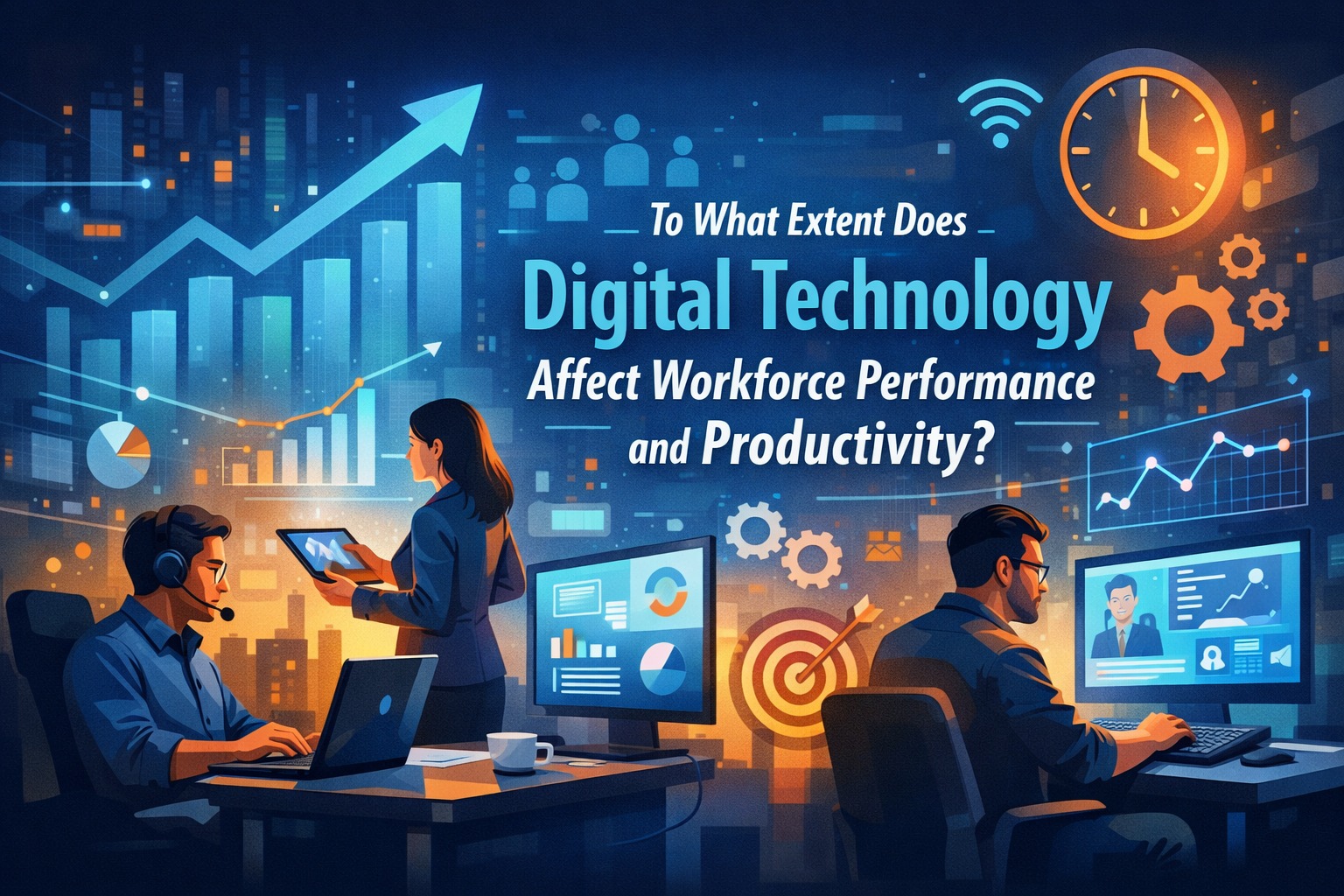
The development of digital technology has brought significant changes to the world of work. From modern management systems to automation tools, technology has become a crucial factor in determining employee performance quality and overall productivity. The question is, to what extent does digital technology influence worker performance across various sectors?
THE ROLE OF TECHNOLOGY IN IMPROVING WORK EFFICIENCY
The use of digital tools has proven effective in shortening work processes that previously required a great deal of time. Tools such as task management software, CRM systems, and collaboration applications help employees complete tasks more quickly and in a more structured manner.
With automated workflows and reduced human error, companies can improve efficiency without increasing their workforce. This efficiency is one of the main reasons why technology has become increasingly important in modern business operations.
THE IMPACT OF DATA AND DIGITALIZATION ON DECISION-MAKING
Digital technology enables companies to access large volumes of data and process it rapidly. Real-time information allows employees and management to make more accurate, data-driven decisions.
The use of analytical dashboards, automated reports, and digital evaluation systems supports more precise decision-making processes, which in turn positively affects overall productivity.
AUTOMATION AND AI AS DRIVERS OF PRODUCTIVITY
Automation and artificial intelligence have replaced many repetitive routine tasks. This shift allows employees to focus on work that requires creativity, analysis, and strategic thinking.
For example, chatbots can handle customer service around the clock, while AI-powered software helps companies identify business patterns that are difficult to detect manually. The combination of human intelligence and technology creates a more productive and high-quality work environment.
WORK FLEXIBILITY IN THE DIGITAL ERA
Digital technology has also introduced new flexibility in the workplace, particularly through the rise of remote and hybrid work systems. Communication can take place via video conferencing, instant messaging, and online collaboration platforms, allowing work to continue regardless of location.
This flexibility enhances employee comfort and has a positive impact on performance. When workers have greater control over their time, productivity tends to increase.
CHALLENGES OF TECHNOLOGY ADOPTION IN THE WORKPLACE
Despite its many benefits, technology adoption also presents challenges, especially for workers who are not yet familiar with digital tools. Limited digital literacy can slow down the transformation process.
In addition, technology requires continuous training to ensure employees keep up with rapid developments. Companies must balance technological implementation with workforce skill development to avoid productivity gaps.
CONCLUSION
Digital technology has a significant impact on improving workforce performance and productivity. From process efficiency and data accessibility to work flexibility, all of these factors contribute to a more effective and competitive work environment.
However, these benefits can only be fully realized if both companies and employees are able to adapt to change. Technology is not merely a tool, but a key driver in addressing the challenges of the modern workplace.
Tentang Penulis
Gusti Ayu Tita
Penulis — Universitas STEKOM
Penulis aktif yang berfokus pada isu-isu akademik, teknologi pendidikan, dan pengembangan sumber daya manusia di lingkungan kampus.