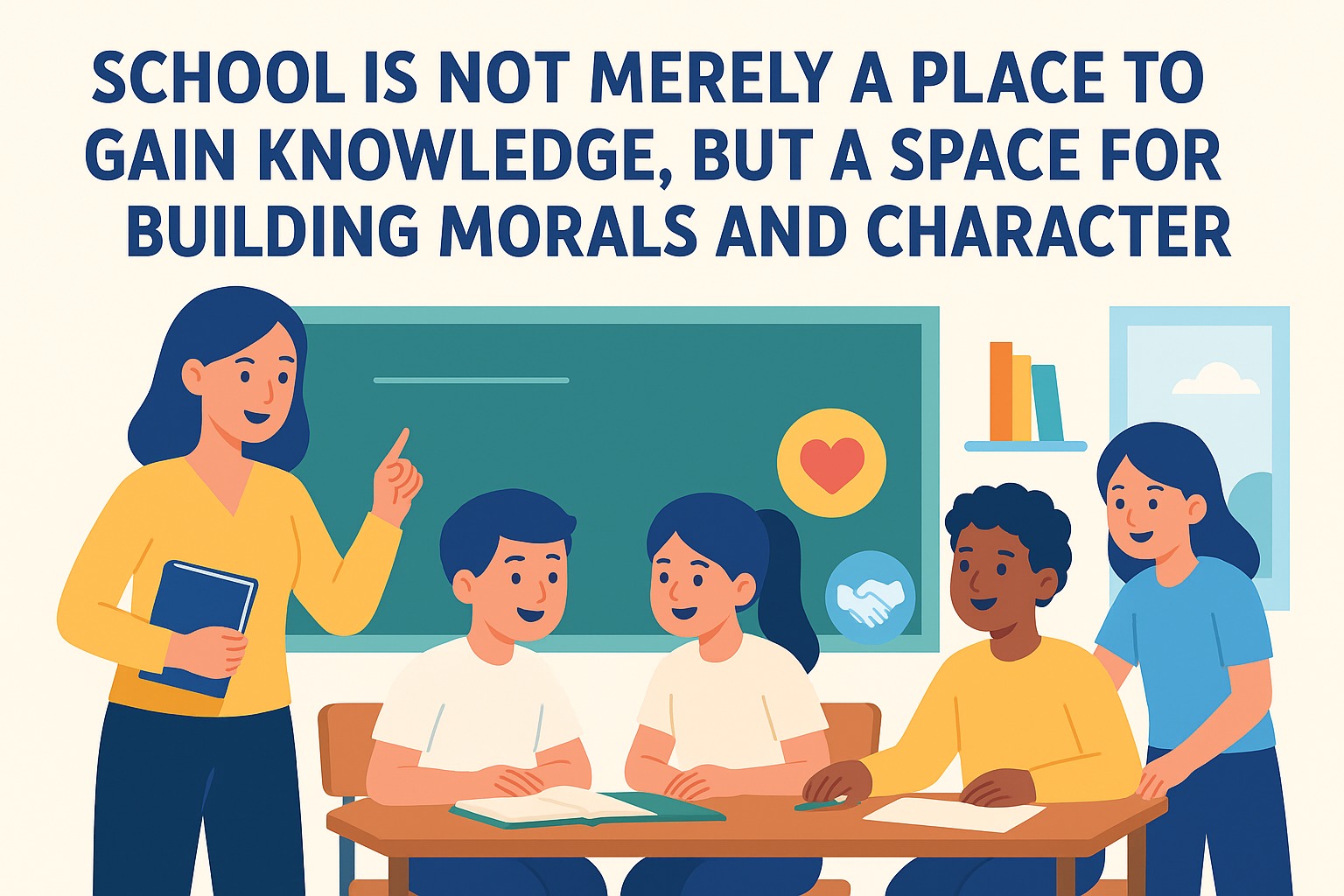
School is often understood as a formal educational institution that teaches academic knowledge. However, in essence, the role of school goes far beyond learning subjects. School is a space intentionally designed to foster moral values, social attitudes, and character that reflect noble behavior. In a rapidly changing era, the quality of one’s character is just as important as intellectual intelligence. Therefore, school becomes the foundation that prepares young generations to behave wisely, show empathy, and be responsible toward their surroundings.
To understand the comprehensive function of school, we must see how learning processes, interactions, and daily activities contribute to shaping students. Values such as discipline, honesty, cooperation, and care do not emerge instantly—they are built through consistent practice. At this point, school becomes not only a place to study but also a training ground where character is formed throughout the educational process.
THE ROLE OF SCHOOLS IN SHAPING STUDENTS’ MORAL VALUES
Character formation cannot occur instantly. Children need a supportive environment, role models, and a system that instills moral values continuously. Schools provide all these elements through curriculum, extracurricular activities, school culture, and interpersonal relationships between teachers and students. These interactions train students to understand boundaries, recognize norms, and develop the ability to make moral decisions. The cultivation of moral values is carried out through various interconnected practices that create positive habits.
Some roles of schools include:
1. Instilling discipline and responsibility
Discipline is not merely about obeying rules but also about managing time, completing tasks, and keeping commitments.
2. Building empathy and mutual respect
Interaction among students from diverse backgrounds teaches them to understand differences and respect others
3. Encouraging honesty in learning
Small actions—such as taking tests without cheating or returning lost items—train integrity.
4. Strengthening cooperation through group activities
Group projects and extracurricular activities build teamwork and respect for different roles.
TEACHERS AS ROLE MODELS OF MORALS AND CHARACTER
Teachers are not only instructors but also figures who model good behavior. Their example greatly influences students’ character development because children tend to imitate what they observe daily. Teachers who communicate kindly, act with patience, stay consistent with their principles, and treat students fairly leave a profound impact. Often, students remember a teacher’s attitude more than the academic material taught.
Teachers demonstrate values through:
1. Respectful communication
2. Consistency and discipline
3. Emotional self-control
4. Fair treatment for all students
5. Encouraging and appreciating effort
THE SCHOOL ENVIRONMENT AS A SPACE FOR CHARACTER DEVELOPMENT
Beyond teachers, the school environment itself plays a crucial role. A clean, orderly, and safe environment creates a positive psychological effect. Activities such as maintaining classroom cleanliness, observing rules, and participating in social programs become part of character learning.
Positive school culture includes:
1. Routine cleanliness programs
2. Religious and moral activities
3. Literacy programs
4. Social and community service activities
CONCLUSION
School is not only a place to acquire knowledge but also a space for building character and morals. Interactions with teachers, peers, and school culture create continuous moral learning. When schools balance academic competence with character education, students become not only intelligent but also wise, empathetic, and responsible individuals.
Tentang Penulis
Gusti Ayu Tita
Penulis — Universitas STEKOM
Penulis aktif yang berfokus pada isu-isu akademik, teknologi pendidikan, dan pengembangan sumber daya manusia di lingkungan kampus.