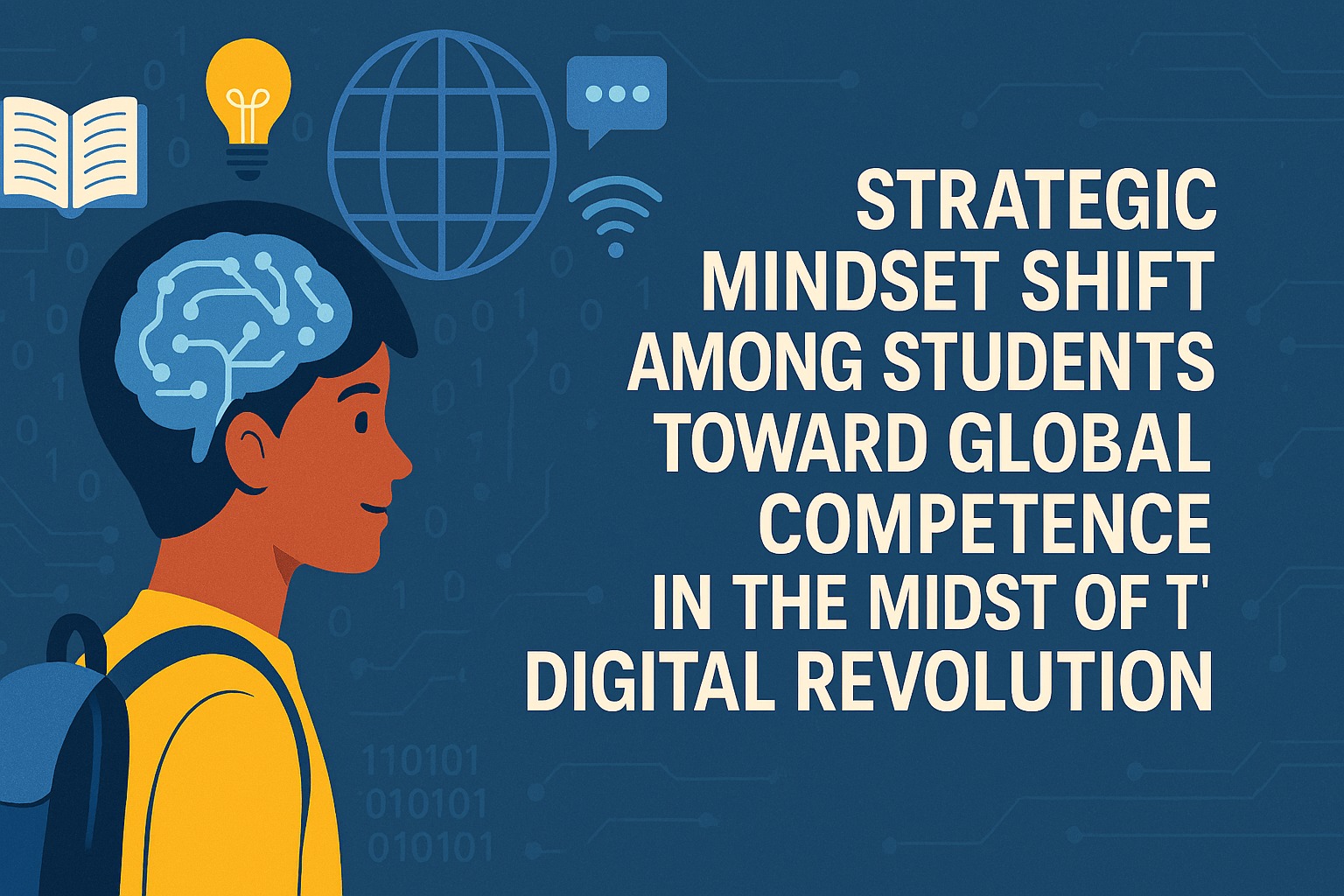
The digital revolution has reshaped the structure of modern society, transforming industries, education systems, and professional expectations. Technological innovation has accelerated the pace of globalization, making competition increasingly borderless. In this context, students are required to prepare themselves not only with academic knowledge but also with a strategic mindset that supports global competence.
A strategic mindset allows students to think beyond short-term academic achievements and focus on long-term development. By cultivating global awareness, critical thinking, and digital skills, students can position themselves as capable contributors in an increasingly interconnected world.
THE DIGITAL REVOLUTION AND GLOBAL COMPETENCE
The digital revolution has expanded opportunities for knowledge sharing, international collaboration, and professional networking. Digital platforms enable students to access global information, participate in online learning communities, and interact with individuals from diverse cultural backgrounds.
However, these opportunities also intensify global competition. Students from different countries now compete in the same digital space for education, innovation, and career opportunities. As a result, developing global competence has become a fundamental requirement for future success.
Global competence includes the ability to communicate across cultures, analyze global issues, and collaborate effectively in diverse environments. Students who develop these capabilities are better prepared to adapt to the demands of the modern workforce.
THE ROLE OF A STRATEGIC MINDSET IN STUDENT DEVELOPMENT
A strategic mindset encourages students to think systematically about their personal growth and career trajectory. Instead of focusing solely on grades or short-term achievements, students begin to consider how their knowledge and skills can create long-term value.
This mindset supports the development of important competencies such as critical thinking, innovation, and leadership. Students with a strategic perspective are more likely to seek meaningful experiences, engage in interdisciplinary learning, and develop problem-solving abilities.
Moreover, strategic thinking helps students identify emerging opportunities in the digital economy, allowing them to build relevant skills that align with global trends.
PRACTICAL APPROACHES TO DEVELOPING GLOBAL COMPETENCE
Students can cultivate global competence through several practical approaches. One effective method is participating in international learning experiences such as online courses, global seminars, and cross-cultural discussions.
Another approach is developing strong digital literacy skills. Understanding digital communication tools, data analysis, and online collaboration platforms enables students to work effectively in global environments.
Students should also engage in critical discussions about global issues such as technological change, sustainability, and economic transformation. These discussions help broaden perspectives and strengthen analytical abilities.
Additionally, building international networks can expose students to diverse viewpoints and create valuable opportunities for collaboration.
CONCLUSION
The digital revolution has created a highly competitive global landscape where students must develop more than academic knowledge. A strategic mindset that prioritizes global competence, adaptability, and innovation is essential for long-term success.
By cultivating strategic thinking and embracing global learning opportunities, students can enhance their readiness to participate in the evolving digital economy. Ultimately, a strategic mindset becomes a powerful foundation for achieving sustainable global competitiveness.
Tentang Penulis
Gusti Ayu Tita P
Penulis — Universitas STEKOM
Penulis aktif yang berfokus pada isu-isu akademik, teknologi pendidikan, dan pengembangan sumber daya manusia di lingkungan kampus.