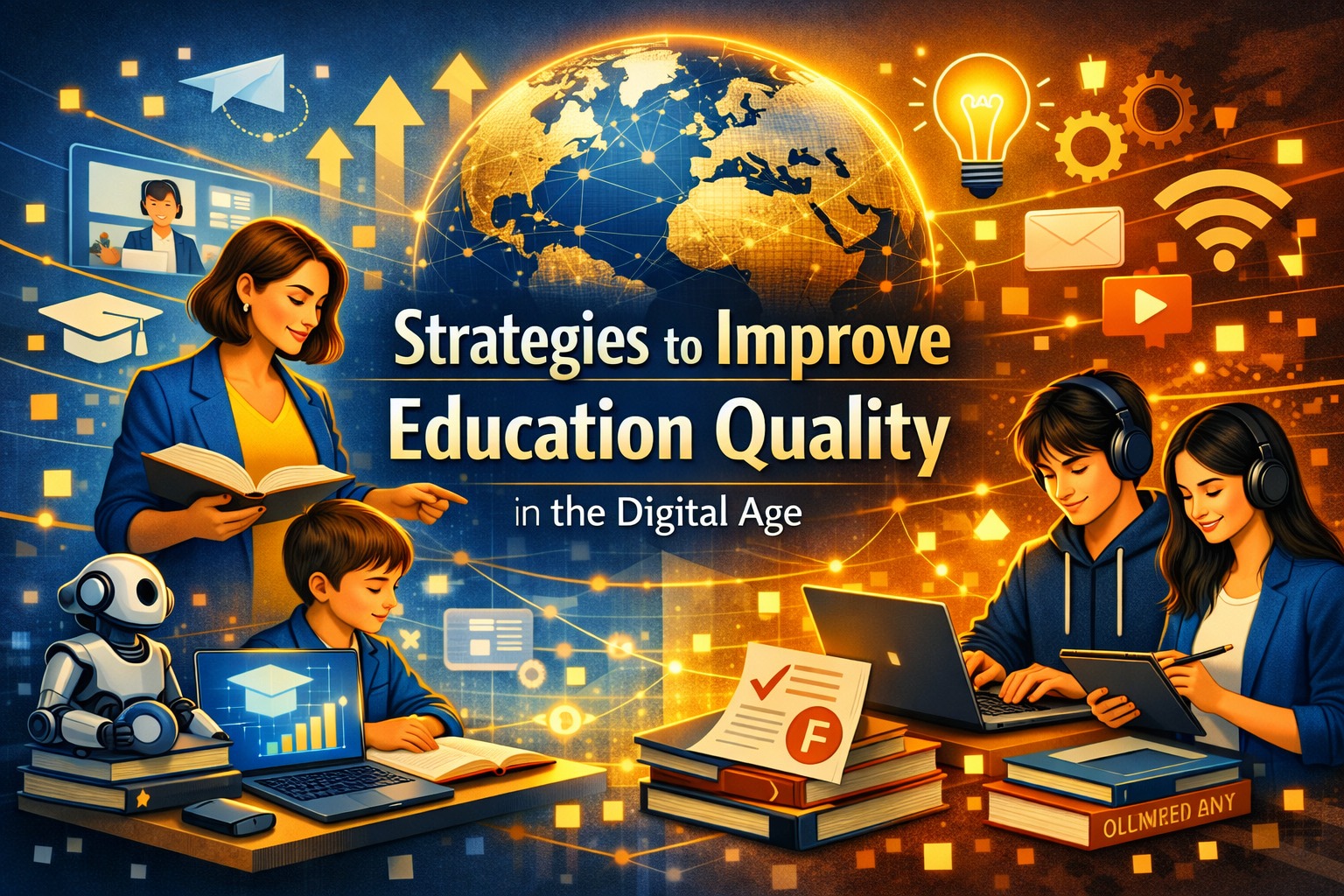
The digital age has transformed the way people learn, communicate, and access information. Education systems worldwide are adapting to new technologies to enhance learning outcomes and prepare students for a rapidly changing world. Improving education quality in this era requires innovative strategies that combine technology, pedagogy, and human values.
INTEGRATING TECHNOLOGY INTO LEARNING
Digital tools such as online platforms, virtual classrooms, and interactive applications have revolutionized education. Teachers can use these technologies to create engaging lessons, personalize learning experiences, and track student progress effectively. However, successful integration depends on proper training and infrastructure to ensure equal access for all learners.
FOCUSING ON DIGITAL LITERACY
Digital literacy is essential for students to navigate the modern world. Schools must teach not only technical skills but also critical thinking, online ethics, and information evaluation. By fostering responsible digital behavior, education can empower students to use technology for creativity and problem‑solving rather than distraction.
ENHANCING TEACHER COMPETENCE
Teachers remain the cornerstone of quality education. Continuous professional development programs should focus on digital teaching methods, innovative assessment techniques, and emotional intelligence. Educators who adapt to technological advancements can inspire students to learn more effectively and independently.
PROMOTING COLLABORATIVE AND INCLUSIVE LEARNING
The digital age encourages collaboration beyond classroom walls. Online discussions, group projects, and global learning networks help students exchange ideas and build cultural understanding. Inclusive education ensures that technology benefits all learners, including those with disabilities or limited resources.
CONCLUSION
Improving education quality in the digital age requires a balanced approach that values both innovation and human connection. By integrating technology wisely, strengthening teacher skills, and promoting digital literacy, education can evolve into a more effective, inclusive, and future‑ready system.
Tentang Penulis
Gusti Ayu Tita
Penulis — Universitas STEKOM
Penulis aktif yang berfokus pada isu-isu akademik, teknologi pendidikan, dan pengembangan sumber daya manusia di lingkungan kampus.