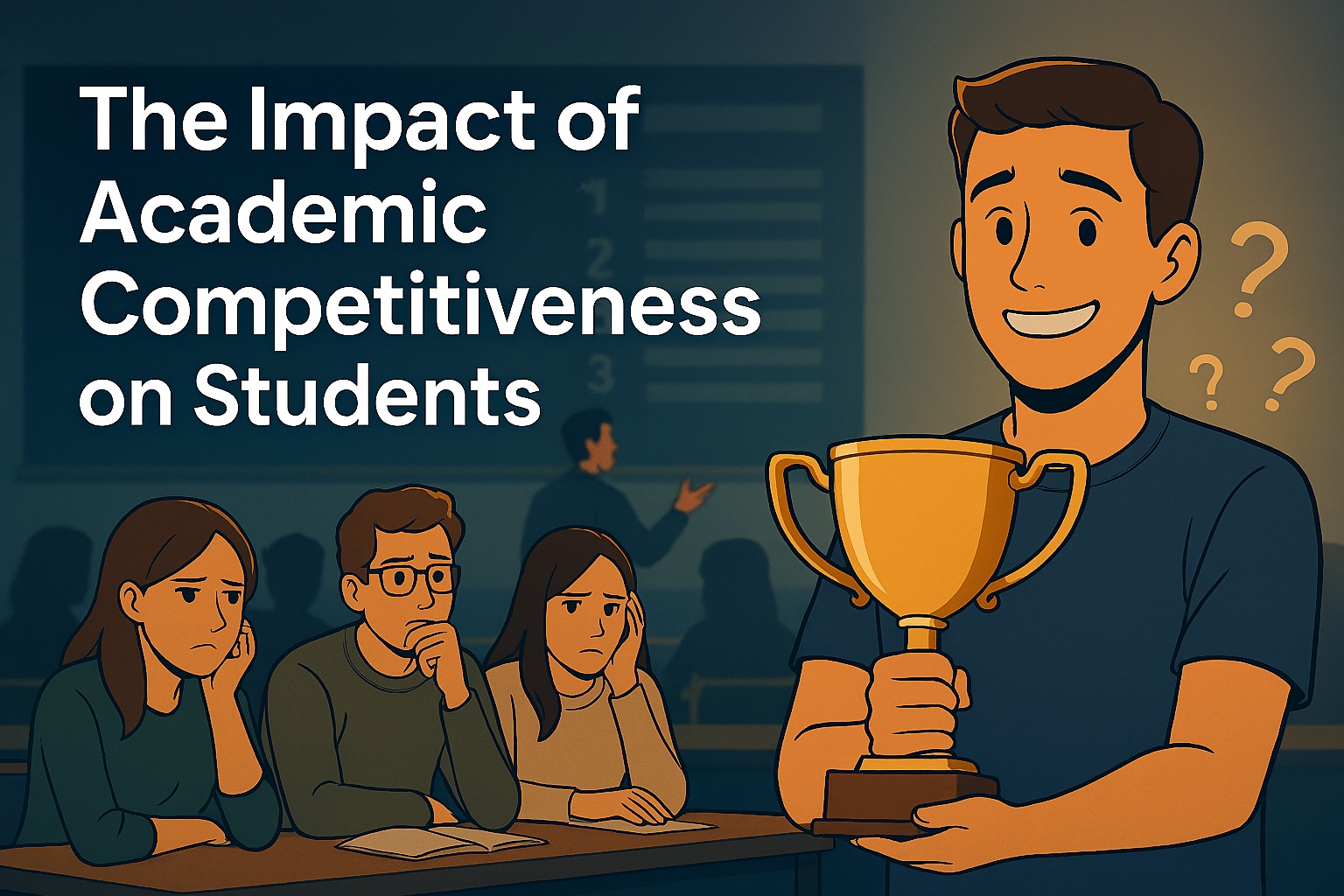
In many educational institutions, competition is considered a driving force for excellence. Rankings, grade comparisons, scholarships, academic awards, and public recognition are often used to motivate students to perform at their best. While healthy competition can inspire effort and discipline, an overly competitive culture may produce unintended consequences. One of the most significant outcomes is the rise of students’ academic pride. Academic pride, in this context, refers to a strong desire to maintain an image of intellectual superiority or consistent competence in front of peers and instructors. Although confidence is essential for success, academic pride shaped by competitive pressure can limit authentic learning, reduce collaboration, and create psychological barriers in classroom discussions. Understanding the impact of competitive culture on students’ academic pride is crucial for building healthier academic environments.
THE NATURE OF COMPETITIVE CULTURE IN EDUCATION
Competitive culture in education is characterized by constant comparison. Students are often evaluated through grades, class rankings, standardized tests, and performance-based recognition. These metrics, while useful for assessment, can shift the focus from learning to outperforming others.
In such environments, success is frequently defined not only by personal improvement but by relative achievement. Students may measure their value based on how they rank among peers rather than how much they understand the material. This atmosphere can subtly encourage students to prioritize image management over intellectual growth.
As competition intensifies, students may begin to view classroom participation as a performance rather than a collaborative learning opportunity. The classroom becomes a stage where they must demonstrate competence rather than explore ideas openly.
HOW COMPETITION FUELS ACADEMIC PRIDE
Competitive academic settings can directly fuel academic pride. When students are repeatedly rewarded for visible excellence, they may develop a strong attachment to being perceived as “smart” or “high-achieving.” Over time, maintaining this identity becomes a priority.
In classroom discussions, this attachment may lead students to avoid admitting confusion or asking clarifying questions. They may fear that revealing uncertainty could weaken their academic image. As a result, they participate selectively, speaking only when they are confident their contributions will reinforce their reputation.
This behavior is not necessarily rooted in arrogance. Instead, it often emerges as a protective mechanism in environments where academic standing feels fragile and constantly evaluated.
EFFECT ON CLASSROOM PARTICIPATION AND DISCUSSION
One of the most noticeable impacts of competitive culture on academic pride is reduced openness in classroom discussions. Students who are concerned about protecting their academic identity may hesitate to share preliminary thoughts or challenge dominant ideas.
Discussions can become dominated by a small group of highly confident students, while others remain silent. This imbalance reduces the diversity of perspectives, limiting the depth and richness of academic dialogue.
Furthermore, when students prioritize appearing knowledgeable over genuine engagement, discussions may become superficial. Instead of asking exploratory questions, students may focus on delivering polished answers that showcase competence.
PSYCHOLOGICAL CONSEQUENCES FOR STUDENTS
The pressure to maintain academic pride in competitive environments can lead to significant psychological strain. Students may experience anxiety about making mistakes or being publicly corrected. This constant self-monitoring can increase stress and reduce overall well-being.
Additionally, linking self-worth to academic comparison can create vulnerability. If students encounter setbacks, they may interpret them as personal failures rather than natural learning experiences. This mindset can damage self-esteem and discourage intellectual risk-taking.
Over time, the combination of competition and academic pride may foster perfectionism. Students may set unrealistic expectations for themselves, leading to burnout and emotional exhaustion.
IMPACT ON COLLABORATION AND PEER RELATIONSHIPS
Healthy learning environments encourage collaboration and mutual support. However, excessive competition can transform peers into rivals. When students view classmates primarily as competitors, cooperation may decline.
Academic pride reinforced by competitive culture can discourage knowledge sharing. Students may hesitate to help others for fear of losing their advantage. This dynamic weakens collective learning and undermines the sense of community within the classroom.
In contrast, collaborative environments tend to reduce academic pride rooted in insecurity. When students feel supported rather than compared, they are more likely to participate authentically.
BALANCING COMPETITION AND COLLABORATIVE LEARNING
Competition itself is not inherently harmful. When balanced properly, it can motivate students to strive for excellence. The key lies in promoting a growth-oriented academic culture rather than a comparison-driven one.
Educators can emphasize personal improvement, effort, and mastery instead of relative ranking. Encouraging reflective learning and normalizing mistakes as part of intellectual development can reduce the pressure to maintain a flawless image.
Creating psychologically safe classrooms where questions are welcomed and diverse perspectives are valued helps counteract the negative effects of excessive competition. In such environments, confidence is built on genuine understanding rather than external validation.
CONCLUSION
The impact of competitive culture on students’ academic pride is both complex and significant. While competition can inspire achievement, it can also encourage students to protect their intellectual image at the expense of authentic engagement. Academic pride shaped by constant comparison may limit classroom participation, increase anxiety, reduce collaboration, and hinder deeper learning.
To foster meaningful academic growth, educational institutions must strike a balance between encouraging excellence and nurturing supportive learning communities. When students feel valued for their effort and curiosity rather than their ranking, academic pride transforms into healthy confidence. Ultimately, true academic success emerges not from outperforming others, but from continuous learning and intellectual courage.
Tentang Penulis
Gusti Ayu Tita P
Penulis — Universitas STEKOM
Penulis aktif yang berfokus pada isu-isu akademik, teknologi pendidikan, dan pengembangan sumber daya manusia di lingkungan kampus.