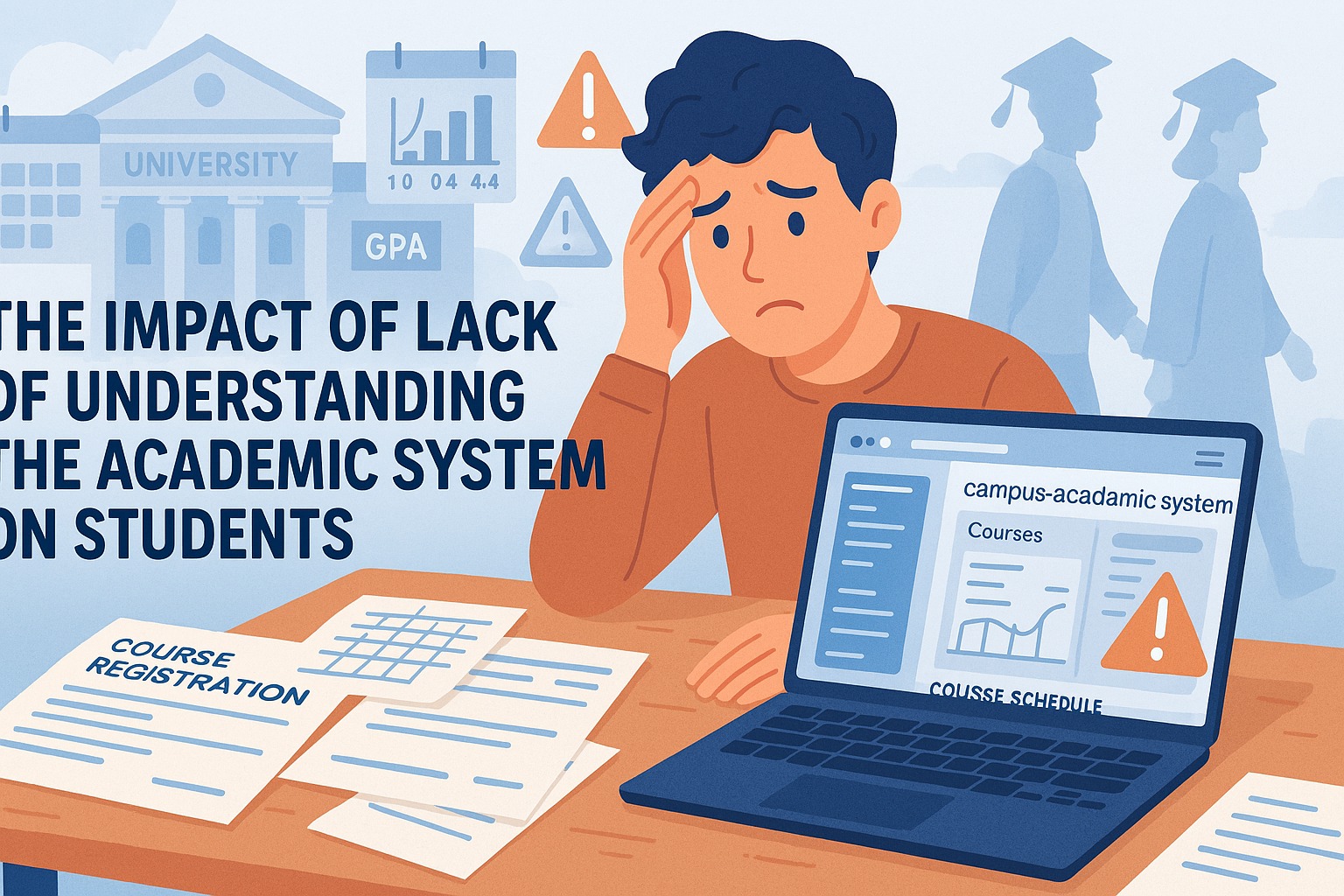
The academic system in higher education is designed to guide students through their learning journey in an organized and structured way. It includes regulations, academic calendars, course registration procedures, grading systems, and graduation requirements. For students, understanding this system is essential because it helps them navigate their academic life effectively.
Many new students enter university with enthusiasm but little knowledge about how the academic system actually works. They may not fully understand important aspects such as credit requirements, course prerequisites, or academic regulations. This lack of understanding can lead to confusion during the early stages of their studies.
The academic system is not merely a set of administrative rules. Instead, it functions as a roadmap that helps students plan their educational path. By understanding the system, students can manage their time, select appropriate courses, and track their academic progress.
When students ignore or fail to learn about the academic system, they risk facing unnecessary academic difficulties. These challenges often appear gradually and can influence both their academic performance and overall university experience.
DIFFICULTIES IN COURSE PLANNING
One of the most common consequences of not understanding the academic system is difficulty in planning courses. Universities typically require students to follow specific course sequences and prerequisites before advancing to higher-level classes.
Students who do not understand these requirements may register for the wrong courses or overlook mandatory subjects. As a result, they might have to repeat the registration process in the following semester, which can delay their academic progress.
Proper course planning also involves understanding credit loads and semester limits. Without this knowledge, some students take too many courses and feel overwhelmed, while others take too few and fall behind schedule.
When students understand how the academic system organizes courses, they can plan their studies more efficiently. However, a lack of knowledge about these regulations often leads to unnecessary academic obstacles.
RISK OF DELAYED GRADUATION
Another significant impact of limited understanding of the academic system is delayed graduation. Many universities have strict graduation requirements that students must fulfill within a specific period of time.
Students who fail to monitor their credit accumulation or course completion may realize too late that they are missing certain mandatory classes. This situation often forces them to extend their study period beyond the expected graduation timeline.
Delayed graduation can create additional financial and emotional burdens. Students may need to pay extra tuition fees and spend more time completing their degree than originally planned.
By understanding the academic system from the beginning, students can avoid these problems. They can track their progress carefully and ensure that all graduation requirements are fulfilled on time.
INCREASED ACADEMIC STRESS
A lack of knowledge about the academic system can also lead to increased stress among students. When students are unsure about academic rules or procedures, they often feel anxious about making mistakes that could affect their grades or progress.
For example, confusion about deadlines for course registration, assignment submission, or academic evaluations can create unnecessary pressure. Students who miss these deadlines may face academic penalties.
In many cases, this stress is not caused by the academic workload itself but by uncertainty about the system. Students may worry about whether they are following the correct procedures or meeting institutional requirements.
Understanding the academic system helps reduce this anxiety. When students know what is expected of them and how the system works, they feel more confident in managing their academic responsibilities.
LIMITED ACCESS TO ACADEMIC OPPORTUNITIES
Universities offer many academic opportunities such as exchange programs, internships, research projects, and academic competitions. However, students who do not understand the academic system often miss these valuable opportunities.
Many of these programs require students to meet certain academic standards or follow specific application procedures. Without knowledge of these requirements, students may not realize they are eligible to participate.
Additionally, some opportunities are tied to academic performance indicators such as grade point averages or credit completion. Students who are unaware of these criteria might fail to prepare themselves in advance.
By understanding the academic system, students can identify opportunities that support their personal and professional growth. Without this awareness, they may graduate without fully benefiting from the resources available at their university.
THE ROLE OF ACADEMIC GUIDANCE AND ORIENTATION
To prevent misunderstandings about the academic system, universities usually provide orientation programs and academic guidance services. These programs aim to introduce students to the essential rules and structures that govern their studies.
Academic advisors play an important role in helping students understand course requirements, graduation policies, and academic planning strategies. Through consultation sessions, students can ask questions and receive guidance related to their academic journey.
Unfortunately, not all students take full advantage of these resources. Some students underestimate the importance of orientation sessions or academic advising, which leads them to miss important information.
Active participation in academic guidance programs can help students build a stronger understanding of the academic system. This knowledge becomes a valuable foundation for their academic success.
Tentang Penulis
Gusti Ayu Tita P
Penulis — Universitas STEKOM
Penulis aktif yang berfokus pada isu-isu akademik, teknologi pendidikan, dan pengembangan sumber daya manusia di lingkungan kampus.