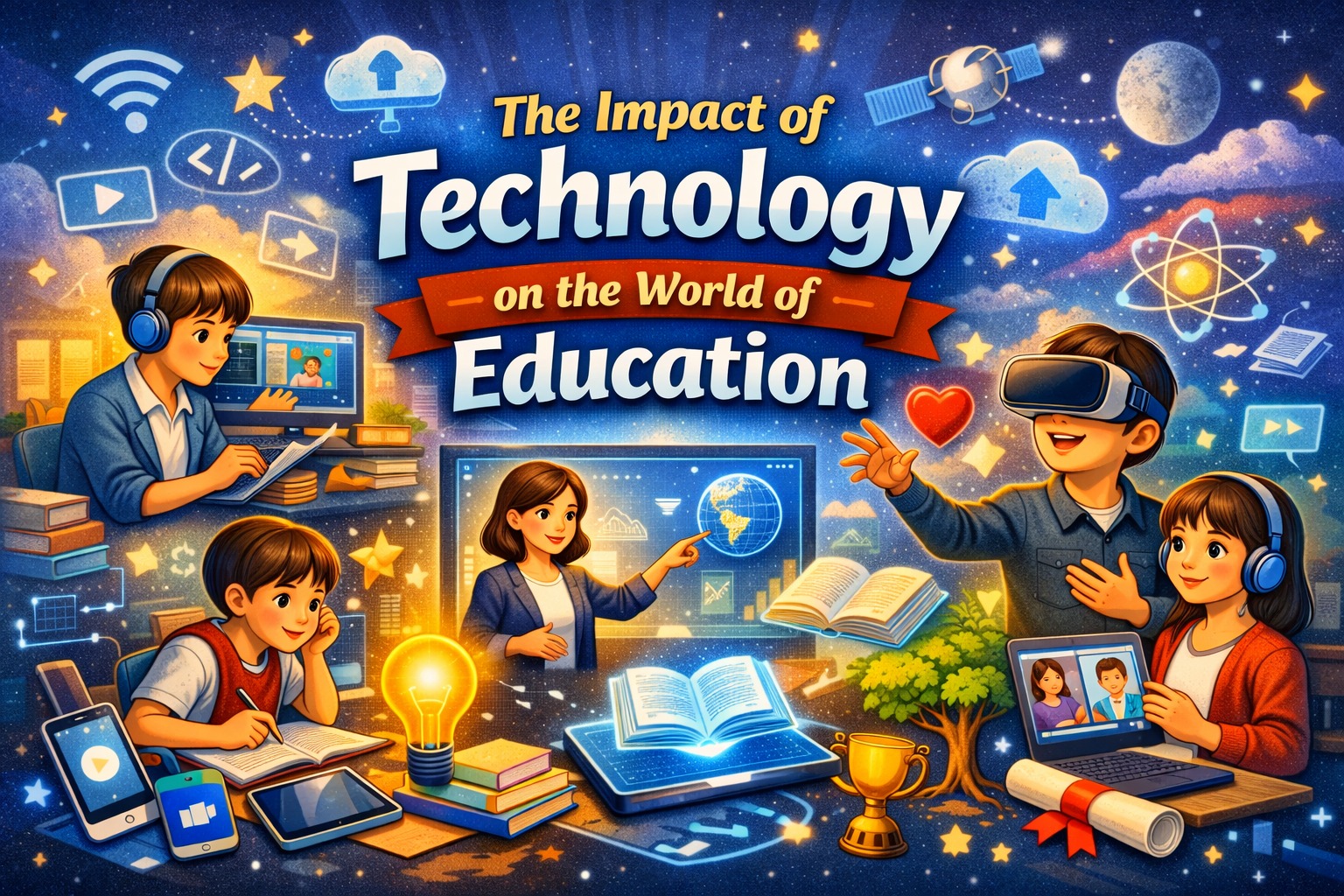
Technology has reshaped nearly every aspect of modern life, and education is no exception. Classrooms today look very different from those of the past, with digital tools, online platforms, and artificial intelligence transforming how students learn and how teachers teach. The integration of technology in education has opened new opportunities while also presenting fresh challenges.
THE EVOLUTION OF EDUCATION IN THE DIGITAL ERA
Education has moved far beyond traditional textbooks and chalkboards. Digital devices such as laptops, tablets, and smartphones now play a central role in learning. Online learning platforms, virtual classrooms, and educational apps have made knowledge more accessible than ever before.
Students can now attend classes from anywhere in the world, breaking geographical barriers and expanding access to quality education. This shift became especially visible during global disruptions, when remote learning became a necessity rather than an option.
IMPROVED ACCESS TO LEARNING RESOURCES
One of the most significant benefits of technology in education is access to unlimited learning resources. Students can explore online libraries, watch educational videos, join webinars, and participate in virtual workshops.
This accessibility helps learners study at their own pace, revisit difficult topics, and discover new areas of interest. As a result, education is no longer restricted by physical classrooms or limited materials.
PERSONALIZED LEARNING EXPERIENCES
Technology enables personalized learning tailored to individual needs. Artificial intelligence and adaptive learning platforms can analyze students’ progress and adjust content accordingly.
Personalized learning helps students who struggle with certain subjects while allowing advanced learners to move faster. This approach increases engagement and improves overall academic performance.
ENHANCED COLLABORATION AND COMMUNICATION
Digital tools make collaboration easier and more effective. Students can work together through shared documents, virtual meetings, and online discussion forums. Teachers can communicate with students and parents instantly through digital platforms.
This level of connectivity encourages teamwork, improves communication skills, and creates a more interactive learning environment.
CHALLENGES OF TECHNOLOGY IN EDUCATION
Despite its many benefits, technology also brings challenges. Not all students have equal access to devices and reliable internet, creating a digital divide. Additionally, excessive screen time and online distractions can affect focus and productivity.
Cybersecurity and data privacy are also growing concerns, making digital literacy an essential skill for students and educators alike.
THE FUTURE OF TECHNOLOGY IN EDUCATION
The future of education will continue to evolve alongside technology. Virtual reality, augmented reality, and artificial intelligence are expected to create more immersive and engaging learning experiences.
As technology advances, the key challenge will be balancing innovation with responsible and effective use. Educators must ensure that technology enhances learning rather than replacing human interaction.
CONCLUSION
Technology has transformed education by making learning more accessible, flexible, and personalized. While challenges remain, the benefits far outweigh the drawbacks when technology is used wisely. By embracing digital tools responsibly, the education system can prepare students for a rapidly changing world.
Tentang Penulis
Gusti Ayu Tita
Penulis — Universitas STEKOM
Penulis aktif yang berfokus pada isu-isu akademik, teknologi pendidikan, dan pengembangan sumber daya manusia di lingkungan kampus.