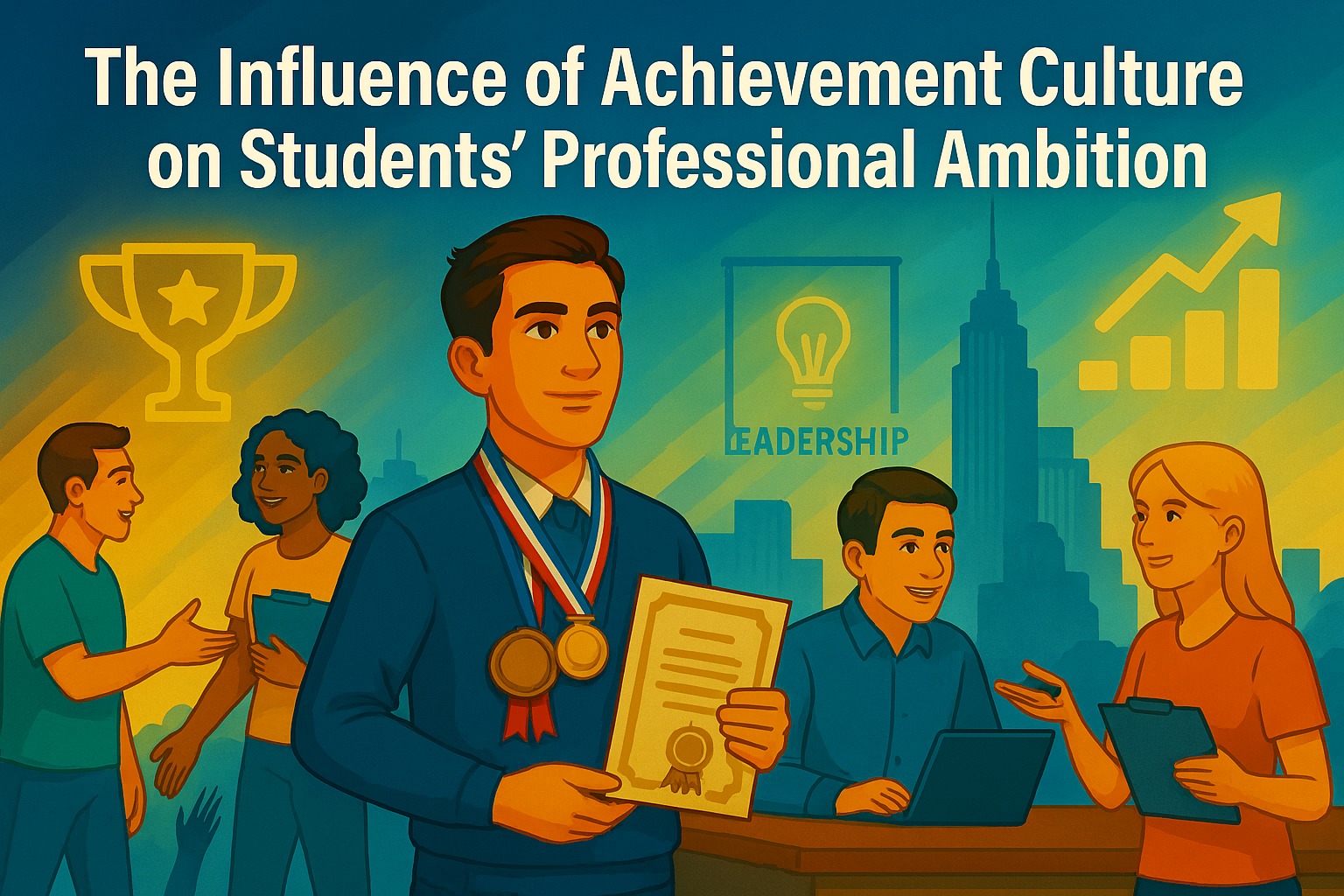
In modern higher education, achievement culture has become a dominant force shaping students’ academic behavior and long-term career aspirations. Universities emphasize performance indicators such as grades, awards, research output, leadership recognition, and competitive accomplishments. While this culture often drives excellence and productivity, it also significantly influences students’ professional ambition. Understanding the influence of achievement culture on students’ professional ambition provides insight into how educational environments shape future leaders, innovators, and professionals. Professional ambition does not emerge in isolation. It is cultivated through repeated exposure to expectations, recognition systems, and performance standards embedded within the academic environment. Achievement culture acts as a powerful motivational framework that defines what success looks like and how it should be pursued.
UNDERSTANDING ACHIEVEMENT CULTURE IN EDUCATION
Achievement culture refers to an environment where success is measured by measurable outcomes, visible accomplishments, and public recognition. In universities, this may include academic honors, scholarships, publication records, competition victories, and leadership titles.
Such an environment communicates clear standards of excellence. Students learn early that dedication, discipline, and consistent effort lead to tangible rewards. Over time, these patterns shape how students define professional success beyond graduation.
Achievement culture often creates a performance-oriented mindset. Students become accustomed to setting high goals, tracking progress, and striving for continuous improvement. This mindset directly influences how they approach their future careers.
SHAPING PROFESSIONAL GOALS AND ASPIRATIONS
Students immersed in achievement-driven environments frequently develop ambitious career goals. They may aim for competitive industries, prestigious organizations, or leadership roles that reflect the high standards they experienced in university.
Exposure to successful peers and celebrated alumni further strengthens these aspirations. When top-performing graduates are recognized for entering elite professions or launching innovative ventures, current students internalize these outcomes as desirable benchmarks.
This process reinforces upward mobility and long-term planning. Students learn to connect academic effort with professional opportunity, building a structured pathway from classroom achievement to career advancement.
POSITIVE EFFECTS ON MOTIVATION AND PERFORMANCE
One of the most significant benefits of achievement culture is enhanced motivation. Clear expectations and recognition systems encourage students to invest effort in developing both technical and soft skills. This consistent drive prepares them for competitive job markets.
Achievement culture also fosters resilience. Students accustomed to striving for excellence often develop perseverance and adaptability when facing obstacles. These qualities are essential in demanding professional environments where continuous growth is required.
Furthermore, performance-focused environments promote strategic thinking. Students learn to prioritize tasks, manage time effectively, and pursue opportunities aligned with long-term ambitions. Such habits contribute to sustained professional progress.
THE RISK OF EXCESSIVE PRESSURE AND EXTERNAL VALIDATION
Despite its advantages, achievement culture can also create intense pressure. When success is narrowly defined by awards, grades, or status, students may feel compelled to pursue careers that maximize recognition rather than personal fulfillment.
External validation can overshadow intrinsic motivation. Some students may choose professions perceived as prestigious even if those careers do not align with their passions or values. Over time, this misalignment may lead to dissatisfaction or burnout.
An overly competitive achievement culture may also discourage risk-taking. Fear of failure can limit creativity and innovation, both of which are essential for long-term professional success.
BALANCING AMBITION WITH PERSONAL VALUES
For achievement culture to positively influence professional ambition, it must be balanced with reflection and self-awareness. Students benefit when institutions encourage them to explore their interests alongside performance goals.
Mentorship programs, career counseling, and experiential learning opportunities help students connect ambition with authentic identity. When professional goals align with personal values, ambition becomes sustainable rather than pressure-driven.
Healthy achievement cultures promote growth rather than comparison. They celebrate diverse definitions of success, allowing students to pursue various career paths while maintaining high standards.
LONG-TERM PROFESSIONAL IMPACT
The influence of achievement culture extends into graduates’ professional lives. Individuals shaped by performance-oriented environments often demonstrate strong work ethics, goal-setting abilities, and commitment to excellence.
These professionals tend to seek advancement opportunities, leadership roles, and continuous learning experiences. Their ambition drives innovation and productivity within organizations.
However, long-term career satisfaction depends on balance. Graduates who integrate ambition with well-being and purpose are more likely to experience meaningful and sustainable career growth.
CONCLUSION
The influence of achievement culture on students’ professional ambition is profound and multifaceted. By promoting high standards, recognition, and measurable success, universities cultivate ambition, resilience, and performance-oriented mindsets. These qualities prepare students to navigate competitive career landscapes with confidence and determination.
At the same time, achievement culture must be guided by supportive structures that emphasize personal alignment and well-being. When ambition is rooted in both excellence and authenticity, students are empowered to pursue careers that are not only prestigious but also personally meaningful and sustainable.
Tentang Penulis
Gusti Ayu Tita P
Penulis — Universitas STEKOM
Penulis aktif yang berfokus pada isu-isu akademik, teknologi pendidikan, dan pengembangan sumber daya manusia di lingkungan kampus.